
Car Insurance Saving Tips That Protect Your Budget
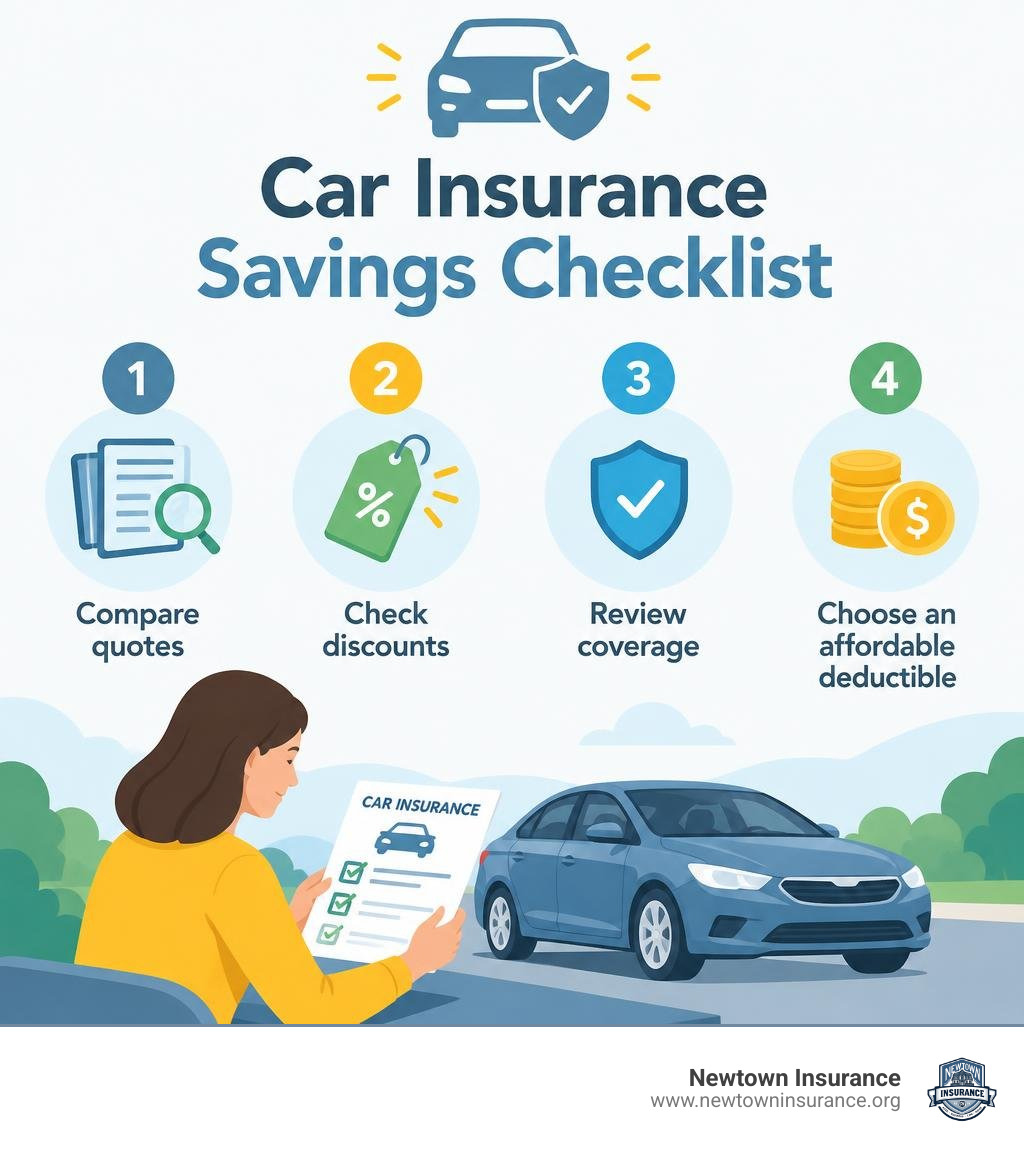
The most useful car insurance saving tips start with three steps: compare quotes at each renewal, ask about discounts you qualify for, and review your coverage and deductible. A higher deductible may lower your premium, but choose one you could afford after a claim. If you drive an older car, check whether collision and comprehensive coverage still make financial sense. Keep enough liability coverage to protect yourself, not just meet Pennsylvania’s minimum.
I’m Shawn Beihl with Newtown Insurance. I bring more than 15 years of specialty insurance and risk management experience to these car insurance saving tips, with a focus on lowering costs without overlooking important risks.
Glossary for car insurance saving tips:
- Insurance tips and tricks
- auto insurance savings tips
- how to lower your car insurance after a ticket
As of November 2026, the national average consumer pays $2,237 per year for car insurance. Between January 2020 and August 2025 alone, total vehicle ownership costs surged by 41%, driven by higher repair costs, severe weather events, and inflationary pressures. However, you do not have to accept rising renewal rates passively. By proactively analyzing policy levers, drivers routinely reduce their expenses significantly without gutting essential financial protections.
Core Car Insurance Saving Tips for Adjusting Your Coverage and Deductibles
Managing policy structures begins with balancing self-retained risk and transferred risk. While state laws establish basic mandates, your actual policy costs depend on the specific limits, deductibles, and optional coverages you select. Authoritative guidance from the National Association of Insurance Commissioners highlights practical Tips for Saving on your Auto Insurance, emphasizing that simple structural adjustments can provide immediate relief on annual bills.
Before making adjustments, review our comprehensive auto insurance savings complete guide to establish a solid baseline for your household’s coverage needs.
Optimizing Deductibles and Dropping Unnecessary Physical Damage Coverage
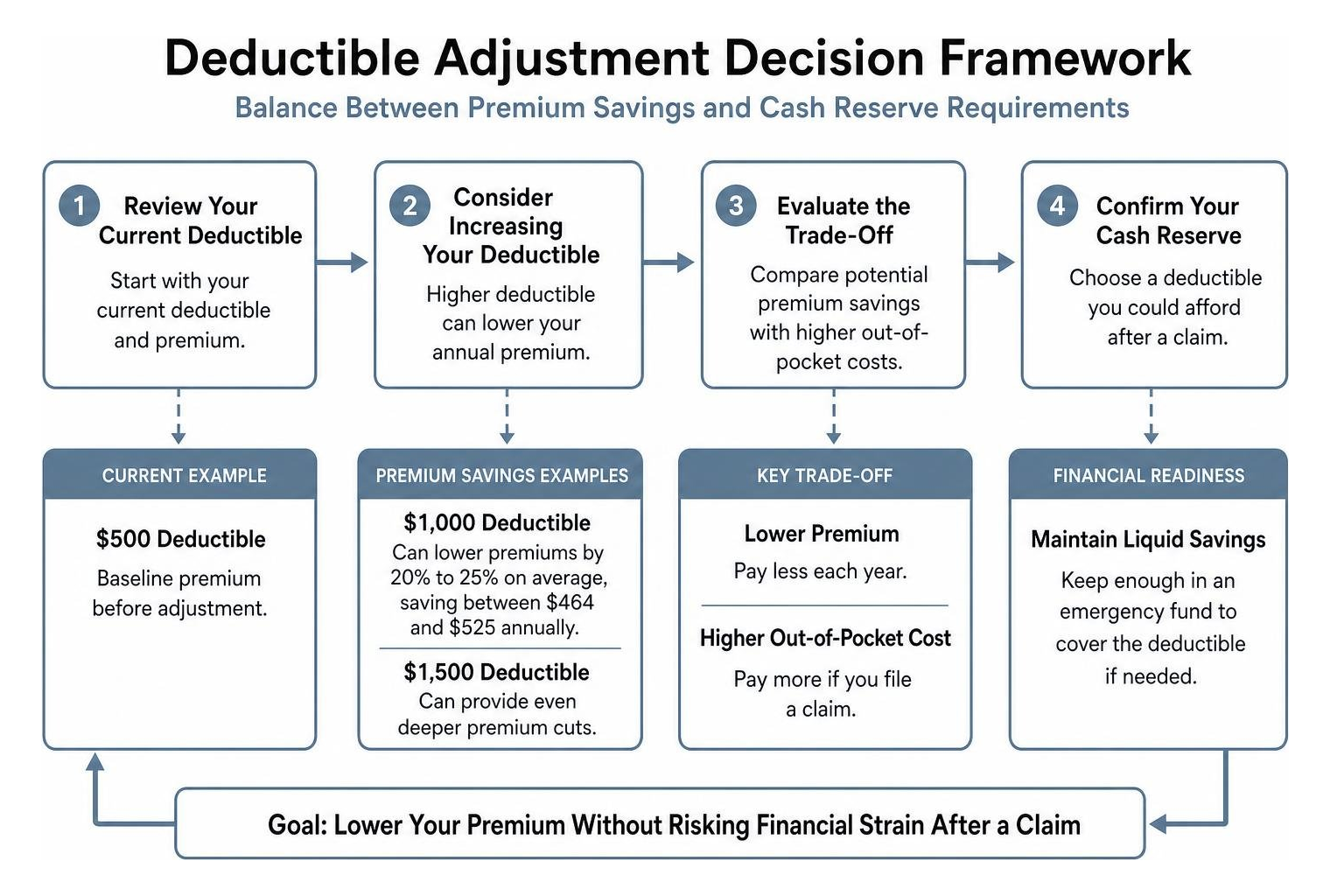
Your deductible represents the out-of-pocket amount you pay before insurance coverage takes effect on collision and comprehensive claims. Adjusting this single figure offers one of the most reliable ways to reduce annual premiums.
Increasing your deductible from $500 to $1,000 can lower your annual premiums by 20% to 25% on average, saving between $464 and $525 annually. Taking it further to $1,500 can provide even deeper cuts. However, this strategy requires maintaining liquid savings in an emergency fund so that an unexpected repair bill does not cause financial strain.
| Deductible Tier | Average Annual Premium Reduction | Estimated Annual Cash Savings | Ideal Driver Profile |
|---|---|---|---|
| $500 (Standard) | Baseline | $0 | Drivers with limited emergency cash reserves |
| $1,000 | 20% – 25% | $464 – $525 | Drivers with at least $1,000 in dedicated liquid savings |
| $1,500 | 30% – 38% | $670 – $850 | Low-mileage drivers with strong emergency funds |
For older vehicles, physical damage coverages (collision and comprehensive) might no longer deliver good financial value. Collision insurance pays to fix your car if you hit another vehicle or object, while comprehensive covers non-crash perils like theft, vandalism, hail, or animal strikes.
A reliable guideline is the “10% rule”: if the annual cost of comprehensive and collision coverage exceeds 10% of your vehicle’s total market value (as determined by Kelley Blue Book or Edmunds), consider dropping them. Dropping collision and comprehensive insurance can save approximately $1,165 a year. If your vehicle is worth $3,000, paying $1,165 annually to insure its physical shell rarely makes financial sense, as the maximum potential payout is capped by the car’s depreciated value minus your deductible.
If your vehicle is newer or financed, maintaining full physical damage protection is necessary. You can still explore options for affordable auto insurance full coverage by raising deductibles rather than removing critical coverage entirely.
Right-Sizing Liability Limits and Evaluating Umbrella Insurance Protection
While cutting optional physical damage coverages on older vehicles can be cost-effective, reducing liability coverage below your true financial exposure is risky. Liability coverage covers bodily injury and property damage you cause to others in an at-fault crash. State minimums leave your home, savings, and future earnings exposed to litigation if you cause a severe collision.
Instead of lowering liability limits to save a few dollars, look into structured excess protection. Adding a $1 million personal umbrella policy typically adds just $250 to $300 to your annual insurance costs while providing an extra layer of liability protection above your auto and home policies. For a detailed breakdown of how excess liability coordinates with vehicle policies, read our guide on whether an umbrella insurance policy is worth the cost for your family.
Maximizing High-Impact Discounts, Telematics, and Smart Payment Habits
Insurers offer numerous discounts that many policyholders qualify for but never claim. Routinely auditing your policy guarantees that you take advantage of every eligible price reduction. National financial publications frequently outline practical strategies in guides like How to Cut Your Auto and Home Insurance Bills This Year | Kiplinger, showing that stacking multiple discounts yields substantial cumulative savings.
To ensure your account captures every available credit, review our overview of 6 car insurance discounts you should ask about at your next renewal.
Bundling Policies, Defensive Driving Courses, and Low-Mileage Verification
Combining multiple policies with one carrier remains one of the largest single discounts available. Bundling auto coverage with homeowners, renters, or condo insurance can save up to 30% across your combined premiums. You can examine top carrier combinations in our review of the best insurance bundles for combining auto and home coverage.
Other effective discounts include:
- Defensive Driving Certification: Completing an approved defensive driving course can save an average of $233 a year (roughly 10% off specific policy coverages).
- Safe Driving Records: Maintaining a clean driving record free of moving violations and at-fault claims for three to five consecutive years qualifies policyholders for substantial safe driver insurance discounts.
- Low-Mileage Reporting: If you work remotely, carpool, or drive fewer than 10,000 miles per year, inform your insurer. Verifying reduced commute mileage often results in rate reductions of $115 to $200 annually.
Weighing Usage-Based Telematics and Avoiding Claim Surcharges for Minor Repairs
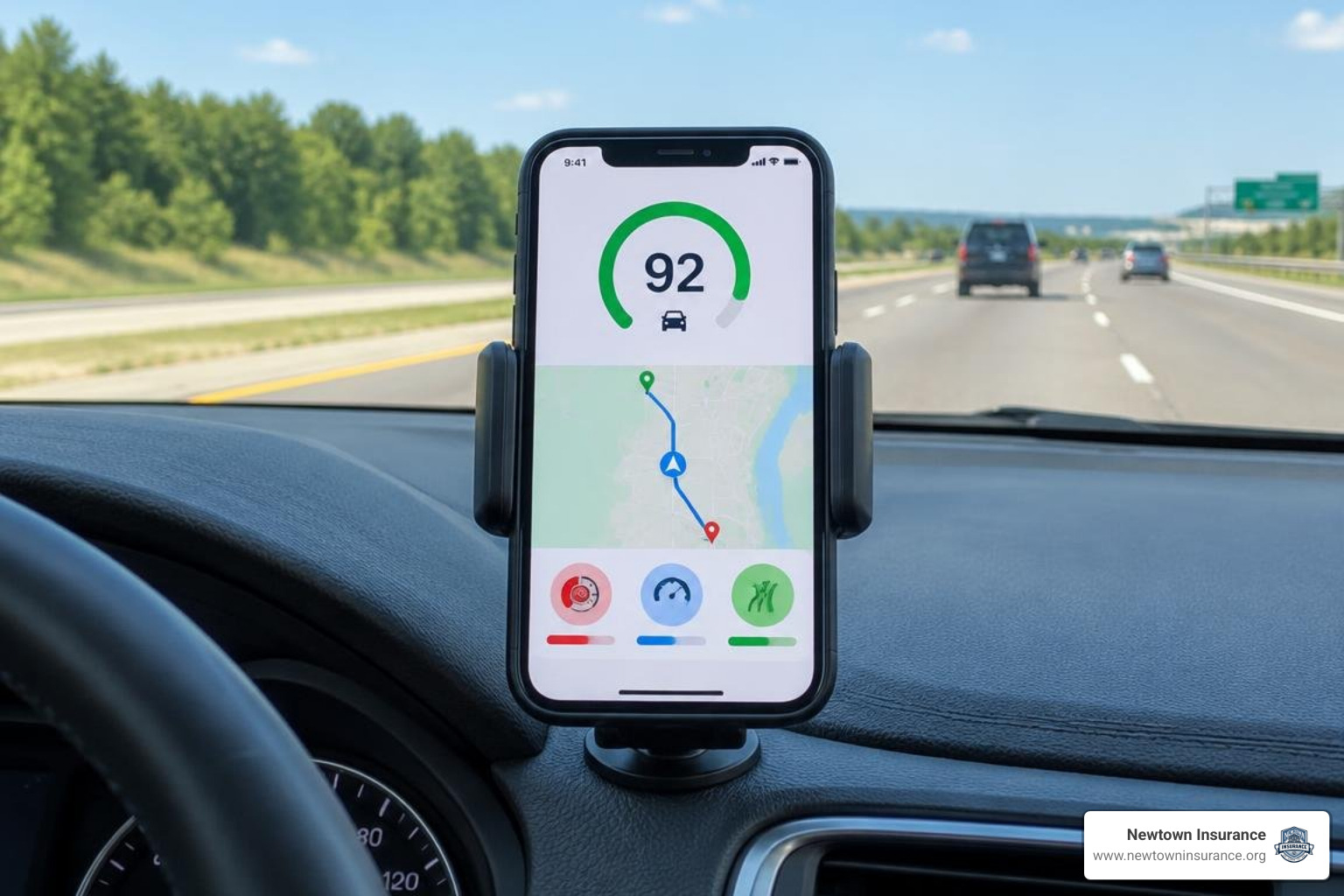
Usage-based insurance (UBI) programs track driving behaviors—such as braking intensity, cornering, speed, late-night driving, and smartphone interaction—via a mobile app or plug-in OBD-II device. Signing up for driver monitoring can save participants an average of $931 a year, with initial enrollment discounts starting around 10%.
However, consider the trade-offs of telematics:
- Pros: Significant premium savings for safe drivers, real-time feedback on driving habits, and reduced rates for infrequent drivers.
- Cons: Data privacy considerations regarding location tracking, and potential rate increases if the system logs frequent hard braking, rapid acceleration, or late-night trips (particularly between midnight and 4:00 AM).
Another key habit for keeping premiums low is avoiding small claims. Minor one-car incidents—such as scraping a post or denting a bumper on a garage door—might cost $800 to fix. If your deductible is $500, filing a claim nets a modest $300 payout but can trigger an at-fault surcharge that raises your annual premium by hundreds of dollars for three to five years. Paying minor repairs out of pocket preserves your claims history and clean-record credits.
Additionally, how you pay matters. Paying annually instead of monthly eliminates installment fees and interest charges, cutting policy administration costs significantly. Review our guide on auto insurance payment plans to choose the most cost-effective schedule for your budget.
Strategic Vehicle Selection and Proactive Shopping Tactics
The vehicle you choose directly shapes your baseline insurance risk. Insurers calculate premiums using historical loss data, repair costs, passenger injury ratings, and vehicle theft statistics. Leading personal finance insights from How can I get cheaper car insurance? confirm that choosing the right vehicle class can save hundreds of dollars each year.
Car Insurance Saving Tips for Choosing Vehicles and Managing Repair Costs
Before purchasing a vehicle, compare insurance rate estimates alongside fuel economy and maintenance costs. High-performance trims, luxury European models, and vehicles with high theft rates attract significantly higher premiums. Installing approved aftermarket security features can help reduce these costs; see how anti-theft equipment lowers premiums in our review of anti-theft discount auto insurance.
Modern vehicle technology also plays an important role. Advanced Driver Assistance Systems (ADAS)—including lane-centering cameras, radar cruise control, and blind-spot sensors—help prevent accidents, but they can be expensive to recalibrate after minor damage. Research highlighted in Moves to Manage the Soaring Costs of Owning a Car | Kiplinger shows that fixing damage to advanced safety systems can add up to 37.6% to repair costs after a crash.
Selecting reliable vehicles with strong safety ratings from the Insurance Institute for Highway Safety (IIHS) and accessible replacement parts keeps both baseline premiums and collision coverage costs manageable.
Proactive Car Insurance Saving Tips for Comparing Quotes and Timing Renewals
Insurance carriers adjust their rating algorithms periodically, meaning the company offering you the best rate three years ago might no longer be competitive today. Drivers who switched insurers saw a median annual savings of $461.
Comparison shopping yields the best results when done well before your current policy expires. Industry pricing data shows that drivers purchasing insurance approximately 26 days before their renewal date secure significantly lower rates than those shopping at the last minute. Insurers often view last-minute shoppers as higher risk, applying higher pricing tiers accordingly.
| Quote Purchase Window | Pricing Impact | Consumer Risk Classification |
|---|---|---|
| 21 – 28 Days Before Renewal | Optimal Pricing Tier (Up to 40% lower) | Proactive, low-risk planner |
| 10 – 20 Days Before Renewal | Moderate Standard Tier | Average market risk |
| 0 – 3 Days / Day of Renewal | Peak Surcharge Tier | High-risk, impulsive or disorganized risk profile |
For step-by-step guidance on setting up side-by-side policy comparisons, refer to our compare insurance quotes complete guide.
Navigating Life Changes, Teen Drivers, and Senior Policies
Major life events provide natural opportunities to reassess your insurance coverage and capture new savings.

Managing Rates Through Marriage, Relocation, and Adding Young Drivers
Life events alter household risk profiles in distinct ways:
- Marriage: Statistically, married couples file fewer claims than single drivers. Combining policies onto a multi-vehicle plan often generates lower base rates and multi-car discounts.
- Relocation: Moving to a new neighborhood changes your territory rating. ZIP codes with lower traffic congestion, lower vehicle theft rates, and off-street or garage parking yield lower comprehensive and collision premiums.
- Adding a Young Driver: Adding a teen driver to an auto policy can increase premiums by $1,000 to $2,000 or more per year.
To mitigate the cost of adding a young driver, review our guide on what every rookie behind the wheel needs to know about policy costs. Be sure to take advantage of:
- Good Student Discounts: Maintaining a 3.0 GPA (“B” average) or higher can earn discounts of 10% to 25%.
- Student Away at School Discounts: If your student attends college over 100 miles away without a car, you can maintain their active coverage while significantly lowering policy costs during the school term.
- Vehicle Assignment: Assign teen drivers as primary operators on older, lower-value family vehicles rather than newer or high-horsepower cars.
Tailored Strategies for Mature Drivers Over 70
Drivers over 70 experience rising premiums as insurers factor in slower reaction times and higher medical expenses per claim. However, mature drivers can offset these rate changes with targeted strategies:
- Senior Refresher Courses: Completing approved driver safety courses (such as AARP Smart Driver) qualifies older motorists for statutory multi-year premium discounts.
- Retirement Commute Adjustments: Shifting from daily commuting to pleasure use reduces annual mileage, lowering vehicle exposure tiers.
- Safety Technology Packages: Equipping vehicles with automatic emergency braking and collision mitigation features helps prevent incidents and keeps mature driver rates low.
For additional practical strategies, explore the frugal driver’s guide: car insurance savings tips to keep cash in your pocket.
Frequently Asked Questions About Lowering Auto Premiums
How much can I save by increasing my car insurance deductible?
Increasing your comprehensive and collision deductible from $500 to $1,000 typically lowers your annual premiums by 20% to 25%, saving roughly $464 to $525 per year. If you increase it to $1,500, savings can reach 35% or more. Before raising your deductible, make sure you have sufficient liquid emergency funds to pay that amount out of pocket if you need to file a claim.
When is the right time to drop comprehensive and collision coverage?
Consider dropping comprehensive and collision coverage when the annual cost of these physical damage coverages exceeds 10% of your vehicle’s actual cash value, or when the total car value drops below $3,000 to $4,000. In these scenarios, dropping full coverage can save approximately $1,165 annually, which can be redirected toward an emergency fund or savings for your next vehicle.
Does paying car insurance annually save money compared to monthly installments?
Yes. Paying your premium in full annually or semi-annually typically saves between $60 and $200 per year. Insurers generally charge administrative processing fees (ranging from $3 to $7 per transaction) plus financing fees on monthly installment plans. Paying upfront eliminates these recurring surcharges.
Conclusion
Controlling your vehicle insurance costs requires regular attention rather than an auto-renew approach. By optimizing deductibles, bundling essential policies, dropping unnecessary coverage on older vehicles, timing quote reviews proactively, and utilizing telematics and group discounts, you can protect your household budget from rising industry costs.
At Newtown Insurance, our team specializes in helping Pennsylvania drivers secure tailored protection with transparent pricing and dependable local support. Explore our full range of insurance services or contact our office in Newtown, Pennsylvania, to complete an in-depth policy review and ensure you receive every discount you qualify for.