How to Lower Your Car Insurance After a Ticket
To lower your car insurance after a ticket, compare quotes before renewal, ask about every available discount, consider an approved defensive-driving course, and adjust deductibles only if you can afford them after a claim. Keep continuous coverage and avoid another violation. Those steps can help offset a surcharge, even though the ticket may affect rates for three to five years.
A single speeding ticket often raises premiums by about 20% to 30%, but the result depends on the violation, your driving history, where you live, and the insurer’s rating rules. A minor first-time ticket may have a smaller effect than reckless driving, a DUI, or several recent violations.
For Pennsylvania drivers, the biggest mistake is assuming your renewal price is the only price available. Insurers do not all rate the same ticket the same way. Review your driving record for errors, compare equal coverage limits and deductibles, and do not cut liability protection simply to get the lowest monthly bill.
I’m Shawn Beihl of Newtown Insurance. With more than 15 years of experience in specialty insurance and risk management, I help clients understand how to lower your car insurance after a ticket while keeping coverage practical for the risks they still face.
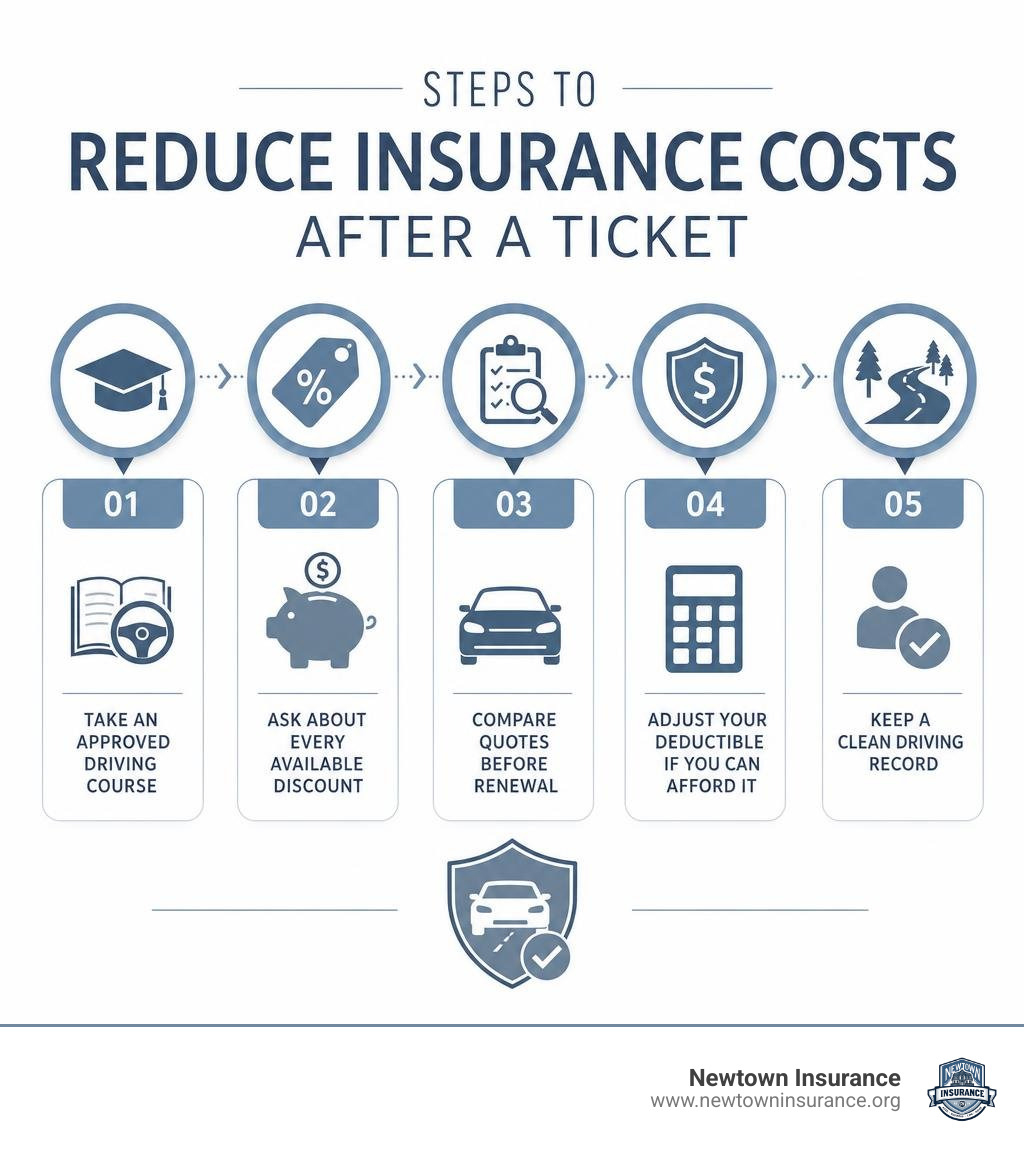
Simple how to lower your car insurance after a ticket word guide:
Understanding the Impact of Traffic Violations on Auto Insurance Rates
When you receive a moving violation, your auto insurer does not simply view it as an unlucky day on the road. From an actuarial standpoint, a traffic citation is a measurable indicator of future risk. Statistical loss modeling demonstrates that drivers with recent citations are significantly more likely to file comprehensive or collision claims than those with spotless records.
To account for this probability, carriers use tiered underwriting systems. When a violation is reported on your Motor Vehicle Record (MVR), the insurer applies a rate surcharge during your next policy renewal window. This surcharge shifts you out of preferred pricing tiers into standard or non-standard rating tiers, raising your baseline premium.
Understanding the direct connection between citation severity, underwriting tiers, and rate surcharges helps you identify how aggressive your rate recovery plan needs to be.
| Violation Type | Average Rate Increase | Typical Insurer Lookback Period | Underwriting Severity Tier |
|---|---|---|---|
| Minor Speeding (1–15 MPH Over) | 10% – 20% | 3 Years | Low to Moderate |
| Major Speeding (16–25+ MPH Over) | 20% – 30% | 3 – 5 Years | Moderate to High |
| Reckless Driving | 70% – 85% | 3 – 5 Years | Severe / Non-Standard |
| At-Fault Accident | 30% – 50% | 3 – 5 Years | Moderate to Severe |
| DUI / DWI Conviction | 80% – 100%+ | 5 – 10 Years | Critical / Assigned Risk |
Understanding these categories allows drivers to plan their policy strategy according to real actuarial metrics rather than guesswork.
Minor Speeding Violations vs. Major Driving Infractions
Not all moving violations carry the same financial weight. Insurers segment infractions into distinct tiers based on speed, location, and potential danger.
- Minor Speeding (1 to 15 mph over the posted limit): This category typically represents a modest rate increase, often averaging between 10% and 20%. In select circumstances, a first-time minor offense may trigger minimal surcharges if your carrier offers built-in violation forgiveness.
- Moderate to Major Speeding (16 to 25+ mph over the limit): Driving substantially over the speed limit moves you into high-risk underwriting brackets. Premiums frequently jump by 20% to 30%, adding hundreds of dollars annually to your policy costs.
- School and Construction Zones: Speeding in designated work or school zones carries statutory fines and aggressive insurance rating penalties due to heightened bodily injury liability risks.
- Reckless Driving and Major Moving Violations: Infractions involving severe negligence, street racing, or reckless operation cause immediate rate spikes of 80% or more, often requiring placement with specialized non-standard carriers.
- DUI / DWI Convictions: A major alcohol- or drug-related conviction represents the highest tier of underwriting risk. Baseline full-coverage rates frequently double, jumping from an average of around $2,697 to over $5,287 per year nationally.
To understand how these specific infraction tiers align with regional underwriting laws, consult our comprehensive Pennsylvania auto insurance guide 2026 to protect your household from costly rating penalties.
How Long Violations Stay on Your Record and Impact Rates
A common point of confusion for drivers is the difference between how long a violation stays on a state motor vehicle record versus how long it impacts auto insurance calculations.
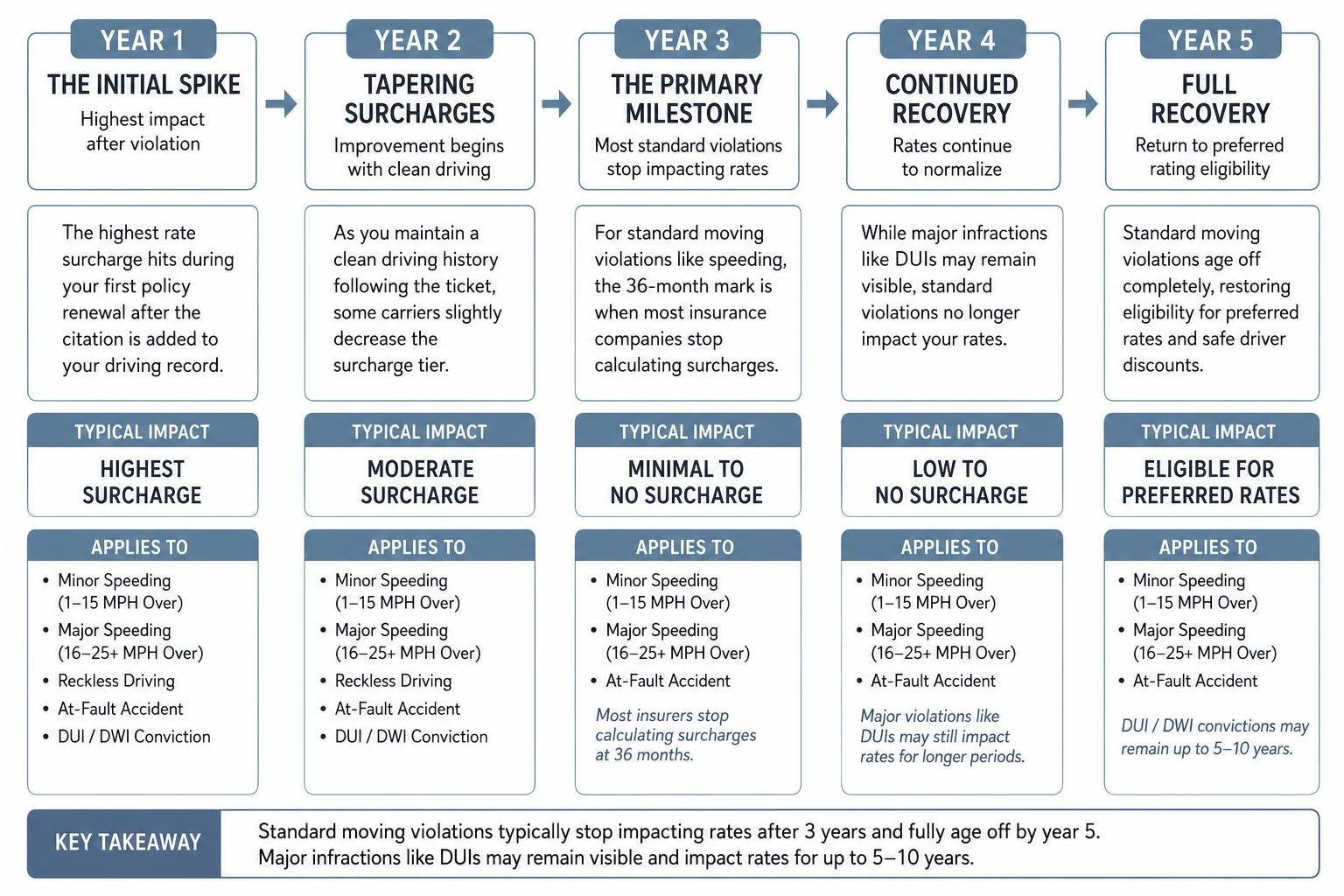
- Year 1 (The Initial Spike): The highest rate surcharge hits during your first policy renewal after the citation is added to your driving record.
- Year 2 (Tapering Surcharges): As you maintain a clean driving history following the ticket, some carriers slightly decrease the surcharge tier.
- Year 3 (The Primary Milestone): For standard moving violations like speeding, the 36-month mark is when most insurance companies stop calculating surcharges.
- Years 4 and 5 (Full Recovery): While major infractions like DUIs may remain visible for up to five or ten years, standard moving violations generally age off completely, restoring your eligibility for preferred rating tiers and safe driver incentives.
Proven Strategies on How to Lower Your Car Insurance After a Ticket
Experiencing a premium increase after receiving a citation does not mean you must overpay for coverage for the next several years. By taking proactive steps, you can counter insurance surcharges with structural discounts and policy adjustments.
If you are exploring practical ways to minimize overall policy expenses, our auto insurance savings complete guide provides actionable methods for managing household policy costs.
Policy Adjustments and How to Lower Your Car Insurance After a Ticket Immediately
The quickest method to lower your premium after a ticket is adjusting your existing policy structure. While you should never compromise essential liability protections, fine-tuning your physical damage coverage can deliver immediate rate relief.
- Raise Your Comprehensive and Collision Deductibles: Moving your physical damage deductible from $500 to $1,000 can lower your overall premium by 15% to 25%. Make sure you maintain enough emergency savings to cover the higher out-of-pocket cost if you need to file a claim.
- Evaluate Physical Damage on Older Vehicles: If you drive an older vehicle with a market value under $3,000 to $4,000, paying for collision and comprehensive coverage alongside ticket surcharges may not make financial sense. Dropping physical damage coverage while keeping robust liability limits can significantly reduce your bill.
- Combine Auto and Property Lines: Policy bundling remains one of the largest discounts in personal lines insurance. Linking your auto coverage with an auto and home bundle can generate total policy discounts between 10% and 25%, helping offset ticket surcharges.
- Review Annual Mileage Estimates: If your commute has changed or you work remotely, ensure your policy reflects your actual annual mileage. Low-mileage drivers frequently qualify for reduced rating tiers.
To review basic requirements before making coverage alterations, explore our detailed breakdown of auto insurance requirements in Pennsylvania.
Defensive Driving Courses and Telematics Programs
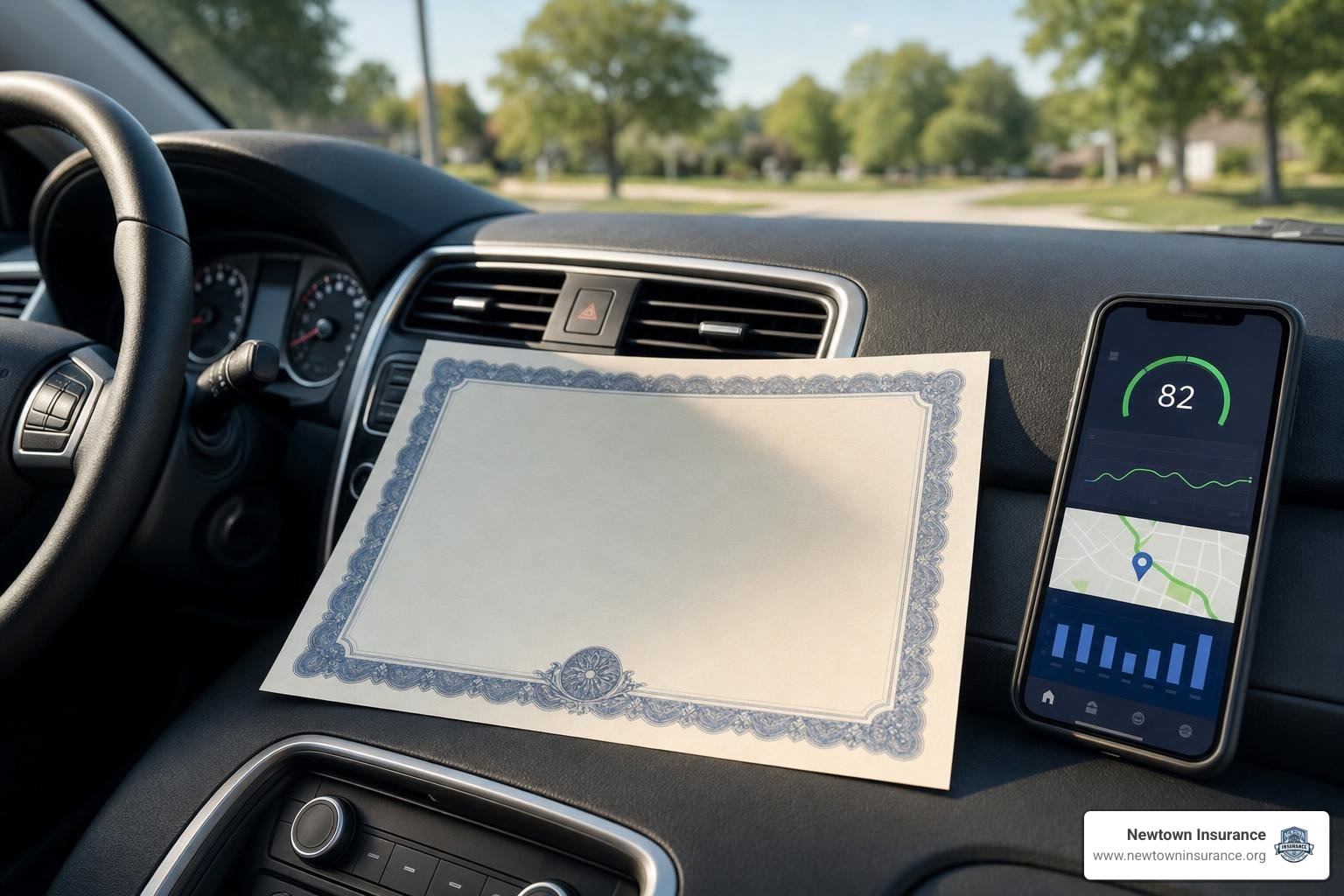
Investing in your driving habits can directly offset insurance surcharges. Most carriers offer measurable incentives for drivers who take concrete steps to prove they are safe behind the wheel.
- State-Approved Defensive Driving Courses: Enrolling in an approved 4- to 8-hour defensive driving or driver improvement course is one of the most reliable ways to earn a policy discount. Most insurance carriers offer premium reductions of 5% to 10% for up to three years upon submitting a completion certificate.
- Usage-Based Telematics Programs: Telematics applications and plug-in devices track real-time driving habits, such as braking force, acceleration speeds, daytime versus nighttime driving, and total mileage. High-risk drivers can use telematics programs to prove safe habits post-citation, frequently unlocking participation discounts of 5% to 10% initially and up to 30% upon policy renewal.
Explore our overview on safe driver insurance discounts to learn how educational certifications and tracking programs reduce annual premiums.
Shopping Comparison Tactics: How to Lower Your Car Insurance After a Ticket at Renewal

Carriers evaluate moving violations differently. While Carrier A might penalize a 15-mph speeding ticket with a 30% premium surcharge, Carrier B might apply only a 12% increase for the same infraction.
- The 30-Day Renewal Window: Start shopping for insurance replacement quotes approximately 30 to 45 days before your existing policy renewal date. This gives you sufficient time to compare coverage limits across carriers without facing a coverage lapse.
- Compare Identical Policy Limits: When shopping for quotes across different companies, always match your bodily injury liability, property damage liability, and medical coverage limits line-by-line to ensure an accurate price comparison.
- Leverage Independent Agency Access: Working with an independent agency allows you to compare multiple regional and national carriers simultaneously. This helps you identify which underwriters offer the most lenient surcharge schedules for drivers recovering from moving violations.
To see how standard rates compare across the Commonwealth, consult our review of the average cost of car insurance in PA, and refer to our compare insurance quotes complete guide for helpful shopping strategies.
Managing Surcharges, Points, and High-Risk Requirements
Recovering from traffic violations requires managing both state motor vehicle department records and internal insurance scoring databases. Understanding how these separate systems operate prevents unexpected premium spikes.
Understanding Insurance Points, DMV Demerits, and CLUE Reports
Many drivers mistakenly believe that state DMV demerit points and insurance points are identical. In reality, they are managed by two completely distinct systems:
- State DMV Demerit Points: State licensing agencies assign administrative points to your driver’s license to penalize dangerous driving. Accumulating too many points can result in mandatory administrative hearings, required driver exams, or temporary license suspensions.
- Insurance Underwriting Points: Insurance companies use internal, proprietary scoring systems to calculate financial risk and policy pricing. Clearing points from your state driver’s license does not automatically remove surcharges from your insurance policy, because underwriters look at the underlying citation on your motor vehicle record (MVR).
- LexisNexis Comprehensive Loss Underwriting Exchange (CLUE): The CLUE database tracks auto insurance loss histories and claims for up to seven years. Inaccuracies or incorrectly filed claims on your CLUE report can inflate your auto insurance premiums.
To ensure your consumer driving data is accurate:
- Request an official copy of your driving record from your state licensing authority to confirm exact violation dates and drop-off timelines.
- Pull your consumer disclosure report from LexisNexis to confirm there are no duplicate citations or inaccurate claims listed.
- If you identify reporting errors on your driving abstract or CLUE report, file a formal dispute with the agency or reporting bureau immediately. Under federal consumer protection guidelines, reporting bureaus are required to investigate disputed items within 30 days.
For official details regarding vehicle ownership regulations and state laws, review the Insurance Law FAQs – Commonwealth of Pennsylvania. You can also discover practical dispute strategies in How to Remove Insurance Points and Lower Your Premiums – LegalClarity.
Navigating SR-22 Filings and Mandatory Liability Coverage
Drivers convicted of major moving violations, such as driving without insurance, reckless operation, or driving under the influence, may be required by the state to provide proof of financial responsibility through an SR-22 certificate.
- What an SR-22 Is (and Is Not): An SR-22 is not an insurance policy. It is an official certificate filed directly by an insurance carrier with the state DMV verifying that you carry the minimum required liability insurance.
- Filing Fees vs. Premium Costs: The administrative fee to file an SR-22 is typically modest, ranging from $15 to $50. However, the underlying driving record that requires an SR-22 often places you in a high-risk insurance tier, which increases annual liability costs.
- Maintaining Continuous Coverage: If an insurance policy carrying an SR-22 certificate lapses or is cancelled for non-payment, the insurer is legally required to notify the state immediately via an SR-26 form. This triggers an immediate driver’s license suspension and resets the mandatory filing clock (typically three consecutive years).
To maintain financial protection while meeting state mandates, explore our guide to liability insurance PA. If you are managing post-incident recovery after a major citation, review the guidance in Your Rates Spiked After an Accident or DUI. Here’s How to Bring Them Back Down.
Frequently Asked Questions About Lowering Insurance After a Ticket
How much will a single speeding ticket increase my car insurance premium?
A single speeding ticket typically increases full-coverage auto insurance premiums by 20% to 30%, depending on your speed tier, prior driving history, and carrier underwriting practices. Minor infractions (1 to 15 mph over the limit) often result in modest increases of 10% to 15%, while major violations (25+ mph over the limit) or citations in school or construction zones can trigger surcharges of 30% or more.
When is the best time to switch auto insurance companies after receiving a ticket?
The best time to compare and switch auto insurance companies is approximately 30 to 45 days before your policy renewal date. Shopping during this window lets you compare alternative insurers before your existing carrier applies new surcharges. Another key time to re-shop is right after your ticket passes the three-year mark, when violations typically age out of standard underwriting lookback periods. For more advice on shopping strategies, visit How To Lower Car Insurance After Ticket? Save Money Now – CarsCareLab.
Does improving my credit score help offset insurance increases after a violation?
Yes. In states where credit-based insurance scores are legally permitted, maintaining an excellent credit rating can significantly reduce your base insurance premium. Actuarial models show a strong correlation between credit stability and claim frequency. Improving your credit score by 50 to 100 points can lower auto insurance premiums by 10% to 20%, which helps offset surcharges from a recent traffic ticket.
Conclusion
A traffic ticket can increase your auto insurance expenses, but it does not have to damage your household finances long term. By taking an approved defensive driving course, adjusting comprehensive and collision deductibles responsibly, optimizing multi-policy discounts, and shopping the open market before policy renewals, you can reduce surcharges and bring your premiums back under control.
At Newtown Insurance, our team provides tailored protection, smart savings, and transparent pricing. We work with clients across Newtown, Pennsylvania, helping you find competitive rates, apply available discounts, and protect what matters most.
Ready to lower your car insurance rates and explore your coverage options? Visit our services directory today to connect with our team and request a personalized policy review.