Why Insurance Tips and Tricks Matter in 2026
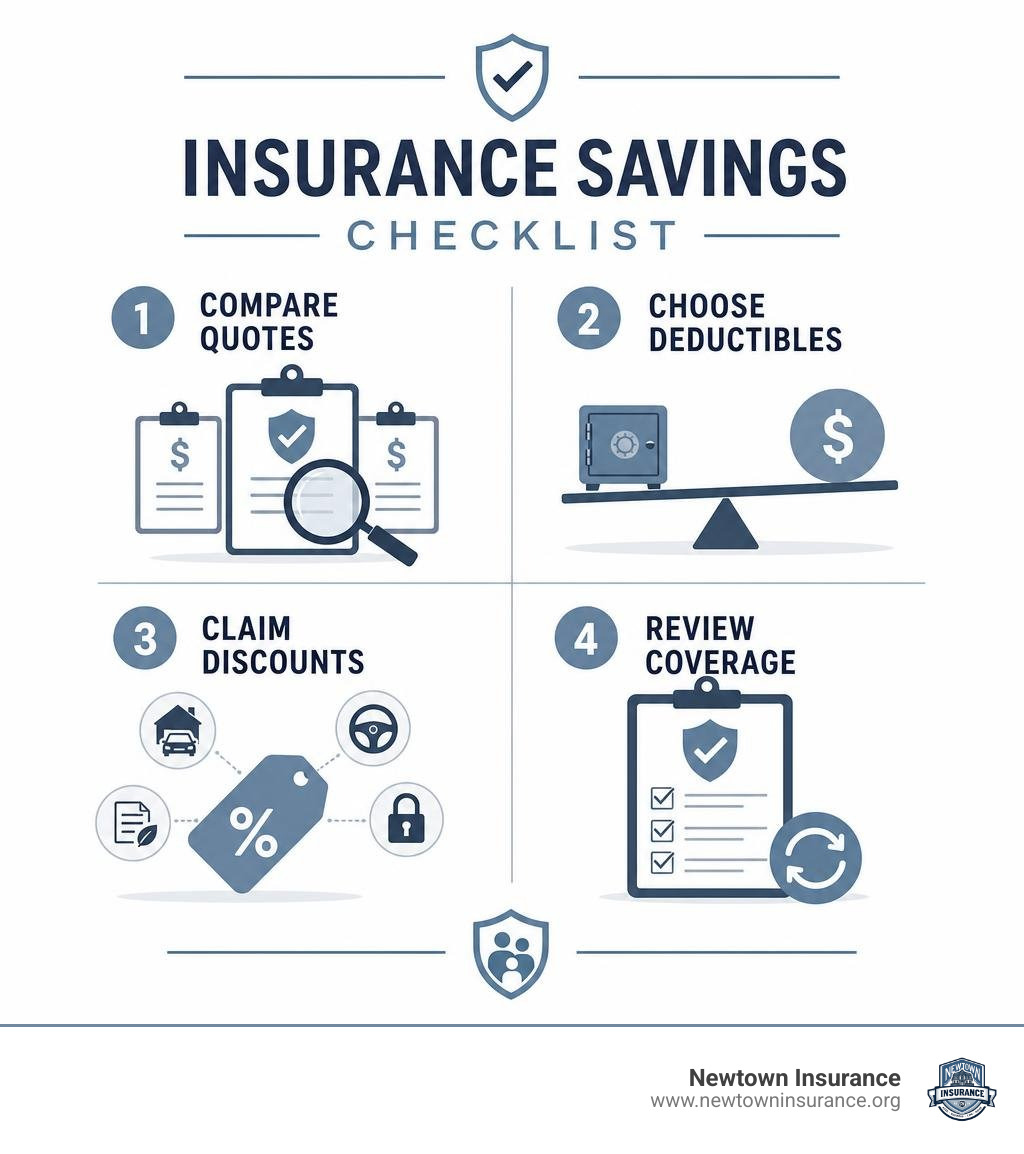
Insurance tips and tricks can help Pennsylvania households lower premiums without leaving major gaps in protection. Start with these high-impact moves:
- Compare equal coverage from at least three insurers before renewing.
- Raise deductibles only to an amount you can pay from savings after a loss.
- Ask about every available discount, including bundles, safe driving, low mileage, paperless billing, and security devices.
- Review liability limits, deductibles, and exclusions once a year and after major life changes.
- Avoid buying solely on price; a low premium can come with costly limits, exclusions, or claim hassles.
Insurance costs have climbed sharply. Full-coverage auto premiums rose 42% on average between 2022 and 2024, while home insurance quotes can differ by $1,000 or more for the same coverage. The good news: shoppers who changed auto insurers in recent years reported median annual savings of $461. The best savings usually come from better comparison, not from cutting protection you may need.
I’m Shawn Beihl of Newtown Insurance, with more than 15 years of experience across life, commercial property and casualty, health, disability, and benefits management. These Insurance tips and tricks draw on the same practical risk-review approach I use to help people spot exposure, control long-term costs, and make coverage choices with confidence.
Insurance tips and tricks terms to remember:
1. Essential Insurance Tips and Tricks to Lower Premiums Across All Policies

Managing household expenses in 2026 requires taking a close look at recurring bills, and insurance is often one of the largest items in the budget. Across auto, home, health, and life insurance, the average American household now spends nearly $10,000 per year—roughly $3,303 for home insurance, $1,993 for auto, $4,055 for health, and $575 for life and other supplemental protections. When rates climb, auto-renewing your policies without asking questions can cost you hundreds or even thousands of dollars over time.
To stop overpaying, start with broad Insurance Savings Tips that apply across almost every line of insurance. These strategies focus on how risk is priced, how administrative costs are calculated, and how carrier discount structures operate.
- Re-shop coverage regularly: Insurance companies update their actuarial risk models annually. A carrier that gave you the most competitive rate three years ago might now charge significantly more for the exact same risk profile.
- Streamline billing and policy administration: Carriers offer discounts for reducing administrative friction. Setting up paperless statements saves 4% to 10%, while automated recurring payments (EFT) add another 5% in direct savings.
- Consolidate policy anniversaries: Managing your auto, home, and umbrella renewal dates alongside a single trusted agent gives you a complete picture of your total exposure and prevents missing coverage gaps.
- Audit your policy details: Verify that your insurance records accurately reflect your current life situation. If you reduced your commute, moved closer to a fire hydrant, or paid off a car loan, your carrier needs to know.
Raising Deductibles and Right-Sizing Risk
Your policy deductible is the amount of money you agree to pay out-of-pocket before insurance payments kick in. Setting your deductible artificially low—like $200 or $250—forces the insurance carrier to cover minor fender benders and tiny home repairs. Because managing small claims carries high administrative costs, insurers charge significantly higher annual premiums for low deductibles.
By increasing your auto collision and comprehensive deductible from $200 to $500, you can lower those coverage costs by 15% to 30%. Taking that deductible from $500 up to $1,000 can slash auto premiums by an additional 20% to 25%. On home insurance policies, moving from a $500 deductible to a $1,500 or $2,500 deductible often produces similar double-digit percentage savings.
To execute this strategy safely, make sure you balance self-insurance with financial reality:
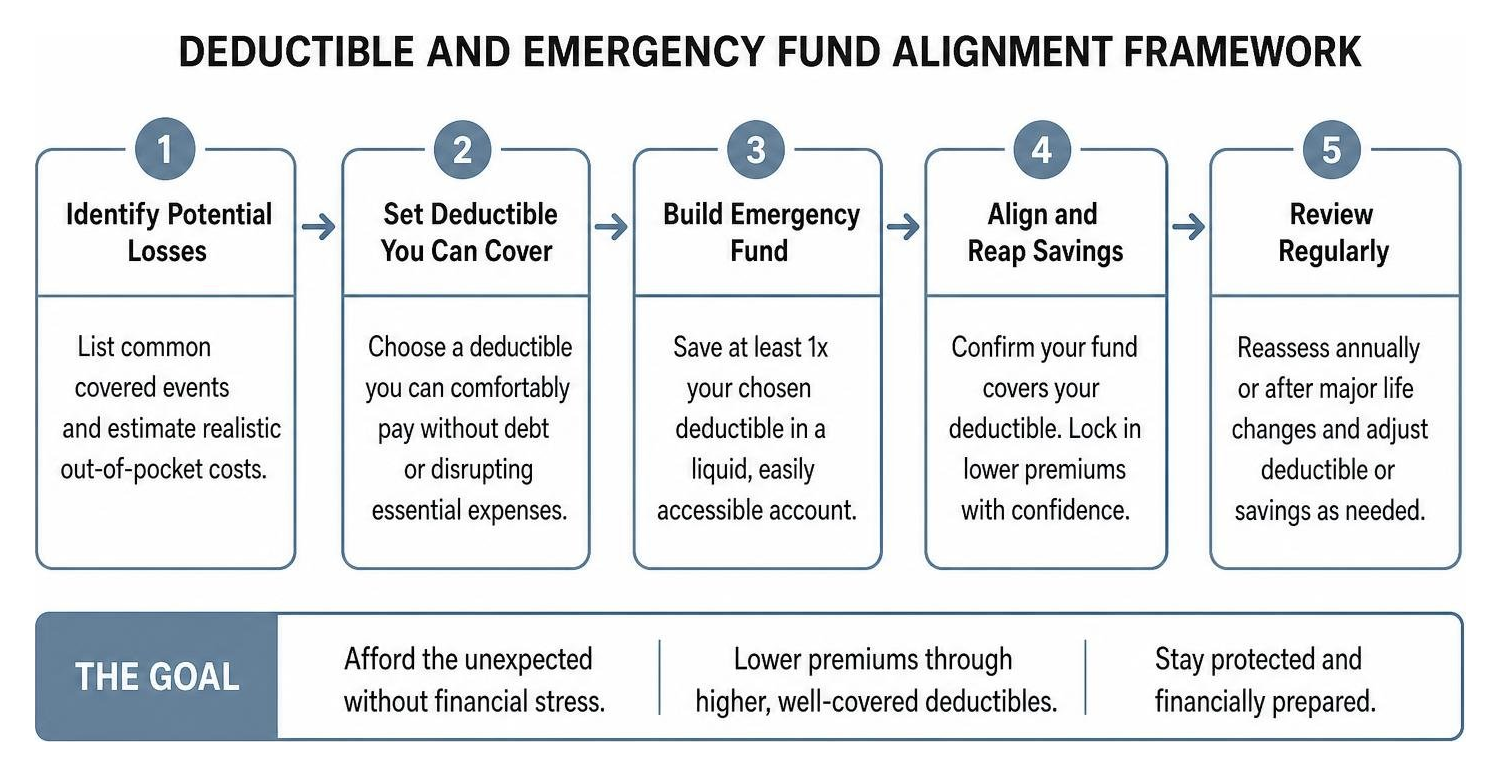
Reviewing these Tips for Saving Money on Insurance works best when you keep a dedicated emergency reserve in a liquid high-yield savings account. If you store $1,000 in savings, opting for a $1,000 deductible allows you to harvest ongoing premium discounts every single month while remaining fully protected against surprise out-of-pocket expenses.
Life Insurance Tips and Tricks for Long-Term Value
Life insurance provides crucial protection for your family’s future, but buying the wrong contract structure or procrastinating can result in bloated premiums. Because rates lock based on your entry age and current health status, acting sooner rather than later saves substantial money over the lifespan of a policy.
Here are proven strategies to secure maximum value on life insurance:
- Compare quotes across independent carriers: Pricing formulas vary wildly between life insurance providers. A term policy for a healthy 35-year-old might cost $25 per month at one company and $45 per month at another. In fact, comparing options across multiple top-rated insurers can cut premiums by 30% to 50%.
- Implement life insurance laddering: Instead of buying a single massive $1,000,000 30-year term policy, structure multiple smaller policies with staggered expiration dates. For example, you might purchase a $500,000 30-year policy for long-term income protection, a $300,000 20-year policy to cover your primary mortgage, and a $200,000 10-year policy for early child-rearing expenses. As major financial obligations shrink, policies naturally expire, keeping your overall costs closely tied to your actual financial exposure.
- Tap into professional association group rates: Many national organizations and professional associations (such as IEEE, ABA, AICPA, or local trade groups) offer group life insurance discounts. These group plans leverage pooled buying power to provide affordable rates without requiring complex underwriting.
- Agree to a full medical exam: Guaranteed-issue or “no-exam” life policies charge significantly higher rates to offset the risk of unvetted health conditions. Taking a quick paramedical exam—which includes basic blood pressure, cholesterol, and blood work—proves your good health to underwriters and unlocks top-tier pricing.
Optimizing Credit Scores and Payment Structures
In most states, including Pennsylvania, insurance companies use credit-based insurance scores to predict the likelihood of future claims. Actuarial data shows a direct link between credit stability and loss risk. As a result, maintaining a strong credit profile is one of the single most powerful levers for reducing personal insurance premiums.
To understand the legal and consumer rights surrounding insurance rating factors in our region, review guidance directly from the Learn About Insurance – Commonwealth of Pennsylvania official portal.
The pricing differences across credit tiers are dramatic:
- Excellent Credit (800+): Drivers with clean records and excellent credit pay roughly 49% less in premiums compared to those with fair credit.
- Fair Credit (580–669): Policyholders in this middle bracket face standard baseline rates, missing out on preferred risk tiers.
- Poor Credit (<580): Drivers with poor credit scores pay up to 115% more for the exact same auto insurance coverage than those in the top credit tier.
Improving your credit score by disputing credit report errors, keeping credit utilization below 30%, and paying bills on time elevates your insurance risk tier. Combine a stronger credit tier with an annual upfront payment—which eliminates monthly installment fees—and you can permanently lower your insurance costs.
2. Strategic Policy Bundling and Channel Selection

One of the easiest ways to secure immediate savings on personal insurance is policy bundling—purchasing both your home (or renters) insurance and auto insurance from the same insurance company. Carriers offer multi-policy discounts to encourage customer retention, and managing your policies under a single umbrella simplifies your personal recordkeeping.
Auto and Home Insurance Tips and Tricks for Maximum Savings
Combining auto and home insurance can unlock multi-policy savings averaging 18% to 25%, with top tier programs cutting annual expenses even further. However, bundling shouldn’t be treated as a set-it-and-forget-it decision.
To get the best return from your policy bundle:
- Verify unbundled pricing: Insurance carriers sometimes charge above-market rates on home insurance while offering steep discounts on auto insurance (or vice versa). Always request separate, unbundled quotes from competing specialized carriers every few years to confirm your bundle is truly saving you money.
- Review combined liability limits: Ensure your home and auto policies feature matching personal liability coverage baselines. Maintaining underlying liability limits of at least $300,000 on both auto and home policies creates a strong foundation if you ever decide to add a low-cost umbrella policy.
- Maximize specialized discounts: Make sure you are receiving every discount you qualify for across both properties. Explore our detailed guides on Home Insurance Discounts Ultimate Guide 2026 and Auto Insurance Discounts Guide 2026 to spot unapplied savings like new roof credits, safe driver tenure, or winter tire installation options.
Navigating Direct, Captive, Independent, and AI Buying Channels
How you buy insurance matters just as much as what you buy. Today’s marketplace features four primary distribution channels, each with distinct trade-offs:

Understanding these channels helps you shop more effectively:
- Direct-to-Consumer Carriers: These companies allow you to buy coverage online or over the phone without a local agent. While direct options eliminate middleman steps, you are limited strictly to that single carrier’s underwriting appetite and pricing structure.
- Captive Agents: Captive agents represent a single major brand. They offer deep knowledge of their company’s specific products and multi-policy bundles, but if that carrier raises rates in Pennsylvania, a captive agent cannot shop competing insurance markets for you.
- Independent Agents and Brokers: Independent agencies (like our team at Newtown Insurance) represent multiple insurance companies. An independent broker acts as an objective advisor, gathering quotes from dozens of top-rated regional and national carriers to match your exact risk profile. If one carrier raises rates, an independent agent can re-shop your policy without forcing you to change agencies.
- AI-Driven Platforms: Newer online comparison algorithms use artificial intelligence to scan policies and generate instant quotes. While AI tools excel at initial data gathering and policy summarization, AI chatbots cannot weigh complex coverage trade-offs, evaluate unique liability risks, or step in as your personal legal and claim advocate during a major loss. Use tech tools to start your research, but consult a licensed human expert before binding final coverage.
3. Auto Coverage Optimization: Balancing Protection and Cost
Auto insurance premiums experienced significant rate increases between 2022 and 2026, driven by rising vehicle repair costs, supply chain pressures, trade tariffs on imported vehicle components, and complex electronic sensor recalibrations. Navigating these higher costs requires a clear understanding of coverage design.
Understanding Insured Value, Premiums, and Coverage Options
When configuring auto insurance, drivers frequently confuse essential legal requirements with physical damage protections. Establishing appropriate liability protection must always take priority over covering physical damage to an older vehicle.
In Pennsylvania, carrying legal minimum liability limits (such as 15/30/5) leaves policyholders vulnerable to catastrophic financial loss. A severe multi-vehicle accident easily results in medical and property damages exceeding $100,000. If your policy limits fall short, injured parties can pursue your personal savings, home equity, and future wages. Financial advisors strongly recommend establishing a baseline liability structure of 100/300/100 ($100,000 bodily injury per person / $300,000 bodily injury per accident / $100,000 property damage).
To help clarify your options, review this side-by-side comparison of core auto coverages:
| Coverage Type | What It Covers | Mandatory or Optional? | Optimization Strategy |
|---|---|---|---|
| Bodily Injury & Property Damage Liability | Third-party medical costs, legal defense, and property repairs when you are at fault. | Mandatory by law in PA. | Match limits to your net worth; never settle for legal minimums. |
| Collision Coverage | Damage to your vehicle resulting from an impact with another vehicle or object. | Required if financed/leased; optional if owned outright. | Increase deductibles to $500–$1,000; drop coverage if car value is under 10x annual premium. |
| Comprehensive Coverage | Non-collision events: theft, vandalism, glass breakage, weather damage, and animal strikes. | Required if financed/leased; optional if owned outright. | Maintain a manageable deductible; comprehensive is relatively inexpensive risk protection. |
| Uninsured/Underinsured Motorist (UM/UIM) | Medical expenses and lost wages if hit by an uninsured or underinsured driver. | High recommended priority. | Purchase limits equal to your primary liability coverage limits. |
Understanding how much car insurance you actually need is critical to building a cost-effective policy. For a deeper breakdown of coverage limits, review How much car insurance coverage do you need? Key things to know | Fortune.
When evaluating physical damage coverage for older vehicles, use the “10% rule.” If the combined annual cost of collision and comprehensive premiums exceeds 10% of your car’s total market value, dropping physical damage coverage and redirecting those savings into an emergency fund is usually the smarter move.
Maximizing Safe Driving Rewards and Usage-Based Programs
Modern auto policies reward personal driving habits through telematics tracking and usage-based insurance (UBI) programs. By downloading a carrier smartphone app or plugging a small telematics device into your vehicle’s diagnostic port, you allow the insurer to evaluate real-world driving behaviors such as mileage, hard braking, rapid acceleration, time of day, and cornering speed.
- Telematics Savings: Safe drivers save an average of $120 to $150 per year by enrolling in telematics monitoring, with top-tier safe drivers earning policy discounts of up to 30%.
- Low-Mileage Discounts: If you work remotely or drive less than 7,500 to 10,000 miles per year, notify your insurance provider. Accurate low-mileage reporting yields annual savings around $115 per vehicle.
- Defensive Driving Credits: Pennsylvania drivers who complete an approved defensive driving course unlock state-mandated premium discounts—often saving $230 or more over a three-year window.
- No Claim Bonus Preservation: Maintaining a clean driving history without minor claims helps protect preferred carrier risk pricing. For actionable tips on protecting your driving record and maximizing safe-driver perks, explore The Frugal Driver’s Guide: Car Insurance Savings Tips.
4. Property Protection and Pitfall Avoidance Strategies
Protecting your home and personal property requires striking the right balance between premium savings and real-world claim protection. Home insurance rate hikes have made homeowners anxious to find savings, but cutting corner-stone policy endorsements can backfire during a major loss.
Home Fortification and Smart Claim Management
Insurance companies price home insurance policies based on the likelihood and potential severity of structural damage. Taking proactive steps to strengthen your home against storm, fire, and water loss significantly reduces your risk profile while unlocking valuable policy discounts.
To optimize your home policy:
- Install smart safety sensors: Equipping your residence with smart water leak detectors, automatic main water shut-off valves, connected smoke alarms, and monitored security systems generates instant insurance discounts.
- Fortify critical structural components: Upgrading your roof with impact-resistant shingles, installing hurricane clips, and upgrading plumbing systems lowers structural risk ratings.
- Avoid filing minor claims: Home insurance policies are designed to protect against catastrophic, financially damaging events—not minor home maintenance items. Submitting small claims (such as a $700 repair when you have a $500 deductible) yields little payout while triggering rate hikes or non-renewal notices that cost far more in the long run.
- Audit personal property endorsements: High-value personal belongings like jewelry, fine art, or specialized equipment are subject to low policy sub-limits unless individually scheduled. Reviewing your inventories ensures full protection without over-insuring everyday household goods.
For comprehensive strategies on lowering household fixed costs without sacrificing essential protections, review the detailed breakdown in the 2026 Insurance Cost Optimization Guide: How to Cut Premiums Without Losing Coverage – StackAndFire. Additionally, don’t forget to check our list of 6 Car Insurance Discounts You Should Ask About when auditing your multi-policy accounts.
Avoiding Common Pitfalls: Underinsurance and Fraud
The most expensive insurance policy you will ever buy is a cheap policy that fails to pay out when you need it most. Avoiding costly pitfalls requires staying proactive and watching out for common policy traps:
- The Loyalty Penalty: Staying with the same insurance carrier for a decade often works against you. Insurance companies use “price optimization” algorithms that gradually raise rates on long-term customers who appear unlikely to switch providers. Re-shopping your coverage every two to three years helps ensure you stay in a competitive pricing tier.
- Underinsuring Liability Assets: As your home equity, retirement accounts, and savings grow, standard auto and home liability limits ($300,000 or $500,000) may no longer fully protect you against personal lawsuits. Adding a $1,000,000 personal umbrella policy typically costs only $150 to $250 per year, providing a massive safety net for your accumulated assets.
- Falling for “Ghost” Policies and Insurance Fraud: Always verify that your agent and insurance company are fully licensed in the Commonwealth of Pennsylvania. Purchasing coverage from unverified online pop-ups can leave you holding counterfeit documentation that offers zero real financial protection.
- Failing to Document Personal Property: Maintain a digital video inventory of your household possessions stored safely in cloud storage. If a fire or severe storm strikes, detailed photo and video documentation speeds up claim processing and prevents settlement disputes.
For a broader breakdown of navigating insurance contracts, filing claims, and safeguarding your household assets, consult the comprehensive resource How to Get Insurance: Ultimate Beginner’s Guide to Coverage, Claims, and Savings in 2026.
Frequently Asked Questions about Insurance Savings
What is the difference between an insurance premium and Insured Declared Value (IDV)?
Your insurance premium is the recurring fee you pay (monthly or annually) to keep your insurance contract active.
Insured Declared Value (IDV)—commonly referred to in auto policies as the vehicle’s agreed market value or actual cash value (ACV)—represents the maximum payout limit the insurance company will reimburse in the event of a total loss or complete vehicle theft.
Setting a higher agreed value increases the insurer’s potential financial risk, resulting in a higher annual premium. Balancing an accurate market valuation with affordable premium payments ensures you aren’t overpaying to insure a depreciating asset.
How much can raising my deductible lower my annual insurance premium?
Increasing your deductible is one of the quickest ways to lower your recurring premium costs:
- Auto Insurance: Raising your collision and comprehensive deductible from $200 to $500 lowers those specific coverage costs by 15% to 30%. Moving your deductible from $500 to $1,000 drops total policy premiums by 20% to 25%.
- Homeowners Insurance: Increasing your property loss deductible from $500 to $1,000 or $2,500 can produce overall home insurance premium savings between 10% and 25%.
Before raising your deductible, make sure you keep that higher deductible amount saved in a liquid emergency bank account so you can comfortably handle out-of-pocket costs if a loss occurs.
When is the best time to switch insurance providers or re-shop coverage?
The ideal time to re-shop your insurance coverage is approximately 30 to 60 days before your current policy renewal date. Setting an annual calendar reminder allows you or your independent agent to gather competitive quotes without missing deadline windows.
Additionally, you should review and re-shop coverage whenever major life events happen, including:
- Getting married or divorced
- Purchasing a home or relocating to a new zip code
- Adding a teen driver to your household policy
- Paying off a vehicle loan or home mortgage
- Shifting to a remote work arrangement with lower driving mileage
You can legally switch insurance providers at any point during your policy term. If you switch mid-term, your previous carrier is required to refund any unearned, prepaid premiums on a prorated basis.
Conclusion
Finding the best value on personal insurance isn’t about buying the absolute cheapest policy on the market—it’s about optimizing your risk coverage so you never pay for unnecessary protections or get caught underinsured during a emergency. By adjusting deductibles, maintaining a strong credit profile, maximizing telematics discounts, and re-shopping your policies regularly, you can comfortably lower your annual insurance bills while preserving total peace of mind.
At Newtown Insurance, our team delivers tailored protection, smart savings, and fully transparent pricing for policyholders across Newtown, Pennsylvania, and the surrounding regions. As an independent insurance agency, we work for you—not the insurance companies. We compare options across top-rated regional and national carriers to ensure you get the exact protection you need without overpaying.
Ready to see how much you could save on your auto, home, or life insurance policies? Explore our complete line of insurance services and request your custom policy review today by visiting Newtown Insurance Services.