Why Personalized Insurance Coverage Is Replacing One-Size-Fits-All Plans
Personalized insurance coverage means your policy is built around your life – your risks, your assets, your budget – instead of a generic template designed for the average person.
Here’s a quick summary of what you need to know:
| What It Is | Why It Matters | How It Works |
|---|---|---|
| Coverage tailored to your individual needs | Avoids overpaying for things you don’t need | Uses data, AI, and telematics to match your real risk |
| Dynamic policies that adapt over time | Closes gaps that standard plans miss | Adjusts as your life, assets, or behavior changes |
| Customer-controlled options and pricing | Can save hundreds per year | Powered by apps, smart devices, and open data |
Most people in Pennsylvania are still paying for insurance plans that were designed for someone else. Standard policies bundle coverages together – some useful, many not – and charge everyone a similar rate regardless of how they actually live. The result? You either overpay, or you’re underprotected when something goes wrong.
In 2023, the U.S. set a record for billion-dollar climate-related disasters. That’s a sharp reminder that generic coverage can leave serious gaps at exactly the wrong moment.
The insurance industry has changed. Today, data, AI, and smarter tools make it possible to build a policy that fits you – not the average policyholder.
I’m Shawn Beihl of Newtown Insurance, and with over 15 years of specialty experience across life, commercial P&C, health, disability, and benefits management, I’ve built my practice around helping clients find personalized insurance coverage that actually reflects their real risks and financial goals. In the guide below, I’ll walk you through exactly how tailored insurance works, what it saves you, and how to get it right.
Understanding Personalized Insurance Coverage vs. Traditional Policies

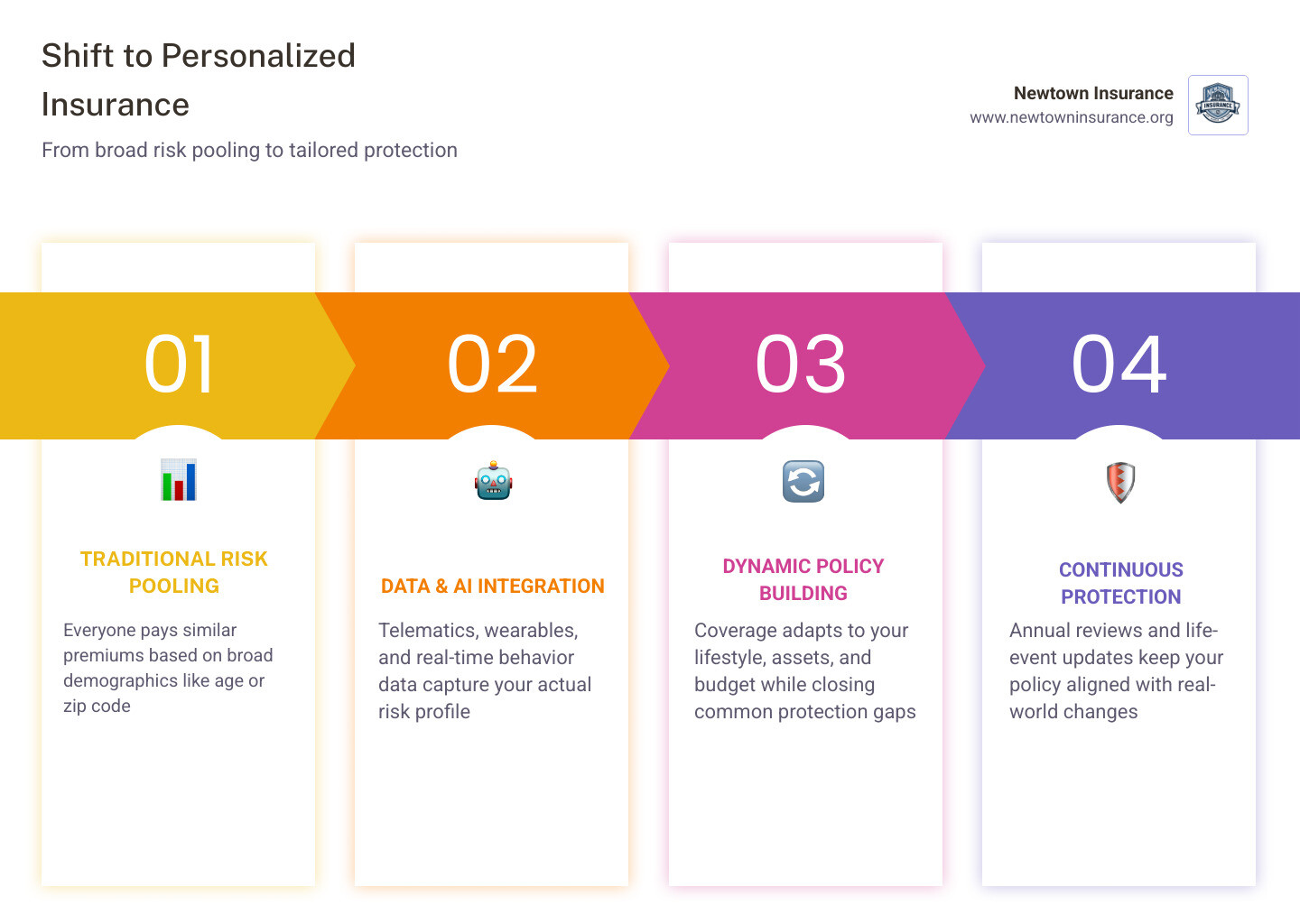
For decades, the insurance world operated on a concept called “risk pooling.” In this traditional model, insurers grouped thousands of people together into broad categories based on general demographics—like your age or your zip code. Everyone in that pool paid a similar premium to cover the “average” risk of the group.
The problem? You aren’t average.
Personalized insurance coverage flips this model on its head. Instead of looking at a group, it focuses on your individual lifestyle, real-time behavioral data, and contextual information. It’s the difference between buying a suit off a rack and having one custom-tailored to your exact measurements. When you choose a personalized insurance quote, you are ensuring that every dollar of your premium is working to protect a specific risk you actually face.
Why Personalized Insurance Coverage is the New Standard
In May 2026, we are seeing a massive shift toward customer-centric insurance. This isn’t just a trend; it’s a digital transformation. Modern consumers expect omnichannel engagement—meaning they want to manage their policies on their phones, get real-time updates, and receive advice that actually applies to their current situation.
Research shows that an incredible 95% of new customers are willing to share their personal data if it means they get a better, more customized service in exchange. This value exchange is the heartbeat of modern financial security. By sharing data, you gain a policy that evolves with you. If you’re ready to see the difference, you can get a Personalized Pennsylvania Insurance Quote today.
The Limitations of Generic Off-the-Shelf Plans
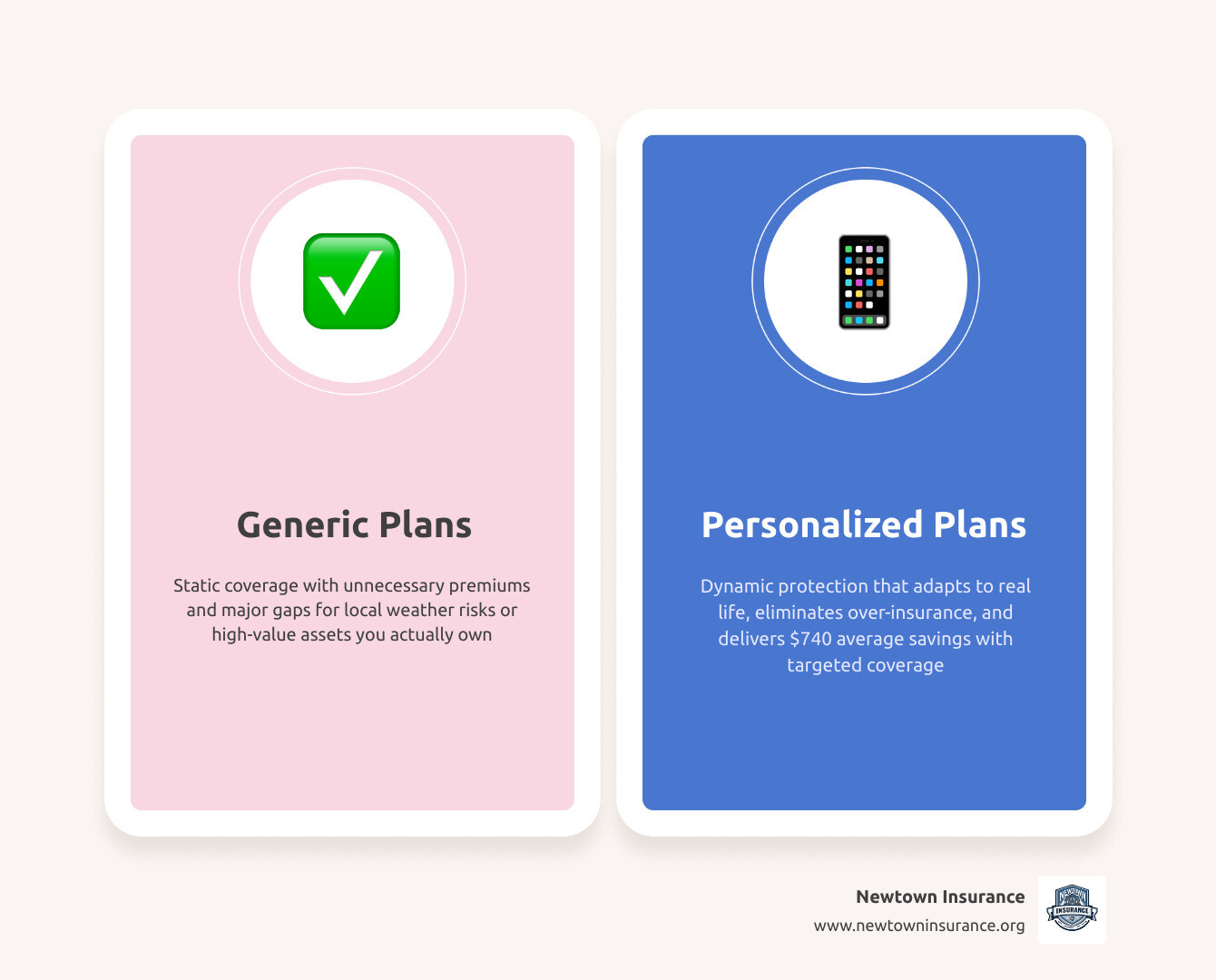
Generic plans often result in “underinsurance” for high-value assets and “over-insurance” for risks you don’t even have. For example, a standard homeowner’s policy in Pennsylvania might include coverage for things you don’t own, while simultaneously leaving a massive gap for specific weather risks relevant to our local area.
Generic policies are static—they sit in a drawer and don’t change until you remember to call your agent. This leads to unnecessary premiums and dangerous coverage gaps. To understand how to spot these gaps, check out our compare insurance quotes complete guide.
The Technology and Data Powering Tailored Protection

You might wonder, “How do they actually know what I need?” The answer lies in the “engine” behind modern insurance: AI decisioning, machine learning, and big data.
By using APIs (Application Programming Interfaces), insurance companies can now connect different data points to create a “path-for-one” experience. This technology allows for real-time updates on your coverage and claims.
Core Technologies Driving Personalization:
- The Cloud: Allows for massive data storage and instant access to policy info.
- AI & Machine Learning: Analyzes patterns to predict what coverage you’ll need next.
- Telematics: Sensors that provide real-world data on how you drive or protect your home.
- Predictive Analytics: Helps insurers offer lower rates to those with low-risk habits.
Telematics and IoT Integration
Telematics is perhaps the most visible part of personalized insurance coverage. These are the programs that monitor your driving behavior – speed, braking, and even the time of day you travel. Integration of telematics with safety initiatives has led to a 20% reduction in accident costs because it encourages safer habits.
Beyond the car, the Internet of Things (IoT) includes smart home devices (like water leak sensors) and wearables (like fitness trackers). These devices allow for proactive risk management. Instead of just paying a claim after your basement floods, a smart sensor can alert you to a leak early, preventing the damage entirely. This level of care is a hallmark of the best insurance customer support.
Open Insurance and Customer Data Access
“Open Insurance” is a concept that gives you the power over your own data. It allows for data transparency, meaning you can access your insurance data in real-time to make informed decisions.
We take ethical data use seriously. By following strict standards like GDPR and CCPA, we ensure your information is used only to improve your protection and lower your costs. It’s about using data to manage your policy in real-time, not just once a year.
Major Benefits and Real-World Success Stories
The benefits of moving away from standard plans are both financial and emotional. When your insurance fits your life, you stop worrying about the “what ifs.”
The Big Three Benefits:
- Cost Efficiency: You only pay for what you use. Some Pennsylvania residents save up to $740 per year just by switching to a plan that offers customized pricing.
- Flexibility: As your life changes—you get married, buy a vintage car, or start a business—your policy adapts.
- Improved Protection: By identifying unique risks (like the record-breaking climate disasters of 2023), personalized plans ensure you aren’t left holding the bill.
If you want to see how these benefits apply to your specific situation, contact our Newtown, PA insurance experts.
Personalized Auto and Home Protection
In auto insurance, usage-based models are king. If you don’t drive much, why pay the same as a long-distance commuter? Safe driver discounts and telematics can save you up to 30% on your premiums.
For homeowners, personalization means adding specific riders for high-end art, jewelry, or vintage car collections that standard policies might cap at a very low value. It also means adjusting for local risks. For instance, if you live in a part of Pennsylvania prone to specific types of storm damage, your policy can be “bolted” with extra flood or wind protection without requiring a whole new expensive plan.
Health and Life Insurance Customization
Personalized health and life insurance are no longer just about your age. Now, wellness incentives reward you for physical activity. Some plans use points from your fitness tracker to lower your premiums or provide status levels with extra benefits.
Modular riders also allow you to add specific protections, like targeted disability riders for a family’s primary earner. This is a vital part of estate planning and wealth transfer, ensuring that your life insurance proceeds are handled exactly as you intended. For more ways to keep your costs down, read our insurance savings tips.
How to Choose Your Personalized Insurance Coverage
Choosing the right personalized insurance coverage requires a move from a “transactional” mindset to a “consultative” one. You aren’t just buying a product; you are building a partnership.
Steps to Selecting the Right Plan:
- Assess Your Needs: Take an inventory of your assets and your daily habits.
- Research Providers: Look for those who use modern technology and have a reputation for transparency.
- Compare Options: Don’t just look at the premium; look at what is actually covered.
- Consult an Expert: A local professional can spot risks you might miss.
- Review Regularly: Your insurance should be updated at least once a year or after any major life event.
Assessing Your Unique Risk Profile
A deep risk profile evaluation looks at more than just what you own. It looks at your future goals. We help you with deductible optimization—finding the “sweet spot” where your monthly premium is low, but your out-of-pocket cost in an emergency is still affordable. We also look at rider selection to ensure your most valuable items are fully covered.
Working with Local Pennsylvania Experts
Local expertise matters because Pennsylvania has its own unique market conditions, legal requirements, and weather patterns. A boutique advisory approach means we don’t just sell you a policy and disappear. We provide continuous monitoring to ensure that as Pennsylvania laws or climate risks change, your coverage stays ahead of the curve.
Frequently Asked Questions about Custom Insurance
What is the main difference between personalized and traditional insurance?
Traditional insurance uses “risk pooling,” where your rates are based on a large group of people. Personalized insurance coverage uses real-time data to create a “path-for-one” experience. It focuses on your individual behavior and specific assets, leading to more customized engagement and often lower costs.
Will sharing my data actually lower my insurance premiums?
Yes! In many cases, it does. For example, customers switching to a “Personal Price Plan” can save an average of $740 per year. By showing safe behavior through telematics or smart home devices, you prove to the insurer that you are a lower risk, which results in direct savings.
How often should I update my personalized insurance plan?
You should review your plan at least once a year. However, you should also update it whenever a major life event occurs—such as buying a new car, renovating your home, getting married, or acquiring high-value art. The beauty of personalized plans is their policy flexibility; they are designed to grow with you.
Conclusion
At Newtown Insurance, we believe that you shouldn’t have to settle for a policy that wasn’t made for you. Our mission is to provide Pennsylvania residents with tailored protection, smart savings, and transparent pricing. By moving away from one-size-fits-all plans and embracing personalized insurance coverage, you gain more than just a policy—you gain financial peace of mind.
Don’t leave your future to chance or generic templates. Secure your tailored protection today and experience the difference that a customer-first, data-driven approach can make for your family or business.