How to Find Affordable Insurance for New Drivers
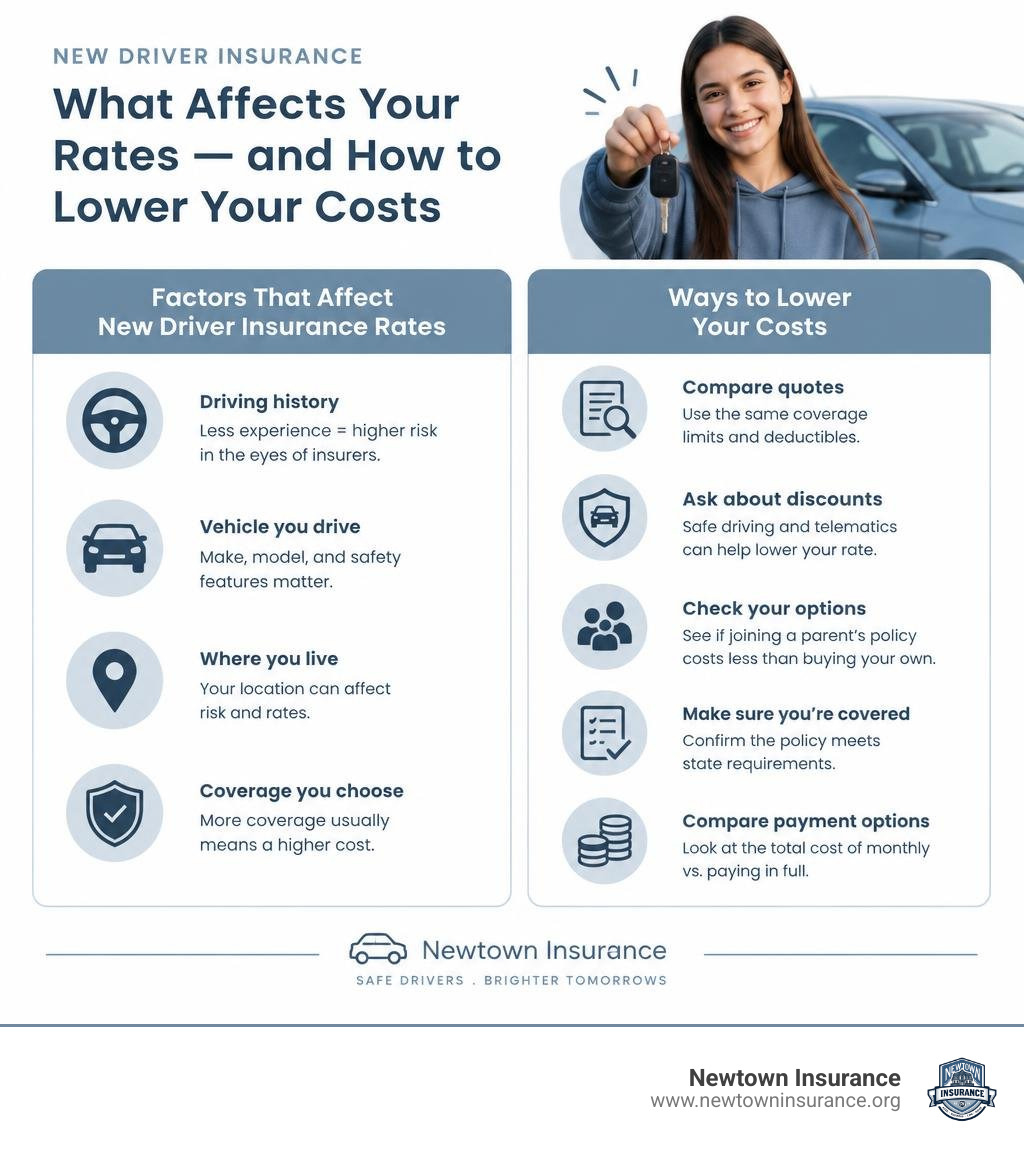
To find affordable coverage in Pennsylvania, compare quotes using the same coverage limits and deductibles. Ask about discounts for safe driving or telematics, and check whether joining a parent’s policy costs less than buying your own. Before you choose, confirm the policy meets state requirements and compare the total cost of paying monthly versus paying in full.
New drivers often pay more because insurers have little driving history to judge their risk. The car you drive, where you live, and the coverage you choose also affect your quote.
I’m Shawn Beihl, and I’ve spent over 15 years in specialty insurance, including property and casualty and accident coverage. Insurance for new drivers can be hard to price at first, so I’ll use that experience to explain what drives the cost and where you can save.
Insurance for new drivers terms simplified:
- auto insurance savings tips
- car insurance savings tips
- how to lower your car insurance after a ticket
Why Insurance for New Drivers Costs So Much
Getting behind the wheel for the first time brings an incredible sense of freedom, but opening that first premium quote can feel like hitting a brick wall. It is common for novice motorists holding a license for under a year to see baseline premiums reaching well over £1,800 annually. When looking at regional averages, drivers under 21 frequently encounter steep pricing across the board.
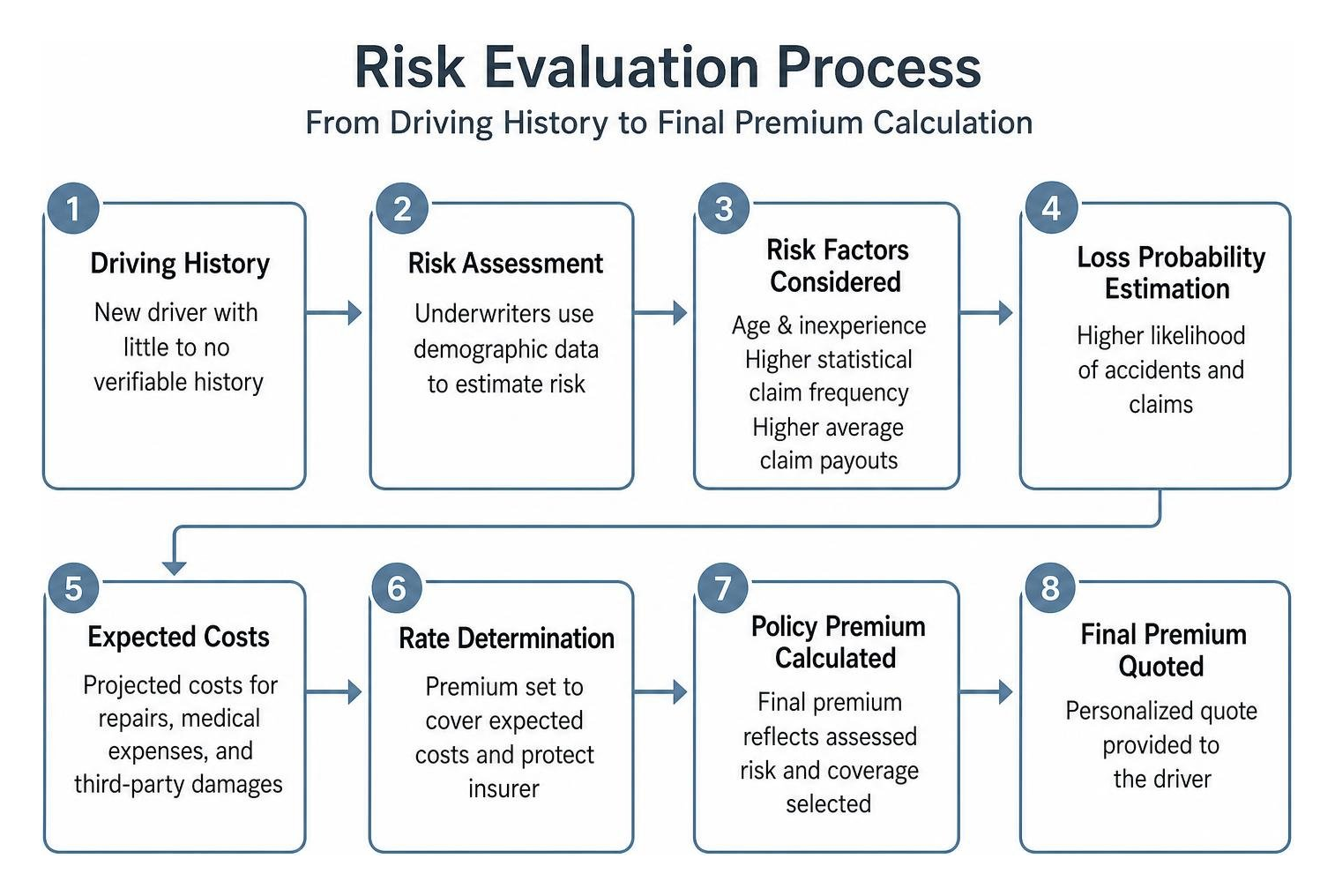
Underwriters do not set these rates out of spite. Insurance pricing relies entirely on mathematical loss ratios and risk probabilities. When a driver has zero verifiable history behind the wheel, underwriters must calculate rates based on the broader demographic group.
Younger and beginner demographics have higher statistical claim frequencies and higher average claim payouts. Road safety research highlights that roughly one-fifth of all fatal or serious road collisions involve motorists between the ages of 17 and 24. For a clear look at regulatory frameworks, review the teen driver guidelines published by insurance departments.
Statistical Collision Risk Among Beginners
The core driver behind high rates is hazard perception and reaction time under pressure. Beginner drivers require more time to recognize dynamic roadway hazards—such as an abrupt brake light three cars ahead or a pedestrian stepping off a curb in low visibility.
Coupled with a natural tendency to underestimate braking distances in poor weather, novice motorists find themselves in preventable accidents at disproportionately higher rates. Insurers protect their balance sheets by pricing policies to cover these anticipated repair bills, medical expenses, and third-party damages. Those looking to keep baseline costs manageable can review our budget-conscious coverage strategies.
The Impact of Inexperience on Premium Pricing
In the insurance world, inexperience is treated as an unknown liability. An experienced driver with a decade of clean driving demonstrates tangible proof of defensive habits. A newly licensed motorist, whether 17 or 27, has no such track record.
Without historical driving data, insurers apply standard actuarial tables where loss probabilities sit at their highest baseline. Every month you spend driving safely chips away at that perceived risk, gradually establishing the verifiable history required to unlock preferred rating tiers.
Navigating Policy Types and Coverage Essentials
Selecting the right level of coverage involves balancing out-of-pocket exposure against regular premium costs. Carrying only the legal baseline might keep your upfront bill slightly lower, but it can leave you financially exposed if your own vehicle is damaged or totaled.
| Coverage Level | Third-Party Bodily Injury & Property | Fire & Theft Protection | Damage to Your Own Vehicle | Best Suited For |
|---|---|---|---|---|
| Comprehensive | Included | Included | Included | Most beginner drivers, financed vehicles, newer cars |
| Third-Party, Fire & Theft | Included | Included | Excluded | Older cars with low market value |
| Third-Party Only | Included | Excluded | Excluded | Minimum legal requirement, very low-value vehicles |
Counterintuitively, comprehensive coverage is often priced lower than third-party-only policies for beginners. High-risk drivers often gravitate toward minimum coverage options, skewing the claims data for third-party tiers and driving up their comparative pricing. Exploring our comprehensive car insurance breakdown will help you evaluate which tier suits your situation.
Core Coverage Options in Insurance for New Drivers
Understanding the primary coverage components ensures you never pay for duplicate protection while maintaining adequate financial defense:
- Third-Party Liability: Covers bodily injuries, medical bills, and property damage caused to other motorists, pedestrians, or passengers in an at-fault accident.
- Collision Coverage: Pays for repairs to your vehicle after a crash with another vehicle or stationary object, regardless of who caused it.
- Comprehensive Coverage: Covers non-collision incidents, such as vehicle theft, storm damage, falling branches, vandalism, or windshield cracking.
Learner and Provisional Driver Policies
Before passing the final road exam, provisional drivers need coverage while practicing in private vehicles alongside professional driving school lessons. Dedicated provisional policies allow learners to practice in family vehicles without risking the primary policyholder’s accumulated discounts.
These flexible policies can be purchased for short periods—ranging from daily permits to multi-month plans—providing full coverage during practice sessions and the official driving test.
Evaluating Policy Add-Ons
Insurers offer optional policy endorsements during checkout. While some provide essential peace of mind, others add unnecessary costs to a tight budget:
- Breakdown Assistance: Roadside towing and battery jump-starts. Excellent value if you drive an older, high-mileage vehicle.
- Motor Legal Protection: Covers legal fees when recovering uninsured losses (like lost wages or excess fees) after a non-fault accident.
- Windscreen Protection: Replaces chipped or shattered glass without counting as a full claim against your policy history.
- Courtesy Car Cover: Provides a temporary vehicle while yours undergoes accident repairs.
- Misfuelling Protection: Covers tank draining and engine repairs if you accidentally put the wrong fuel type into your vehicle.
Step-by-Step Strategies to Lower Your First Premium
Securing an affordable premium does not happen by accident; it requires a structured approach before you buy a vehicle or submit personal details. Implementing our actionable auto rate reductions can save you hundreds of dollars right away.
Selecting Lower-Risk Vehicles
The make and model you choose directly dictate your baseline rate. Vehicles are categorized into distinct insurance groups (ranging from group 1 for the cheapest to group 50 for elite performance models) based on engine size, acceleration speed, parts availability, and body repair complexity.
For instance, younger motorists often pay upwards of £3,084 annually to insure high-performance sedans from premium brands, compared to roughly £1,341 for an entry-level compact hatchback. Opting for a standard 1.0L to 1.2L engine with built-in electronic immobilizers keeps risk profiles low and parts costs affordable.
Telematics and Connected Insurance for New Drivers
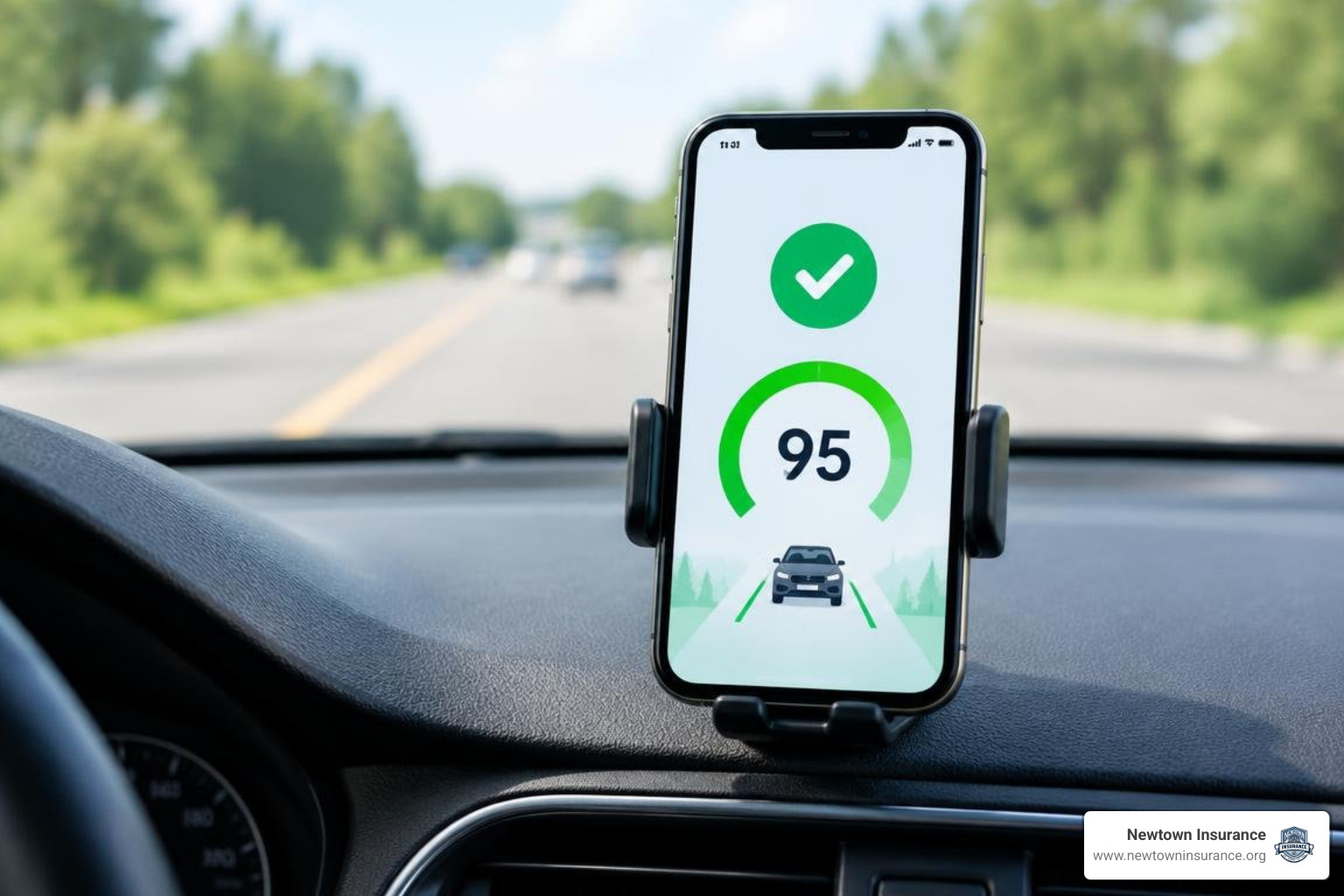
Telematics—commonly referred to as black box insurance—tracks real-time driving behavior using an installed device or a smartphone application. Rather than judging you purely on demographic risk, insurers evaluate your actual performance:
- Braking Force: Smooth, gradual deceleration signals defensive driving.
- Cornering Stability: Taking turns at controlled speeds shows vehicle control.
- Speed Compliance: Consistently staying within posted limits keeps risk scores high.
- Driving Hours: Avoiding late-night driving (typically between midnight and 5:00 AM) reduces exposure to severe night collisions.
Safe habits tracked by telematics can earn significant policy discounts at renewal. Our safe driver discount qualifications explain how consistent road habits translate into lower renewal premiums.
Named Drivers vs Fronting Pitfalls
Adding an experienced, claims-free secondary driver—such as a parent or older relative—to your policy can reduce first-time coverage costs by around £438. Underwriters calculate that the vehicle will spend a portion of its road time under the control of an experienced motorist, reducing overall risk exposure.
However, you must avoid fronting. Fronting is an illegal practice where an experienced parent falsely claims to be the primary driver of a car that is mainly operated by a beginner. If a claim occurs, investigators will verify who drives the vehicle daily. Uncovering fraud results in immediate policy cancellation, unpaid claims, and potential criminal prosecution.
Quote Timing and Payment Schedules
Timing your insurance purchase makes a substantial difference in price. Insurers track consumer behavior and view last-minute buyers as higher-risk planners.
Data shows that buying a policy 20 to 26 days before your start date can cut costs substantially. A policy costing £708 on renewal day drops to around £374 when secured 25 days early—saving you roughly £334 just for planning ahead.
Additionally, pay upfront annually whenever possible. Splitting premiums into 12 monthly installments introduces financing interest rates and administrative fees that raise total annual costs by 10% to 20%. If monthly payments are essential, review our structured payment options to choose the most cost-effective schedule.
Alternative Options When Rates Remain Out of Reach
If your initial quotes still exceed your budget, exploring specialized insurance avenues and policy adjustments can bridge the gap.

Begin by comparing multiple vehicle quotes across independent brokers and regional providers. Specialist brokers often work with niche underwriting pools that cater specifically to young drivers, offering rates not found on standard comparison websites.
Adjusting Deductibles and Seeking Niche Discounts
Increasing your voluntary deductible (the out-of-pocket amount you agree to pay toward repairs before coverage steps in) lowers your overall premium. Ensure your chosen deductible remains an amount you can easily afford in an emergency.
Take advantage of every available rating discount:
- Academic Achievement: Full-time high school and college students maintaining a ‘B’ average (3.0 GPA) or higher qualify for student discount opportunities.
- Anti-Theft Devices: Installing factory-approved alarms, steering locks, and GPS tracking hardware earns security credits.
- Low Mileage Limits: Setting a realistic, lower annual mileage cap (for example, 6,000 miles instead of 12,000) reduces roadway exposure and cuts premiums.
Building a Long-Term No-Claims Discount
The most reliable way to lower policy costs permanently is building a No-Claims Discount (NCD). For every 12-month policy term completed without filing an at-fault claim, insurers reward you with a tiered percentage discount.
Drivers accumulating between 1 and 3 consecutive claim-free years save an average of £794 annually compared to those with zero bonus history. As your track record grows, your rates will stabilize at significantly more affordable levels.
Frequently Asked Questions About Beginner Auto Policies
How long does high-risk pricing last for newly licensed drivers?
High-risk pricing generally spans your first two consecutive years of licensed driving, especially between the ages of 17 and 24. Once you reach age 25 and maintain a clean driving record with two or more years of claim-free history, premiums drop considerably.
Does taking an advanced driving course guarantee a lower premium?
Completing certified defensive driving courses (such as Pass Plus or recognized state programs) demonstrates improved vehicle handling and hazard awareness. While not all insurance companies offer discounts for these programs, many provide reductions between 5% and 15% for certified graduates.
Can adding a parent to my policy invalidate my coverage?
No, as long as the policy details are accurate. Adding a parent as an occasional secondary driver is completely legal and often earns a discount. The policy only becomes invalid if you falsely list the parent as the main daily driver when the beginner operates the vehicle most of the time.
Conclusion
Securing affordable auto insurance as a newly licensed driver comes down to proactive planning. By choosing a lower-insurance-group car, installing telematics, scheduling quotes roughly 25 days early, and maintaining clean driving habits, you can cut hundreds of dollars from your first-year premium while keeping high-quality protection intact.
At Newtown Insurance, our team helps new motorists and families throughout Pennsylvania find tailored, cost-effective coverage with zero hidden fees. Explore our full range of services on our service portal or contact our Newtown office today for a custom quote built around your needs.