How to Find the Cheapest Full Coverage Auto Insurance in Pennsylvania
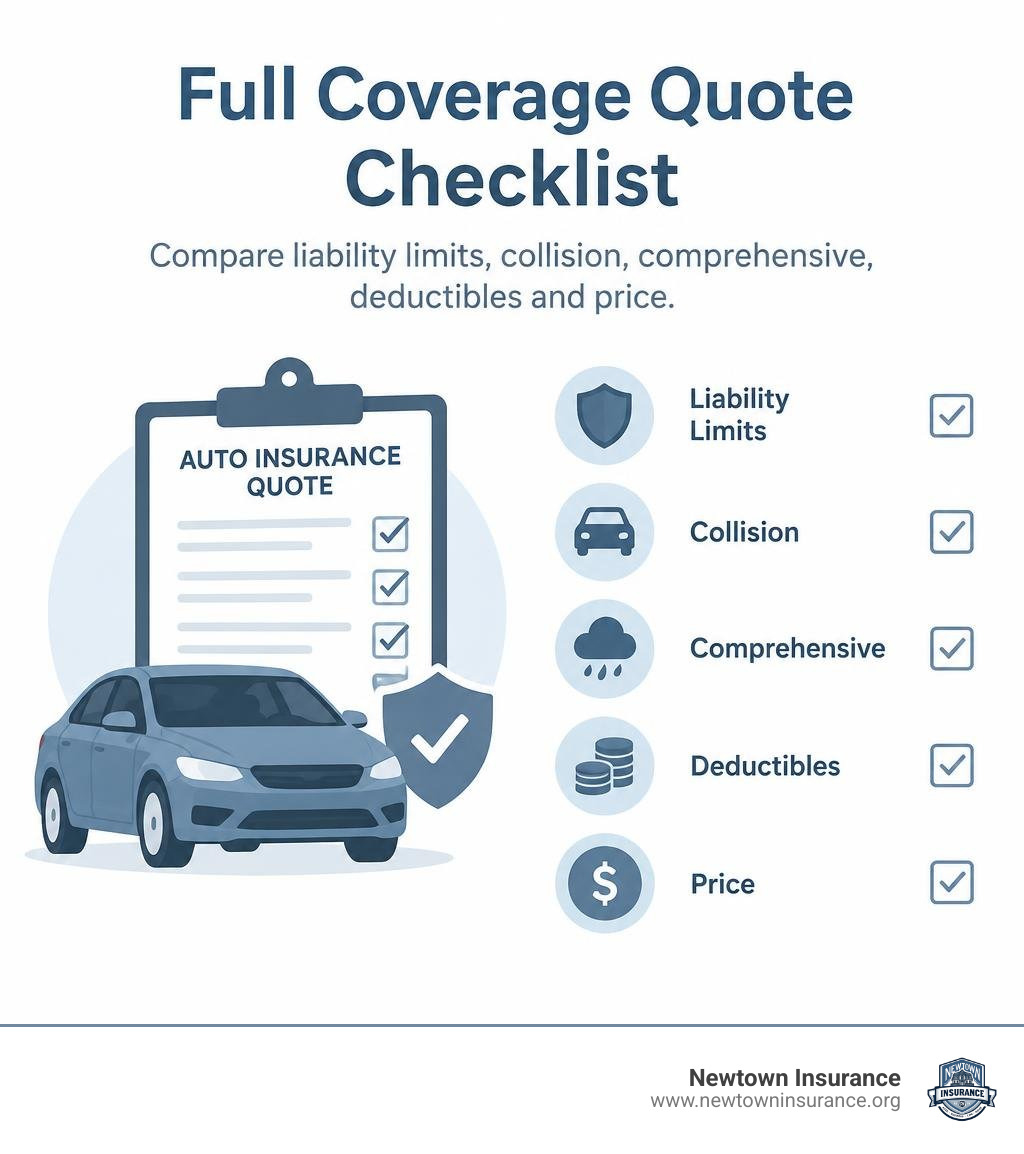
The cheapest full coverage auto insurance is the lowest-priced policy that meets your coverage needs. To find it, compare quotes with the same liability limits, collision and comprehensive coverage, and deductibles. A cheaper quote may leave you paying more after a claim if it has a higher deductible or less protection.
Your driving record, vehicle, and location can all affect your rate. We’ll show you what to compare so you can spot real savings, not just a low monthly price.
I’m Shawn Beihl. With more than 15 years in specialty insurance, I help make searches for auto insurance cheapest full coverage easier to understand without losing sight of protection.
Auto insurance cheapest full coverage terms to remember:
- auto insurance glass coverage
- average cost of commercial vehicle insurance
- best commercial vehicle insurance company
What Defines Full Coverage and How Rates Are Determined
When drivers search for affordable protection, “full coverage” is often used as a catch-all term. In standard industry practice, full coverage is not a single, monolithic policy sold in a box. Instead, it refers to a package that pairs state-mandated liability coverage with first-party physical damage protection: comprehensive and collision insurance.
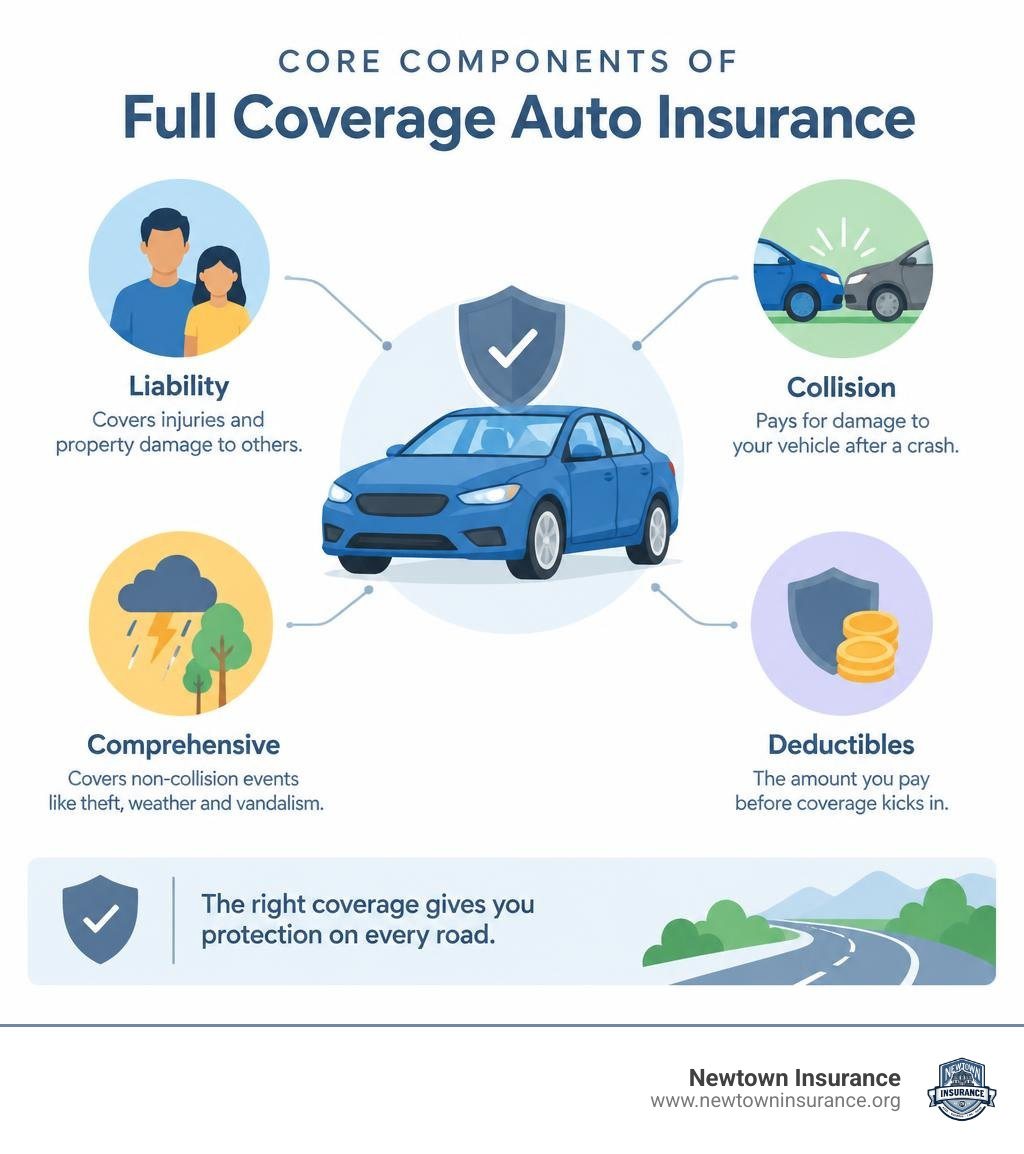
While minimum liability simply pays for bodily injuries or property damage you cause to other people, physical damage coverage protects your own vehicle when unexpected incidents occur. Reviewing comprehensive full coverage guidance helps clarify how these distinct layers work in tandem to insulate your personal finances.
| Coverage Element | State Minimum Liability | Full Coverage Policy |
|---|---|---|
| Third-Party Bodily Injury | Required by law | Included (typically with higher limits) |
| Third-Party Property Damage | Required by law | Included |
| Collision (Impact Repairs) | Excluded | Included (subject to deductible) |
| Comprehensive (Non-Collision Perils) | Excluded | Included (subject to deductible) |
| Lender / Lease Compliance | Inadequate | Fully Compliant |
For additional foundational guidance on how state frameworks mandate these protections, consult A Consumer’s Guide to Auto Insurance.
Understanding Core Coverages and Deductibles
To understand your premium, you must dissect the three core pillars of full coverage:
- Bodily Injury and Property Damage Liability: Covers medical bills, rehabilitation, legal defense, and structural repairs for third parties when you are at fault in an accident.
- Collision Coverage: Reimburses you for damage to your car resulting from a collision with another vehicle, a tree, a guardrail, or a rollover, regardless of who caused the incident.
- Comprehensive Coverage: Protects against physical damage resulting from non-collision perils, such as theft, vandalism, falling objects, hail, flood, or collisions with animals.
When setting up comprehensive and collision insurance, you choose a deductible—the out-of-pocket amount you pay before coverage kicks in. Choosing a $1,000 deductible rather than a $250 deductible shifts more initial repair responsibility to you, which lowers your ongoing monthly premium.
In Pennsylvania, you must also select between limited tort and full tort options; exploring full tort coverage details shows how this choice impacts your right to seek financial compensation for pain and suffering following a non-economic injury.
Key Factors Influencing Annual Premiums
Underwriters evaluate several risk variables when pricing full coverage:
- Driving History: A clean record with zero moving violations yields the most favorable baseline pricing.
- Annual Mileage: Drivers with shorter commutes generate fewer road exposures, lowering their overall claim risk.
- Credit-Based Insurance Scores: Where permitted by law, actuarial models incorporate credit histories to forecast claim frequency.
- Vehicle Characteristics: Repair cost indices, safety ratings, and anti-theft systems directly influence comprehensive and collision rates.
- Local Density and Environment: Regional congestion, severe weather trends, and vehicle theft statistics shape neighborhood base rates.
Additionally, keeping vital safety nets intact—such as reviewing uninsured motorist protection considerations—ensures that cost-cutting measures never leave you vulnerable to drivers operating without required coverage.
Finding Auto Insurance Cheapest Full Coverage Rates Nationwide
Finding value requires looking beyond high-level advertisements and reviewing actual rate distributions across coverage tiers.
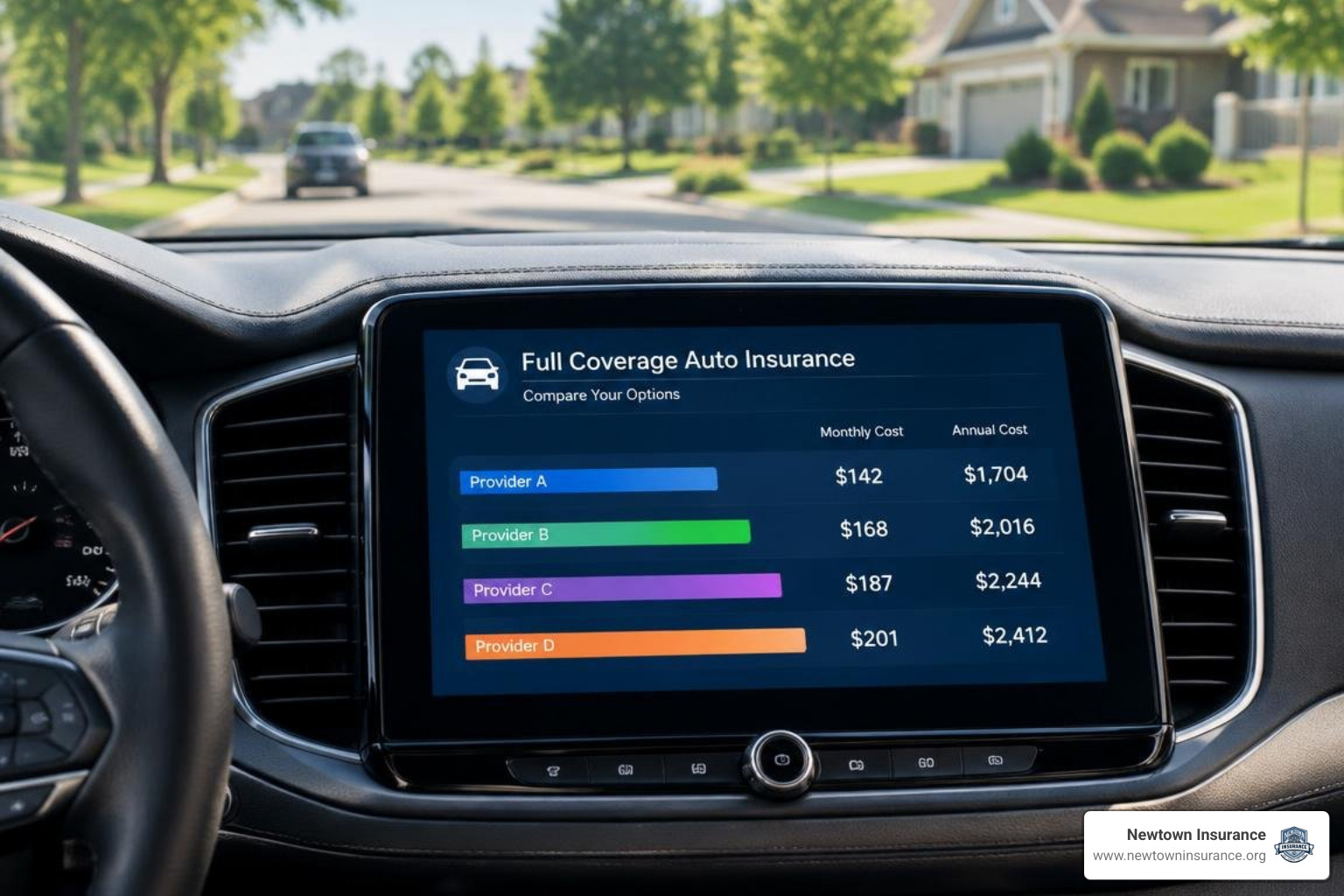
Full coverage costs vary based on risk tier and provider type:
| Provider / Risk Category | Average Monthly Rate | Average Annual Rate |
|---|---|---|
| Leading Value National Insurers | $125 – $135 | $1,500 – $1,620 |
| Regional Specialty Carriers | $103 – $134 | $1,236 – $1,608 |
| Standard Baseline Market Average | $175 – $210 | $2,100 – $2,520 |
| High-Risk Profile (Post-Incident) | $163 – $225+ | $1,956 – $2,700+ |
National vs. Regional Coverage Benchmarks
National carriers operate expansive digital portals and nationwide marketing networks, but regional carriers often provide competitive full coverage pricing within their specific operational states. Regional carriers benefit from localized underwriting that reflects exact traffic patterns and weather trends.
Reviewing a regional car insurance rate guide reveals that independent regional insurers frequently maintain lower overhead costs, translating directly into competitive annual premiums for localized drivers.
Geographic and State-by-State Rate Variations
Rates differ significantly from state to state and county to county. For example, rural Midwestern markets often enjoy baseline rates below $110 per month, while dense coastal metro hubs frequently exceed $250 per month for identical policy limits. These disparities stem from state liability mandates, litigation patterns, and regional auto repair labor rates.
Drivers evaluating their local market can review statewide average cost factors to understand how municipal traffic volume and localized claim volume shape their monthly rates.
How to Secure the Cheapest Full Coverage Auto Insurance by Driver Profile
Actuarial models categorize drivers by life stage and credit history. Applying targeted strategies to your specific demographic profile helps secure competitive rates.

Affordable Full Coverage for Young Drivers and Students
Young drivers face higher baseline premiums due to statistical accident frequencies. However, families can secure manageable rates through smart policy structuring:
- Family Policy Inclusion: Keeping a teen on a parent’s multi-vehicle policy is consistently more economical than purchasing a standalone policy.
- Good Student Credits: Maintaining a “B” average (3.0 GPA) or higher unlocks academic discounts that can reduce rates by 10% to 15%.
- Defensive Driving Certifications: Completing approved driver education programs helps lower youth risk surcharges.
Exploring student driver insurance savings highlights actionable avenues for younger motorists to establish a clean record without overpaying.
Senior Driver Rates and Low-Mileage Savings Options
Drivers over age 60 often enjoy competitive pricing, with average mature full coverage policies starting around $141 per month. Because retirement often shortens daily commutes, mature motorists can take advantage of specialized savings options:
- Pay-Per-Mile Programs: Insurers monitor actual vehicle mileage, applying base monthly rates plus a small per-mile fee.
- Mature Driver Improvement Courses: State-approved voluntary refresher courses often grant a mandatory three-year policy discount.
- Low-Mileage Tiering: Driving fewer than 7,500 miles annually can qualify you for reduced pleasure-use rating tiers.
Options for Drivers with Poor Credit Histories
In states that permit credit-based insurance scoring, poor credit can increase full coverage premiums. Underwriters correlate credit stability with long-term claim frequency, sometimes doubling premiums for lower score tiers.
Drivers facing these surcharges can still find affordable protection:
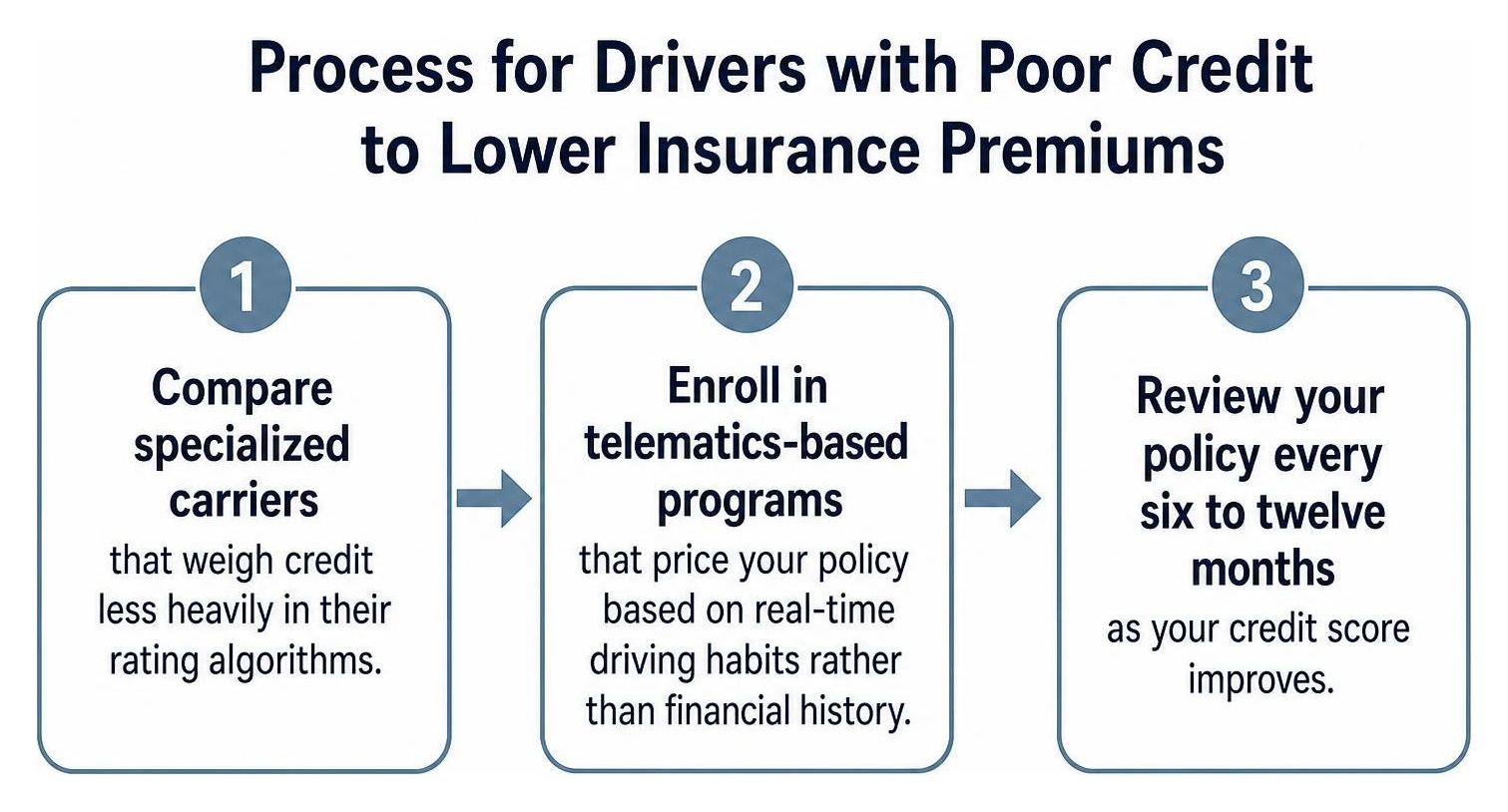
- Compare specialized carriers that weigh credit less heavily in their rating algorithms.
- Enroll in telematics-based programs that price your policy based on real-time driving habits rather than financial history.
- Review your policy every six to twelve months as your credit score improves.
Working with an independent agent to explore personalized insurance policy options ensures you receive quotes from underwriters suited to your financial background.
Strategies to Find Auto Insurance Cheapest Full Coverage After Violations
A spotty driving record will increase your rates, but violations do not have to put affordable full coverage out of reach.
Managing Premiums Following a Speeding Ticket
A single moving violation raises full coverage rates by an average of 22%. Some carriers impose minor surcharges as low as 6%, while others apply steep rate increases.
To manage post-ticket expenses:
- Request court supervision or driving school diversion to prevent points from hitting your public driving record.
- Check with your carrier about completing an approved defensive driving course to offset moving violation surcharges.
- Shop your policy across carriers, as different underwriters penalize single speeding tickets at varying rates.
Read our complete breakdown on lowering insurance costs after a ticket to manage surcharges until violations drop off your record.
Rebuilding Rates After an At-Fault Accident or Claim
An at-fault accident can trigger rate increases of 40% or more, with average post-accident full coverage rates rising to roughly $163 per month with value-focused carriers. Surcharges generally stay on your record for three to five years.
Key strategies for rebuilding your rate include:
- Accident Forgiveness: Purchasing this endorsement early prevents rate increases after your first at-fault claim.
- Adjusting Deductibles: Raising your physical damage deductible from $500 to $1,000 can offset an accident surcharge while keeping your core liability protections intact.
- Carrying Proper Gap Coverage: If you finance or lease your car, combining low-cost physical damage protection with gap insurance policy essentials protects you from out-of-pocket losses if your vehicle is totaled.
Practical Ways to Lower Your Full Coverage Policy Costs
Reducing your auto insurance premium does not mean sacrificing critical coverage limits.
| Discount Category | Qualifying Criteria | Typical Savings Potential |
|---|---|---|
| Multi-Policy Bundle | Pairing Auto with Home or Renters | 10% – 25% |
| Telematics / Usage-Based | Tracking driving habits via mobile app | 10% – 30% |
| Multi-Vehicle | Insuring two or more cars on one policy | 15% – 20% |
| Paperless & Auto-Pay | Electronic billing and automated payment | 3% – 5% |
| Vehicle Safety Tech | Anti-lock brakes, anti-theft, daytime lights | 5% – 10% |
Optimizing Policy Deductibles and Payment Structures
Adjusting your policy structure can yield immediate savings without altering your underlying liability protection. Raising your collision and comprehensive deductibles directly lowers your premium costs.
In addition, insurers often charge installment fees on monthly billing schedules. You can eliminate these fees by selecting flexible auto insurance payment structures, such as automatic bank drafts (EFT) or paying your annual or semi-annual premium in full.
Maximizing Vehicle Safety, Telematics, and Multi-Policy Bundles
Take advantage of every carrier discount:
- Anti-Theft Features: Installing alarms, GPS tracking systems, or VIN etchings can qualify you for anti-theft insurance discounts.
- Telematics Enrollment: Usage-based programs track your braking, speed, and mileage, rewarding safe driving with discounts up to 30%.
- Multi-Policy Bundles: Combining your auto policy with property coverage through home and auto bundle savings remains one of the most reliable ways to lower your total insurance costs.
Frequently Asked Questions About Cheap Full Coverage Auto Insurance
What is the average national cost of full coverage car insurance?
The national average for full coverage car insurance ranges between $140 and $180 per month, depending on carrier, driving history, and state mandates. Value-focused carriers often offer base rates around $125 to $135 monthly for clean-record profiles. Using a comprehensive comparison guide helps you evaluate quotes across identical coverage tiers to secure competitive local pricing.
How can I get full coverage auto insurance with a bad credit score?
If you have a lower credit score, compare carriers that place less weight on credit-based insurance scoring. You can also enroll in usage-based telematics programs that price policies based on real-time driving habits, increase your comprehensive and collision deductibles, and ask your insurer to re-run your score annually as your credit profile improves.
Is full coverage worth it for older vehicles?
A helpful guideline is the “ten-times rule”: if your annual comprehensive and collision premium plus your deductible exceeds the actual cash value of your car, carrying full physical damage coverage may no longer be cost-effective. For vehicles valued under $3,000 to $4,000, switching to liability-only with high third-party limits can help reduce ongoing expenses.
Conclusion
Securing cheap full coverage auto insurance does not mean settling for cut-rate protection that leaves you vulnerable after an accident. By understanding how liability limits, deductibles, and comprehensive protections work together, you can customize a policy that safeguards your assets while fitting your budget.
At Newtown Insurance, we provide clear guidance, tailored coverage, and transparent pricing to help drivers in Newtown and across Pennsylvania avoid overpaying for protection. Contact our local team today to explore your options and find a dependable, affordable full coverage policy for your vehicle through our comprehensive auto insurance services.