Can You Save With a Motorcycle and Auto Insurance Bundle?
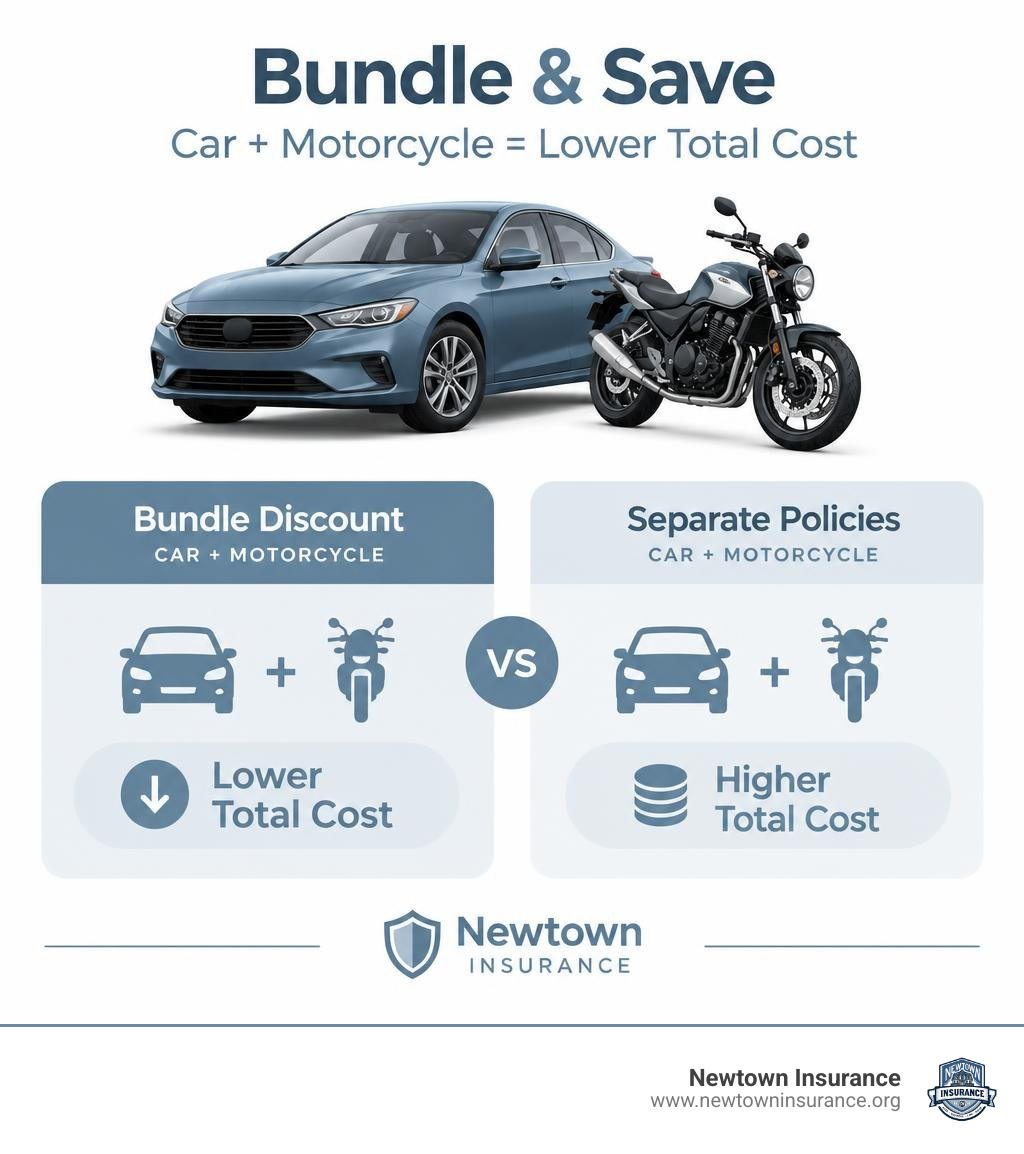
Yes, you can often insure your car and motorcycle with the same company and get a discount. A motorcycle and auto insurance bundle may cut premiums, but the lowest combined price matters more than the advertised discount. Ask for a bundle quote, then compare it with the cost of keeping the policies separate. Match coverage limits and deductibles so you know what you are paying for.
I’m Shawn Beihl of Newtown Insurance. With over 15 years in specialty insurance and risk management, I help people weigh coverage and long-term costs, including whether a motorcycle and auto insurance bundle is the right fit.
Motorcycle and auto insurance bundle terms to know:
How a Motorcycle and Auto Insurance Bundle Works and Saves You Money
Combining your daily commuter car and your weekend cruiser under a single carrier is one of the easiest ways to streamline your household budget. At its core, a bundled policy connects two distinct vehicle risks under one administrative umbrella. In October 2026, insurance carriers continue to reward multi-line clients with discounts ranging between 5% and 20% on their annual premiums.
Beyond pure percentage reductions, bundling eliminates administrative clutter. Instead of juggling separate payment schedules, different policy renewal dates, and independent customer portals, you manage your garage with a single account. For many riders, the convenience is as valuable as the monetary savings—it keeps you from having to guess which company to call if something happens in your garage overnight.
To understand the baseline economics, consider national averages: a stand-alone motorcycle policy averages around $179 per month, while standard full-coverage auto policies average roughly $187 per month. When paired together through an experienced agency like ours, those baseline costs drop noticeably. Exploring tailored personal vehicle insurance options helps you understand how different vehicle classifications interact on a shared statement.
| Coverage Setup | Estimated Monthly Cost | Estimated Annual Cost | Multi-Policy Discount Applied | Estimated Annual Savings |
|---|---|---|---|---|
| Separate Policies | $366 combined | $4,392 | 0% | $0 |
| Bundled (10% Tier) | $329 combined | $3,952 | 10% across both | $440 / year |
| Bundled (15% Tier) | $311 combined | $3,733 | 15% across both | $659 / year |
| Bundled (20% Tier) | $293 combined | $3,513 | 20% across both | $879 / year |
Multi-Vehicle vs Multi-Policy Discounts
While the terms are often used interchangeably, rating engines treat multi-vehicle discounts and multi-policy discounts differently:
- Multi-Vehicle Discount: This applies when two or more private passenger vehicles of the same classification (like two passenger sedans or two cruisers) share a single policy schedule. This usually yields 5% to 15% off each unit’s premium.
- Multi-Policy Discount: This triggers when entirely different product lines (such as private auto and specialized power sports/motorcycle) sit under the same carrier account.
Understanding how carriers stack these credits is essential. When you look into auto insurance discount options, you will find that a household insuring two cars and one bike might unlock both discount types simultaneously.
Expanding Protection Across Home and Renters Policies
If you want to maximize your savings, combining your garage protection with your primary residence offers even deeper rate reductions. Adding a homeowners or renters policy to your auto and motorcycle lines creates a tri-bundle structure.
Carriers frequently offer 10% to 25% off property insurance when paired with active vehicle policies. While bundling a car and bike might save you $180 to $300 annually, combining car, motorcycle, and home insurance can easily yield total household savings between $400 and $600 each year. For broader context on how insurers structure these packages, see Vehicle insurance in the United States.
Coverage Options for Combined Auto and Motorcycle Policies
A common myth among motorists is that bundling forces you into cookie-cutter protection. In reality, a bundled policy maintains distinct coverage limits for each vehicle to reflect their unique road risks. While both vehicles require state-mandated liability limits, your bike requires specialized riders that your sedan will never need.
Reviewing comprehensive personal auto protection ensures your daily commuter has standard comprehensive, collision, and uninsured motorist safeguards, while leaving room for tailored motorcycle endorsements.
Essential Coverages in a Motorcycle and Auto Insurance Bundle
When assembling your policy package, make sure the following protections are aligned across all vehicles:
- Bodily Injury and Property Damage Liability: Protects your personal assets if you are found at fault in an accident.
- Collision and Comprehensive Coverage: Safeguards both your car and your bike against crashes, severe weather, vandalism, and theft.
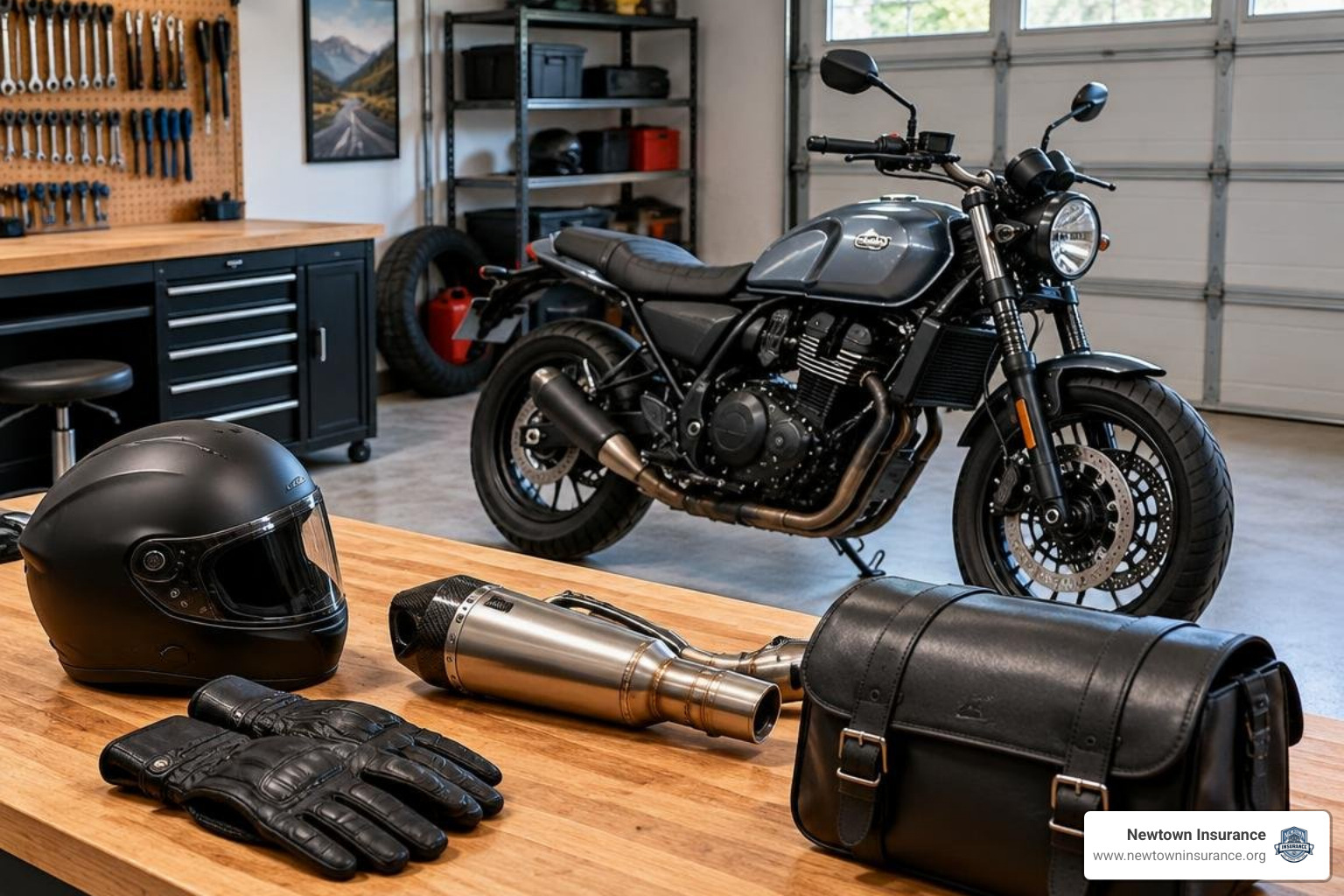
- Accessory and Custom Equipment Coverage: Motorcycle-specific protection for chrome, custom paint, aftermarket exhaust systems, and safety riding gear (often ranging from $1,000 to $30,000 in covered value).
- Roadside Assistance and Trip Interruption: Critical for two-wheel touring enthusiasts needing specialized flatbed motorcycle towing.
- OEM Parts Endorsement: Ensures that repairs on your bike or vehicle use Original Equipment Manufacturer components rather than generic aftermarket replacements.
Securing full coverage vehicle protection across both assets guarantees you do not sacrifice critical protection just to obtain a bundle discount.
Deductible Rules and Combined Claim Handling
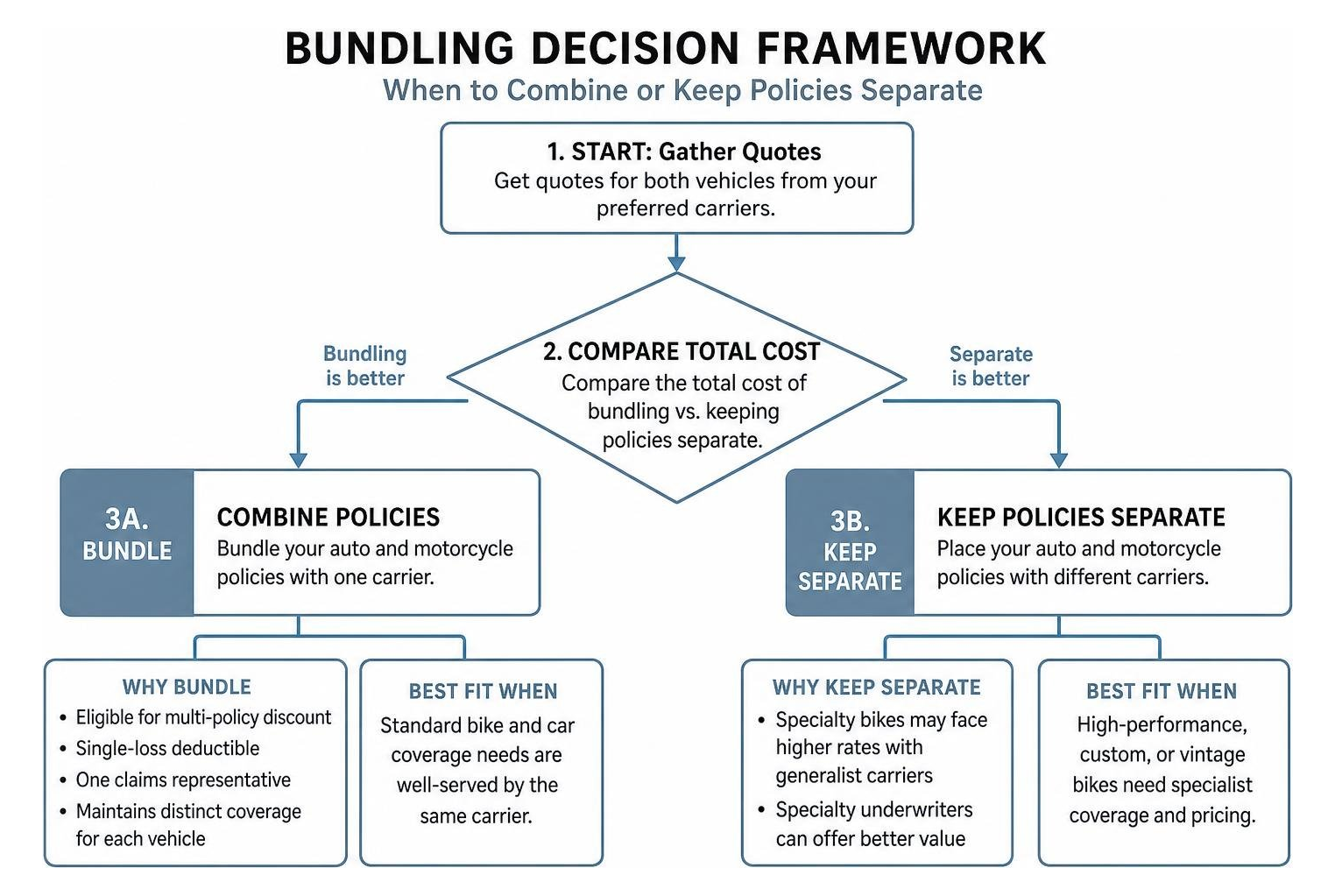
One standout advantage offered by select carriers on bundled policies is the single-loss deductible. If a severe storm damages both your car and motorcycle parked in the driveway, or a garage fire affects both units simultaneously, a single deductible applies to the entire event rather than forcing you to pay separate out-of-pocket deductibles for each vehicle.
Furthermore, bundling simplifies the claims reporting process through a single claims representative. When coupled with safe driver savings, policyholders maintain lower baseline rating tiers while enjoying seamless post-accident restoration.
When to Bundle vs Keeping Policies Separate

While combining coverage is convenient for most drivers, bundling is not universally the best option for every garage. The deciding factor is always the baseline rate charged by the underlying carrier.
High-Performance Bikes and Specialist Coverage Exceptions
Specialty motorcycles—such as high-displacement sportbikes, heavily altered custom choppers, or rare vintage machines—often face strict underwriting surcharges from standard auto carriers. A generalist carrier might offer a generous 15% bundling discount on your car, but their baseline rate for a 1000cc superbike might be double what a niche motorcycle underwriter charges.
In those situations, the best approach is to keep the policies separate: place your daily driver with a preferred auto carrier and insure the bike with a specialty power sports underwriter. Following clear Pennsylvania vehicle insurance guidelines ensures you meet legal standards without overpaying for high-risk power sports lines.
Driving Records and Household Profile Impacts
Your household driving profile also dictates whether a bundle makes financial sense. If one driver on the policy has multiple moving violations or an at-fault accident, standard carriers may apply surcharges across all bundled schedules.
Carriers evaluate household operator risk collectively. Reviewing smart driver rating factors helps you determine if moving a high-risk operator to an independent policy preserves the preferred bundling tier on your remaining household vehicles.
How to Shop for the Best Multi-Vehicle Coverage
Shopping for multi-vehicle coverage requires balancing policy limits, specific endorsements, and final costs. Relying on an independent agency allows you to compare multiple policy structures across top carriers without doing all the legwork yourself.
When you compare vehicle insurance rates, you can easily evaluate whether a bundled package truly beats separate policies from different carriers.
Steps to Compare Motorcycle and Auto Insurance Bundle Quotes
To find the right coverage for your vehicles, follow this step-by-step process:
- Collect Vehicle Data: Gather the VIN, exact mileage, trim level, and modification lists for both your auto and motorcycle.
- Standardize Coverage Limits: Request identical bodily injury, comprehensive, and collision deductibles across all carrier proposals for an accurate comparison.
- Inquire About Safety Credits: Provide proof of completed motorcycle safety foundation (MSF) courses and defensive driving certificates.
- Evaluate Custom Equipment Needs: Make sure accessory values (saddlebags, fairings, electronics) are included in the quote.
- Request Side-by-Side Quotes: Request a quote for the bundle alongside separate stand-alone quotes to verify where the real savings lie.
Obtaining customized vehicle quotes ensures every discount is properly applied to your garage.
Evaluating Renewal Rates and Ongoing Policy Value
Insurance pricing is dynamic. A bundle that offers the best rate today should be reviewed periodically to ensure it remains competitive. Check for seasonal storage or lay-up options on your motorcycle policy, which lower physical damage premiums during winter months when your bike is parked in the garage.
Using practical vehicle budget savings methods lets you keep long-term premiums low without sacrificing essential protections.
Frequently Asked Questions About Bundling Vehicle Insurance
Does bundling car and motorcycle insurance save money?
Yes. Most carriers offer multi-policy discounts ranging from 5% to 20% off combined premiums. However, true savings depend on the base rates of each policy. Utilizing proven auto insurance savings strategies helps you confirm that your bundled total beats individual policies from separate specialty carriers.
What happens if I file a claim on my motorcycle policy?
In most cases, carriers evaluate claims independently by line of business. An isolated physical damage claim on your motorcycle will impact that bike’s future rate tier, but it rarely triggers a surcharge on your separate auto liability limits. However, frequent claims across multiple policies may affect your overall account-level tier at renewal.
Can I add a motorcycle to my existing auto policy directly?
Some carriers permit motorcycles to be added as an endorsement directly on a single personal auto policy, but most carriers generate a dedicated motorcycle policy linked to your primary auto account. This keeps motorcycle-specific endorsements, safety gear coverages, and seasonal lay-up terms distinct while still granting you the full multi-policy discount.
Conclusion
Finding the right balance between convenience, extensive coverage, and cost savings is the key to protecting your vehicles. Insuring your car and motorcycle with the same company can deliver great discounts, simplify your monthly bills, and provide coordinated protection for your garage.
At Newtown Insurance, we work closely with Pennsylvania drivers and riders to craft tailored, budget-friendly coverage. Whether you need standard liability or comprehensive protection with custom equipment riders, our team is here to help you get the best value on your coverage.
Ready to see how much you can save? Start now to compare your options and secure the protection your vehicles deserve.