Get a Personal Indemnity Insurance Quote Without Paying for Unneeded Cover
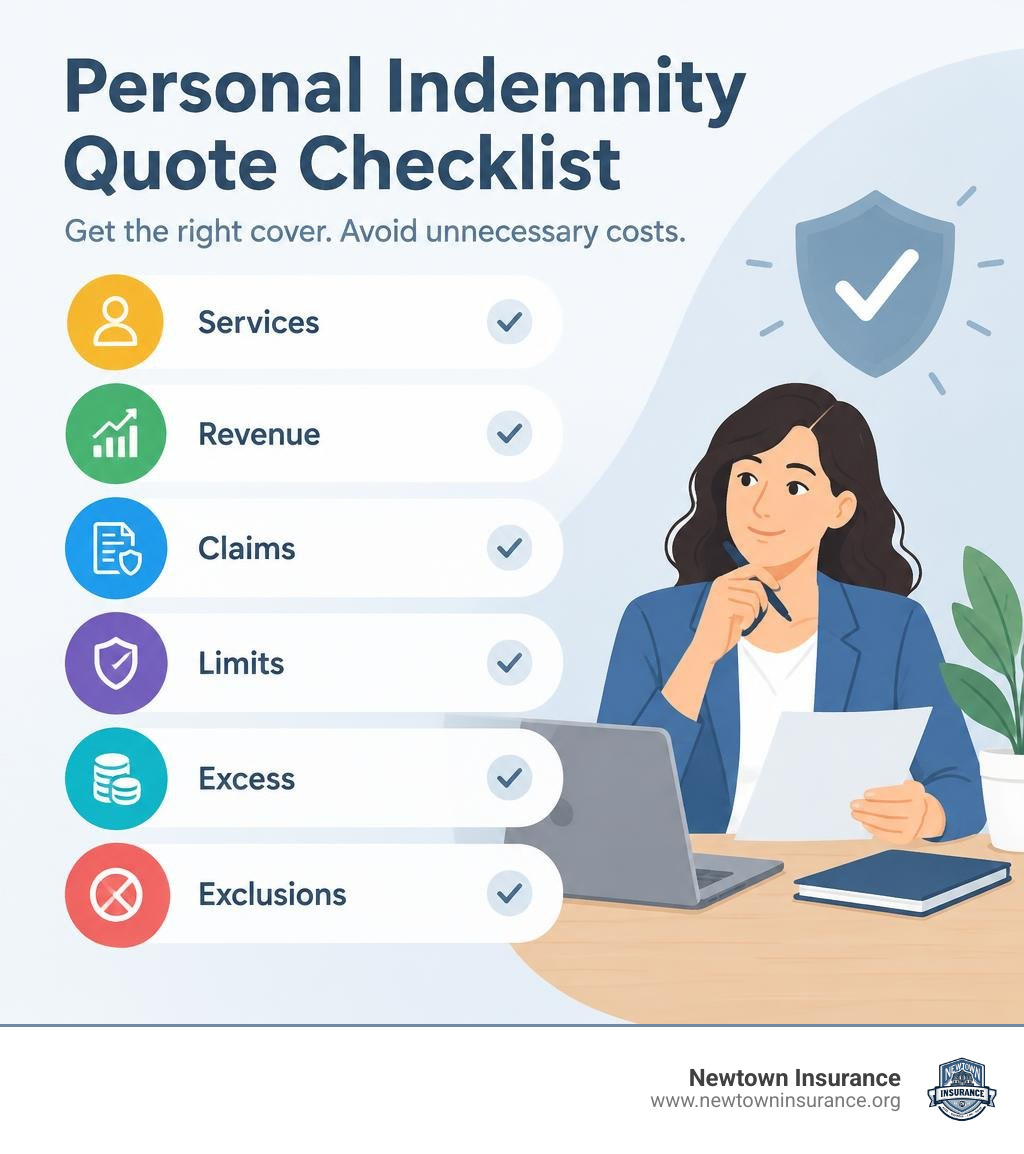
To get a fair personal indemnity insurance quote, gather your services, annual revenue, contract requirements, claims history, and the cover limit you need. Then compare like-for-like policies, checking the excess, retroactive date, exclusions, legal-defense costs, and any fees before choosing on price alone.
Personal indemnity insurance, often called professional indemnity insurance, helps protect professionals when a client says their advice, design, or service caused financial loss. It can help with defense costs and compensation for claims involving mistakes, negligence, confidentiality breaches, or certain copyright and defamation allegations.
The lowest premium is not always the lowest total cost. A policy with a high excess, weak prior-work protection, or exclusions that affect your work can leave you paying more if a claim occurs. For Pennsylvania professionals, the smart move is to match coverage to your actual contracts and risk, not accept a generic plan.
I am Shawn Beihl of Newtown Insurance, with more than 15 years of experience across specialty insurance, commercial property and casualty, benefits, disability, and risk management. I help clients assess the details behind a personal indemnity insurance quote so they can reduce avoidable costs while protecting against real exposures.
Basic personal indemnity insurance quote terms:
- personal accident insurance quote
- personal liability insurance quotes
- personal umbrella insurance quote
Understanding Personal Indemnity Insurance and Core Protections
Personal indemnity insurance functions as a vital financial safety net for individuals providing expert advice, custom designs, or specialized professional services. When a client alleges that an oversight or technical mistake caused them economic harm, standard business policies often fall short. Exploring personal liability coverage options is important, but personal indemnity—broadly recognized across the commercial sector as professional liability insurance—specifically addresses errors, omissions, and financial damages stemming directly from your professional output and contractual deliverables.
Core protections typically encompass:
- Professional Negligence: Financial loss resulting from incorrect advice, flawed calculations, or sub-par deliverables that fail to meet reasonable industry standards.
- Legal Defense Costs: Legal representation fees, court filings, expert witness fees, and related defense expenses, regardless of whether an alleged client claim has substantive legal merit.
- Breach of Confidentiality: Inadvertent disclosure of sensitive client data, non-disclosure agreement violations, or proprietary commercial information.
- Copyright and Intellectual Property Infringement: Accidental use of copyrighted material, unauthorized imagery, or proprietary methodologies in client work.
- Defamation, Libel, and Slander: Allegations regarding damaging statements made unintentionally during professional interactions, reports, or consultations.
Understanding how indemnity differs from general commercial liability ensures you do not leave dangerous gaps in your overall business risk profile.
| Coverage Element | Personal Indemnity Insurance | Public Liability Insurance |
|---|---|---|
| Primary Focus | Financial loss caused by advice, designs, or services | Physical injury or property damage to third parties |
| Trigger Event | Professional error, omission, or negligence | Accidents on premises or job sites |
| Legal Costs | Defense against service-related client disputes | Defense against bodily injury or property damage lawsuits |
| Typical Beneficiary | Direct clients suffering purely economic losses | Members of the public, visitors, or clients suffering physical harm |
Who Requires Indemnity Protection in 2026
In September 2026, the modern business landscape involves intricate digital tools, heightened regulatory demands, and interconnected service models. Indemnity protection is essential across numerous disciplines, including:
- Management & Financial Consultants: Addressing market projections, operational frameworks, and strategic business guidance.
- Freelancers & Digital Creatives: Covering web designers, copywriters, and branding specialists against copyright claims, trademark conflicts, or production errors.
- Technical Specialists & IT Contractors: Protecting software engineers, cybersecurity consultants, and systems architects from software outages, coding flaws, and deployment delays.
- Remote Contractors: Managing client relationships and deliverable obligations without the built-in umbrella of a parent corporation or enterprise risk department.
As emerging technologies transform project delivery, professionals increasingly rely on specialized coverage models to address complex contractual expectations and avoid personal financial exposure.
Standard Exclusions and Coverage Limits
While indemnity policies offer broad risk mitigation, they do not cover every adverse event. Standard policy exclusions generally include:
- Intentional or Fraudulent Acts: Deliberate deception, dishonesty, or criminal misconduct.
- Pre-existing Disputes: Known issues, unresolved grievances, or pending disputes that began before the policy’s effective start date.
- Direct Bodily Injury & Property Damage: Physical incidents that fall strictly under general public liability or commercial property policies.
- Unregulated Financial Advice: Specific high-risk financial services or speculative ventures not explicitly approved during underwriting.
Indemnity limits typically range from $50,000 up to $5 million, depending on client requirements and sector risk profiles. In addition, personal indemnity insurance premiums are generally recognized as an allowable business expense, making your policy tax deductible and reducing overall operational overhead.
Key Factors That Determine Your Premium and Coverage Level

Underwriters evaluate several core criteria when determining premium rates for your business. Your annual turnover serves as a baseline indicator of total business volume and claim exposure. The specific industry tier dictates inherent operational risk, while your personal claims history demonstrates past risk management effectiveness and reliability.
Adjusting your deductible excess allows you to customize premium costs: agreeing to pay a higher out-of-pocket amount during a claim lowers your recurring payment. However, your excess should remain within an amount your operational cash reserves can comfortably absorb if multiple issues arise within a single policy term. Furthermore, maintaining continuous, uninterrupted coverage prevents rate spikes and underwriting penalties associated with policy lapses.
Determining the Right Coverage Limit for Your Business
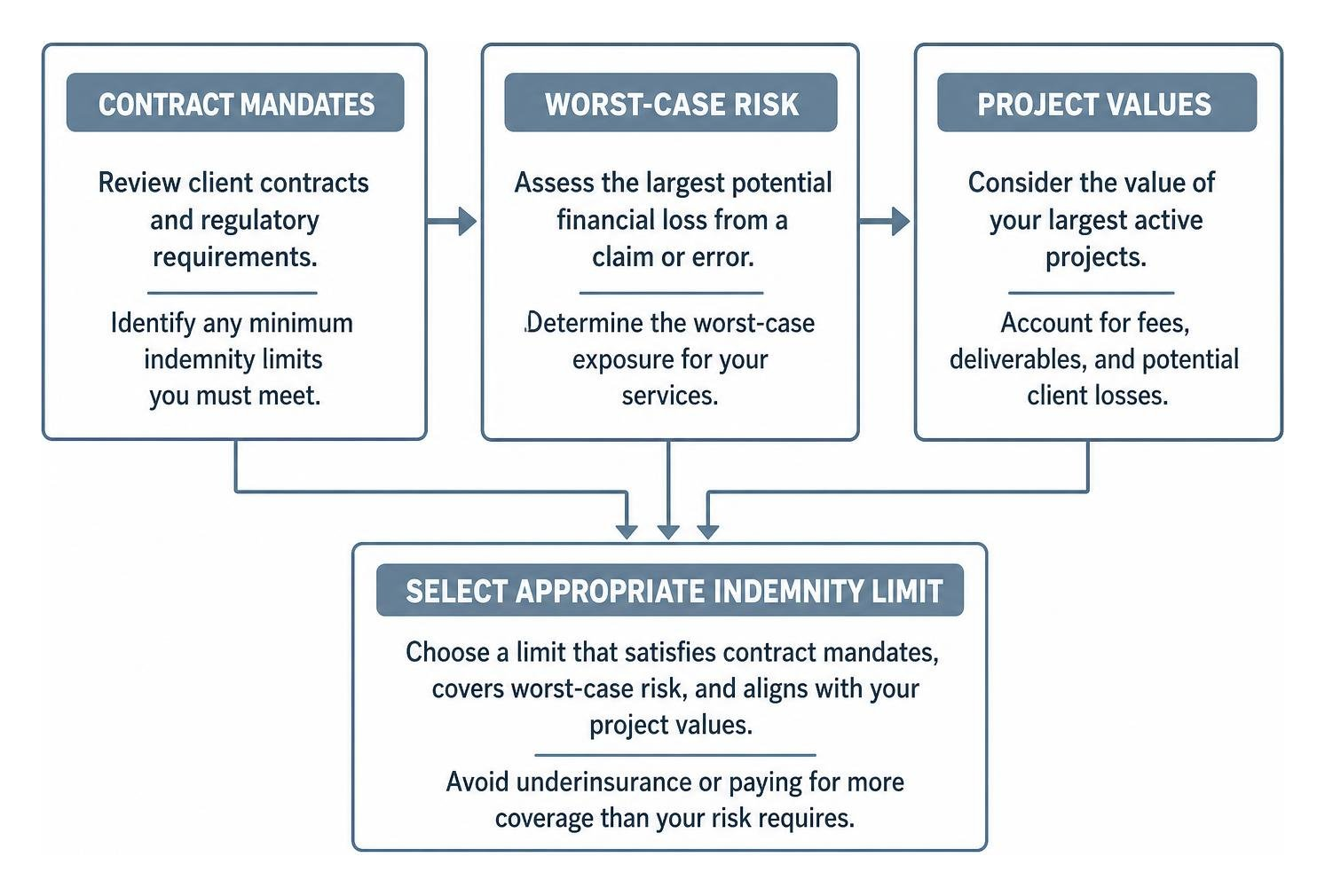
Selecting an adequate indemnity limit requires evaluating your largest active contracts, potential client worst-case financial scenarios, and regulatory requirements. Policy limits are usually expressed as both a per-claim limit (the maximum payable for any single incident) and an aggregate limit (the total maximum payable across all claims during the policy year). Relying on comprehensive insurance guides helps professionals match industry standards without overpaying for excessive coverage limits that exceed their risk exposure.
Managing Retroactive Dates and Continuous Coverage
Indemnity insurance is written on a “claims-made” basis, meaning a policy must be active both when the work was completed and when the formal claim is lodged against you. The retroactive date specifies the earliest date from which your prior work is protected.
Maintaining continuous coverage protects your past projects without interruption. If you switch providers or modify coverage tiers, always verify that your new policy explicitly honors your existing retroactive date. Allowing a policy to cancel or lapse without securing run-off cover eliminates protection for all past contracts, exposing your personal and business assets to delayed legal claims.
How to Secure a Competitive Personal Indemnity Insurance Quote

Finding a cost-effective policy requires a structured evaluation of your actual service obligations. Reviewing our smart rate comparison guide will help you benchmark policy inclusions, excess terms, and payment schedules to secure maximum value.
Key Information Needed for a Personal Indemnity Insurance Quote
Before submitting your details, prepare the following documentation:
- Accurate gross annual revenue figures and projected earnings.
- Verified professional credentials, certifications, and industry memberships.
- A documented claims history covering the past three to five years.
- Active client contracts outlining specific indemnity and liability clauses.
Strategies to Lower Your Personal Indemnity Insurance Quote Premium
You can reduce recurring costs by applying practical risk-reduction techniques:
- Increase the Policy Excess: Opting for a higher voluntary deductible directly decreases your baseline premium.
- Demonstrate Robust Risk Protocols: Maintain written client sign-offs, detailed project scopes, and strict quality control records.
- Tailor Policy Features: Leverage custom policy design strategies to remove irrelevant coverages.
- Choose Annual Billing: Paying your annual premium in a single payment avoids monthly administrative surcharges.
Frequently Asked Questions About Personal Indemnity Coverage
Is personal indemnity insurance a legal requirement for freelancers?
Indemnity insurance is not universally mandated by federal or state law, but professional licensing boards, regulatory agencies, and enterprise clients frequently make active coverage a mandatory contractual requirement before work begins.
Can I purchase short-term indemnity insurance for a single project?
Because indemnity operates on a claims-made foundation, standalone short-term policies are generally unavailable. Since claims often arise months after a project ends, professionals maintain continuous 12-month policies to preserve vital run-off and prior-acts protection.
How do cyber incidents and AI impact indemnity claims in 2026?
Industry assessments indicate the top three business risks in 2026 for professional services are artificial intelligence (48%), cyber incidents (46%), and changes in legislation and regulation (35%). As algorithmic tools and automated workflows integrate into client deliverables, indemnity policies are adapting to address liabilities tied to automated advice, digital errors, and evolving regulatory standards.
Conclusion
Securing an optimized indemnity policy protects your business assets, safeguards your reputation, and ensures long-term financial stability. By tailoring your coverage limits, maintaining continuous protection, and implementing strong internal risk practices, you can prevent costly claims while keeping overhead manageable.
At Newtown Insurance, we provide transparent guidance and customized commercial protection tailored to your specific trade. Explore our tailored insurance services to protect your professional enterprise today.