Compare Medicare Supplemental Insurance in Pennsylvania Without Overpaying
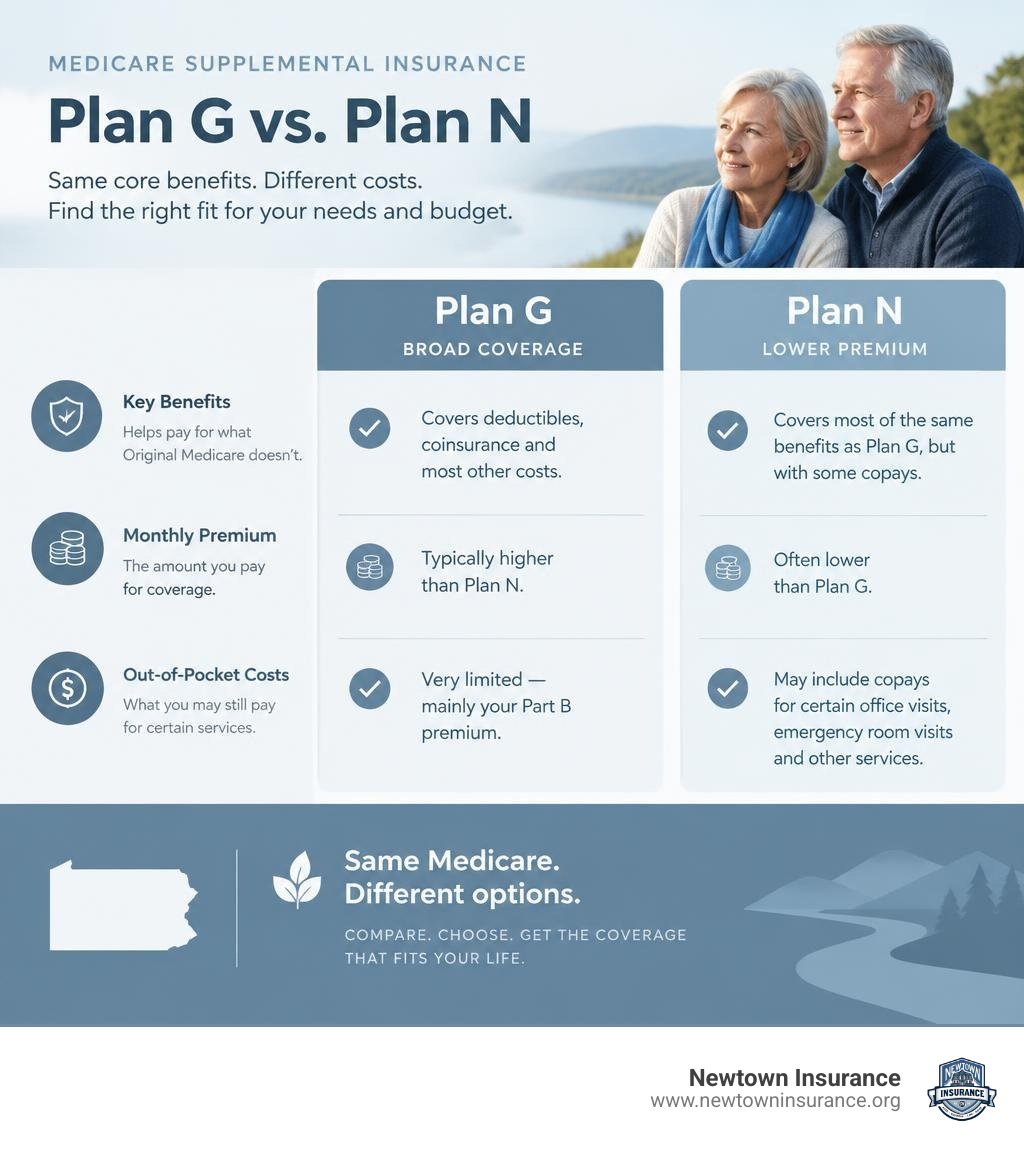
To compare Medicare supplemental insurance Pennsylvania residents can buy, start with the plan letter, then compare prices for that same letter. Medigap plans help pay some costs left by Original Medicare, such as deductibles and coinsurance. Plans with the same letter offer the same basic benefits, but premiums can differ by insurer. Plan G offers broad coverage, while Plan N may have a lower premium but leave you with some copays. If you are new to Part B at age 65 or older, check your six-month Medigap Open Enrollment Period before you choose.
I’m Shawn Beihl, and my 15-plus years in specialty insurance, including health and benefits, shape how I explain Medicare supplemental insurance Pennsylvania residents can compare. Let’s look at what each plan covers, what it costs, and when you can enroll.
Learn more about medicare supplemental insurance pennsylvania:
Understanding Medicare Supplemental Insurance in Pennsylvania
Original Medicare provides a strong foundation for your healthcare needs, but it was never designed to cover 100% of your medical bills. Part A covers inpatient hospital stays, skilled nursing care, and hospice, while Part B manages outpatient medical services, doctor visits, preventive care, and durable medical equipment.
However, Original Medicare leaves substantial gaps. Under Part B, you are generally responsible for a 20% coinsurance on all approved services with no annual out-of-pocket maximum limit. If you experience a major medical event, that 20% can add up quickly.
According to guidelines from the Pennsylvania Insurance Department Medigap overview, Medicare Supplement plans are standardized policies offered by private insurance companies. Because the benefits for each letter plan are standard, a Plan G from one insurer provides the exact same core medical coverage as a Plan G from another. Navigating these options is a crucial piece of your broader coverage strategy, as outlined in our comprehensive Pennsylvania insurance guide.
How Medigap Works Alongside Original Medicare
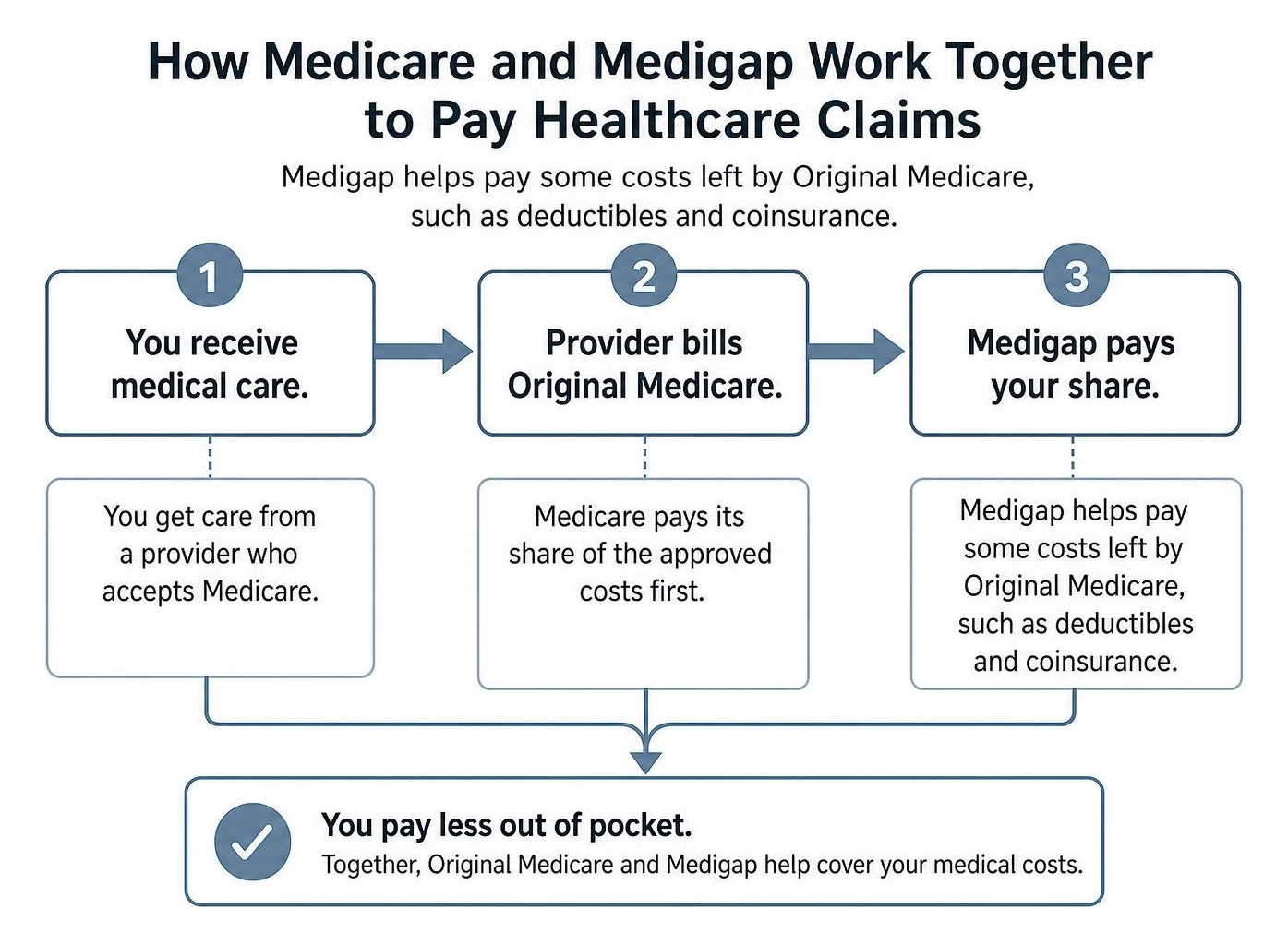
Medigap acts like a supportive partner to Original Medicare. When you receive medical care from a healthcare provider who accepts Medicare, the billing process happens sequentially:
- Your doctor or hospital bills Medicare directly.
- Medicare pays its approved share for covered services (usually 80% for Part B outpatient care after your annual deductible).
- The remaining balance (such as copayments, coinsurance, and Part A hospital deductibles) is sent directly to your Medigap insurance carrier.
- Your Medigap policy pays its contracted portion according to your plan letter.
This seamless electronic claims crossover means you rarely have to handle paperwork or file claims yourself. Exploring standardized Medigap plans in PA allows you to see how different tiers handle these out-of-pocket expenses.
What Medigap Does Not Cover in Pennsylvania
While Medicare Supplement insurance shields you from unpredictable hospital and doctor bills, it does have specific exclusions. Medigap policies do not cover:
- Long-term care (such as custodial or nursing home care for assistance with daily living activities)
- Routine vision exams and eyeglasses
- Routine dental care, dentures, or cleanings
- Hearing aids and routine hearing exams
- Private-duty nursing care
- Outpatient prescription drugs
To obtain prescription drug coverage, you must enroll in a standalone Medicare Part D plan. If you are balancing your monthly medical expenses with other essential living costs, reviewing our health insurance budget guide can help you plan your total healthcare budget efficiently.
Comparing Plans and Benefits for PA Seniors
Medigap policies in Pennsylvania are categorized by letter: A, B, C, D, F, G, K, L, M, and N. Each letter represents a specific package of benefits.
Plans K and L offer lower monthly premiums in exchange for cost-sharing, covering a percentage (50% or 75%) of eligible services until you reach an annual out-of-pocket maximum. Plan M shares the Part A hospital deductible, while Plan D covers most core benefits without excess charge protection.
| Standardized Benefits | Plan A | Plan B | Plan D | Plan G | Plan K | Plan L | Plan M | Plan N |
|---|---|---|---|---|---|---|---|---|
| Part A Coinsurance & Hospital Costs | 100% | 100% | 100% | 100% | 100% | 100% | 100% | 100% |
| Part B Coinsurance / Copayment | 100% | 100% | 100% | 100% | 50% | 75% | 100% | 100%* |
| Blood (First 3 Pints) | 100% | 100% | 100% | 100% | 50% | 75% | 100% | 100% |
| Part A Hospice Coinsurance/Copay | 100% | 100% | 100% | 100% | 50% | 75% | 100% | 100% |
| Skilled Nursing Facility Coinsurance | No | No | 100% | 100% | 50% | 75% | 100% | 100% |
| Part A Deductible | No | 100% | 100% | 100% | 50% | 75% | 50% | 100% |
| Part B Deductible | No | No | No | No | No | No | No | No |
| Part B Excess Charges | No | No | No | 100% | No | No | No | No |
| Foreign Travel Emergency (up to limits) | No | No | 80% | 80% | No | No | 80% | 80% |
*Plan N pays 100% of Part B coinsurance, except for a copayment of up to $20 for some office visits and up to $50 for emergency room visits that do not result in an inpatient admission.
Top Plan Options for Medicare Supplemental Insurance in Pennsylvania
For seniors enrolling today, Plan G and Plan N are the two most popular selections:
- Plan G: The most comprehensive policy available to newly eligible beneficiaries. It covers every gap in Original Medicare except for the annual Part B deductible. Once you pay that deductible out of pocket, you receive 100% coverage for all Medicare-approved medical services. Learn more about how this policy works in our guide to Medigap Plan G in Pennsylvania.
- Plan N: A budget-friendly alternative that provides lower monthly premiums. In return, you pay your Part B deductible, small copayments (up to $20 for doctor visits, up to $50 for ER visits not resulting in admission), and any Part B excess charges if a provider does not accept Medicare assignment.
- Plan F: While Plan F covered 100% of all costs, federal rules phased it out for individuals who became eligible for Medicare on or after January 1, 2020. If you were eligible prior to that date, you may keep or still apply for Plan F, but Plan G typically offers better overall premium value.
Original Medicare and Medigap
When you pair Original Medicare with a Medigap plan, you maintain complete provider flexibility. You can visit any physician, specialist, or hospital across the United States that accepts Medicare—with no network restrictions, no prior authorization requirements, and no need for specialist referrals.
Enrollment Rules, Timing, and Costs in Pennsylvania

Understanding pricing methods is critical to managing your long-term premiums. Private insurance carriers in Pennsylvania set their rates using one of three pricing structures:
- Community-Rated (No-Age-Rated): Everyone with the policy pays the same monthly premium regardless of age.
- Issue-Age-Rated: Your premium is based on the age you are when you purchase the policy. Premiums do not increase simply because you get older.
- Attained-Age-Rated: Your premium starts based on your current age and increases automatically as you grow older.
Reviewing a customized insurance planning guide helps you understand how these pricing models impact your overall household expenses over time.
When and How to Enroll in Medicare Supplemental Insurance Pennsylvania Policies
The single best time to purchase a Medigap plan is during your Medigap Open Enrollment Period. This is a one-time, 6-month window that begins the first month you are both age 65 or older and enrolled in Medicare Part B.
During this 6-month period, you enjoy guaranteed issue rights. Insurers cannot:
- Deny you coverage based on pre-existing health conditions
- Place waiting periods on covered benefits
- Charge you higher monthly rates due to your medical history
If you miss this window and apply later without qualifying for a Special Enrollment Period (such as losing employer group coverage), insurers can subject your application to full medical underwriting. They may look at your health history, charge higher premiums, or deny your coverage altogether.
Coordination with Pennsylvania Medicaid and State Assistance
For lower-income beneficiaries, Pennsylvania Medicaid and Medicare Savings Programs (such as the Qualified Medicare Beneficiary program) provide essential financial help.
If you qualify for full Medicaid or a Medicare Savings Program that pays your Medicare cost-sharing, you generally do not need a Medigap plan. In fact, it is illegal for an insurer to knowingly sell you a Medigap policy that duplicates benefits provided by Medicaid.
Finding Local Assistance and Choosing a Licensed Agent in PA

Navigating supplemental plans requires clarity and local insight. Pennsylvania residents have access to both public and independent resources:
- PA MEDI: You can access unbiased state resources through PA MEDI counseling assistance, a program funded by the Pennsylvania Department of Aging that offers free counseling clinics.
- Licensed Brokers: Working with a licensed local professional through a trusted local Pennsylvania agent directory allows you to compare multiple top-rated carriers simultaneously at zero additional cost to you.
When shopping for coverage, gathering verified figures using an accurate insurance quotes guide ensures you select an insurer with stable rate histories and strong customer satisfaction.
Frequently Asked Questions About Pennsylvania Medicare Supplement Plans
Can I have Original Medicare and a Medigap policy in Pennsylvania?
Yes. Medigap policies are specifically designed to work alongside Original Medicare (Parts A and B). However, you cannot have a Medigap policy and a Medicare Advantage Plan (Part C) at the same time. If you decide to switch back to Original Medicare from Medicare Advantage, you can then apply for a Medigap plan.
What is the PA MEDI program and how does it help seniors?
PA MEDI (Pennsylvania Medicare Education and Decision Insight) is Pennsylvania’s State Health Insurance Assistance Program (SHIP). Supported by local Area Agencies on Aging, it provides free, objective counseling to help seniors understand Original Medicare, Medigap options, Medicare Advantage, and prescription drug plans.
What happens if I miss my Medigap Open Enrollment Period in Pennsylvania?
If you miss your initial 6-month open enrollment window, you lose your guaranteed issue rights unless you qualify for a specific exception. Insurance companies may require you to answer detailed medical questions, look at your prescription history, charge higher monthly rates, or reject your application outright based on your health status.
Conclusion
Securing the right supplemental coverage protects your retirement nest egg from unexpected healthcare bills. Because plan benefits are standardized across Pennsylvania, comparing rate stability, customer service, and company reputation is key to finding the right match for your health and budget.
At Newtown Insurance, we provide tailored protection, smart savings, and transparent pricing with a customer-first approach to ensure you never overpay for your coverage. If you are ready to review your options, explore coverage options and tailored plans with our team today.
— Shawn Beihl, Newtown Insurance