Is Bundling Auto and Home Insurance Worth It?
Bundling auto and home insurance means buying both policies from the same insurer, often for a multi-policy discount. To see if it saves you money, compare the total bundled price with quotes for separate policies. Keep coverage limits and deductibles the same in each quote so the comparison is fair.
A bundle may also make billing and claims easier. But the discount alone does not tell you whether the coverage fits your needs or whether the total price is the best available.
I’m Shawn Beihl of Newtown Insurance. I bring more than 15 years of specialty insurance experience to helping people weigh coverage and long-term costs when bundling auto and home insurance.
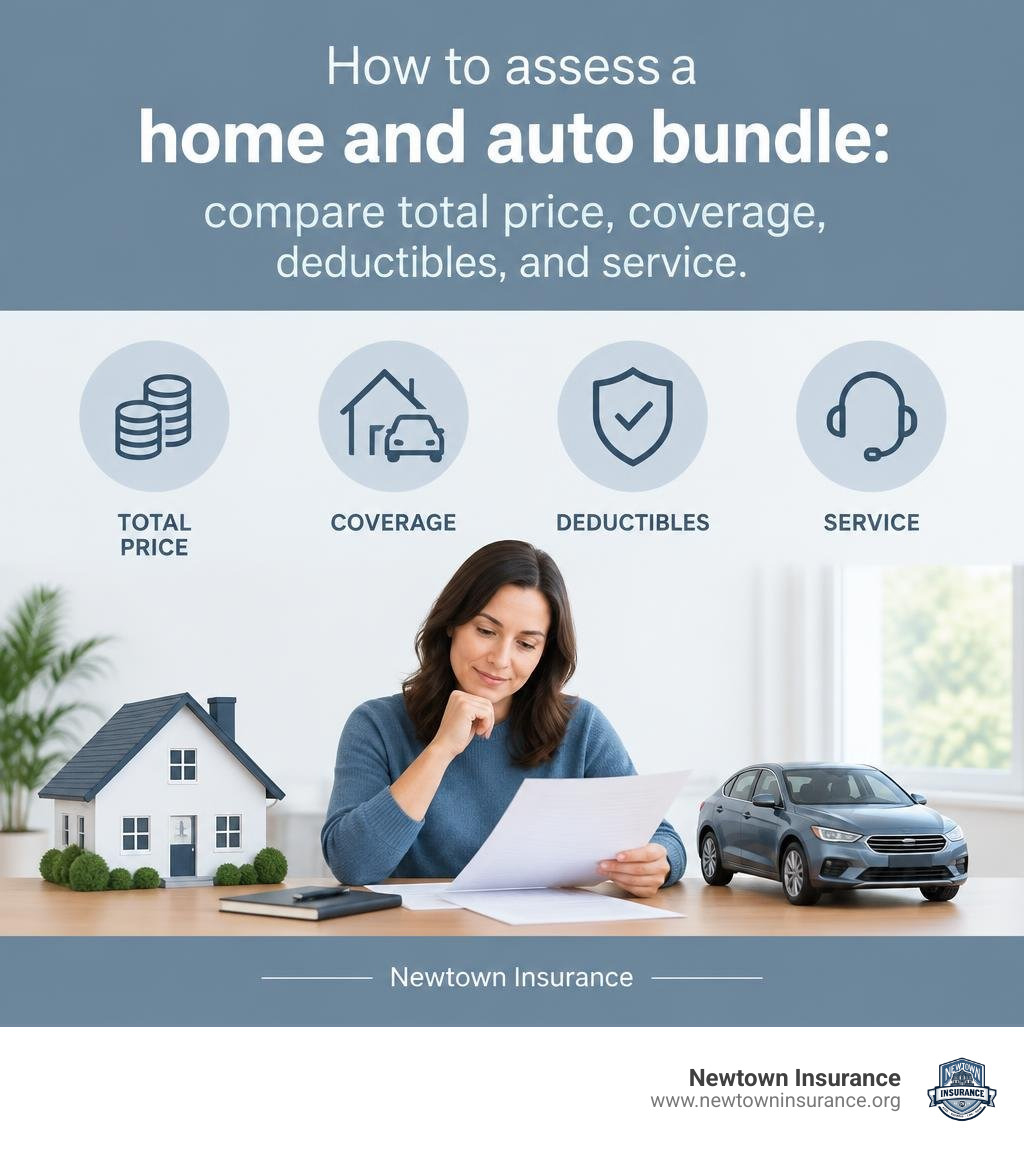
Bundling auto and home terms at a glance:
The Fundamentals of Bundling Auto and Home Insurance

At its core, bundling is the practice of purchasing two or more insurance policies through a single insurance carrier or agency. Rather than managing your homeowners insurance through one provider and your car insurance through another, you package them under one roof. In return for your expanded business, insurance companies offer a multi-policy discount that lowers the overall premium on one or both coverages.
When you look at your declarations page—the front page of your insurance policy summarizing your limits, deductibles, and premiums—a multi-policy setup coordinates these terms. It gives you a clear snapshot of your entire household risk profile.
Understanding the fundamentals means looking past the advertising pitch. Insurance carriers use bundles to attract and keep policyholders. For consumers, the real value lies in matching competitive pricing with coordinated coverage that prevents protection gaps.
What Multi-Policy Coverage Entails
Multi-policy coverage consolidates your account management. Instead of tracking multiple billing schedules, policy effective dates, and policy portals, you deal with a single carrier or agent.
This account consolidation brings immediate administrative relief:
- Unified Billing: You receive combined statements or aligned payment dates, which minimizes the risk of missed payments.
- Single Point of Contact: You work with one agency team that understands your vehicles, your property, and your overall liability exposure.
- Premium Reduction: Insurers apply discounts ranging from 10% to 25% across the combined policies.
When exploring your options, evaluating comprehensive auto and home bundle options allows you to see how different carriers structure their underlying limits, endorsements, and discount credits.
Bundling Auto and Home for Renters and Condo Owners
A common misconception is that bundling requires owning a standalone single-family house. That is not the case. Multi-policy discounts apply to nearly all residential property insurance types when paired with auto coverage:
- Condo Owners (HO-6 Policies): Condo policies cover your interior walls, fixtures, and personal belongings, while the master policy covers the building exterior. When paired with auto insurance, condo owners save an average of $1,350 across their policies.
- Renters and Tenants (HO-4 Policies): Tenants need protection for personal property and personal liability. Pairing tenant insurance with a vehicle policy yields average savings of $1,300, providing an accessible discount for non-homeowners.
- Multi-Vehicle and Specialty Lines: You can often expand your package beyond one car and a residence. Many households integrate secondary vehicles or explore combining car, motorcycle, and home insurance combined to maximize their rate reductions.
Financial and Practical Benefits of Multi-Policy Coverage

The primary reason most drivers and homeowners look into multi-policy arrangements is direct cost reduction. However, package value extends beyond lower premiums. Coordinated administrative management, unified liability umbrellas, and simplified claim handling all contribute to long-term financial security.
Premium Discounts and Potential Savings
Multi-policy discounts are among the largest premium reductions offered in the property and casualty insurance sector. Homeowners who combine residential and auto policies frequently save up to 25%, with average recorded savings reaching $1,870 depending on property value and driving history.
Typical discount structures include:
- Auto Policy Discount: Generally between 10% and 15% off the base auto premium.
- Home Policy Discount: Typically between 10% and 25% off the property insurance premium.
Finding the best insurance bundles for combining auto and home coverage requires evaluating how these discount percentages apply to your baseline premiums. A 20% discount on a policy that is overpriced to begin with may still cost more than an unbundled policy from a competitive carrier.
Single Deductibles and Streamlined Claims Management
One practical advantage of a bundled policy package is the single deductible provision offered by select carriers.
Consider a severe weather event, such as a severe storm that brings a large tree limb down across your roof while also crushing the hood of your car parked in the driveway. Under separate insurance companies, you face two distinct claims processes:
- A homeowners claim subject to your home deductible (e.g., $1,500).
- An auto comprehensive claim subject to your vehicle deductible (e.g., $500).
- Total out-of-pocket deductible expense: $2,000.
Under a single-carrier bundled package with a single deductible feature, you only pay one deductible (usually the higher of the two) for the entire occurrence. A single adjuster can often be assigned to evaluate the holistic property damage, streamlining your paperwork, phone calls, and repair timelines.
Additional Coverage Options and Liability Protection
Bundling makes it easier to establish a seamless liability shield across your assets. If you carry $300,000 in personal liability on your home policy and $250,000/$500,000 liability limits on your auto policy, an umbrella policy can sit on top of both.
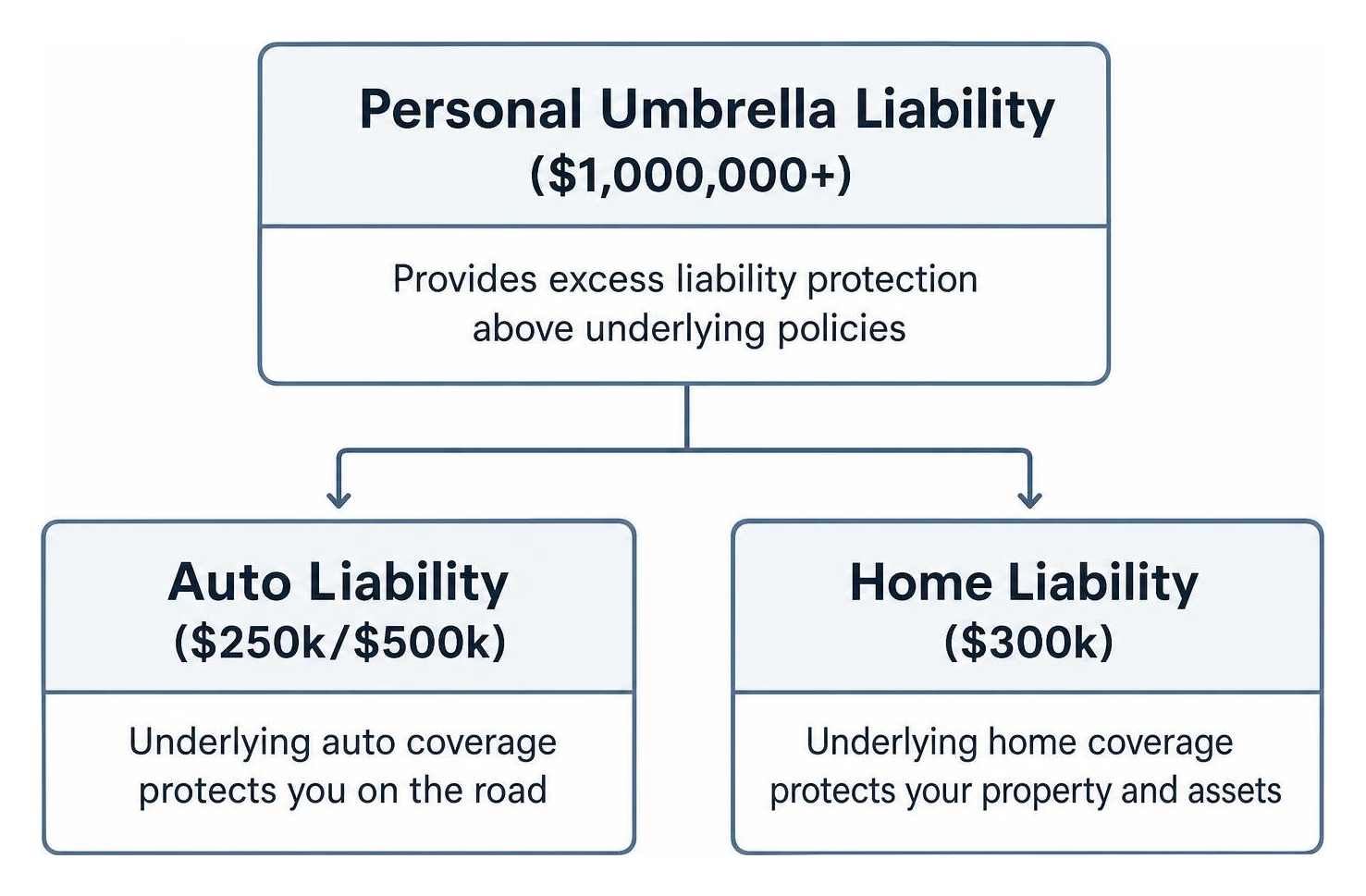
Carriers generally require your underlying home and auto limits to match specific minimum thresholds before issuing an umbrella policy. When all coverages are managed by one provider, coordinating those limits is straightforward, eliminating gaps where a claim might fall between differing carrier guidelines. Many policyholders also review specialized home and auto bundle options to secure built-in endorsements like legal assistance, water backup, or equipment breakdown coverage.
Comparing Bundled vs. Standalone Insurance Policies
While multi-policy packages offer strong advantages, bundling is not universally the best choice for every household. Determining whether to bundle or buy standalone policies requires an objective comparison of the total net cost and the quality of protection.
| Feature | Bundled Package | Standalone Policies |
|---|---|---|
| Pricing Structure | Multi-policy discount applied to both lines (10%–25% savings). | Standard base rates per carrier with line-specific discounts only. |
| Deductible Treatment | Potential for a single deductible during joint loss events. | Separate deductibles required for property and vehicle claims. |
| Billing and Admin | Single renewal portal, coordinated dates, combined payments. | Multiple logins, different renewal timelines, separate billing fees. |
| Coverage Customization | Standardized endorsements across one carrier platform. | Freedom to choose niche carriers specializing in unique property or auto risks. |
| Rate Stability Impact | A claim on one policy could influence overall renewal pricing. | Loss history isolated entirely to the specific carrier and policy line. |
Key Evaluation Metrics When Shopping Quotes
When evaluating insurance quotes, perform an apples-to-apples comparison using these metrics. The National Association of Insurance Commissioners’ homeowners insurance shopping tool can also help you compare policy details and questions to ask:
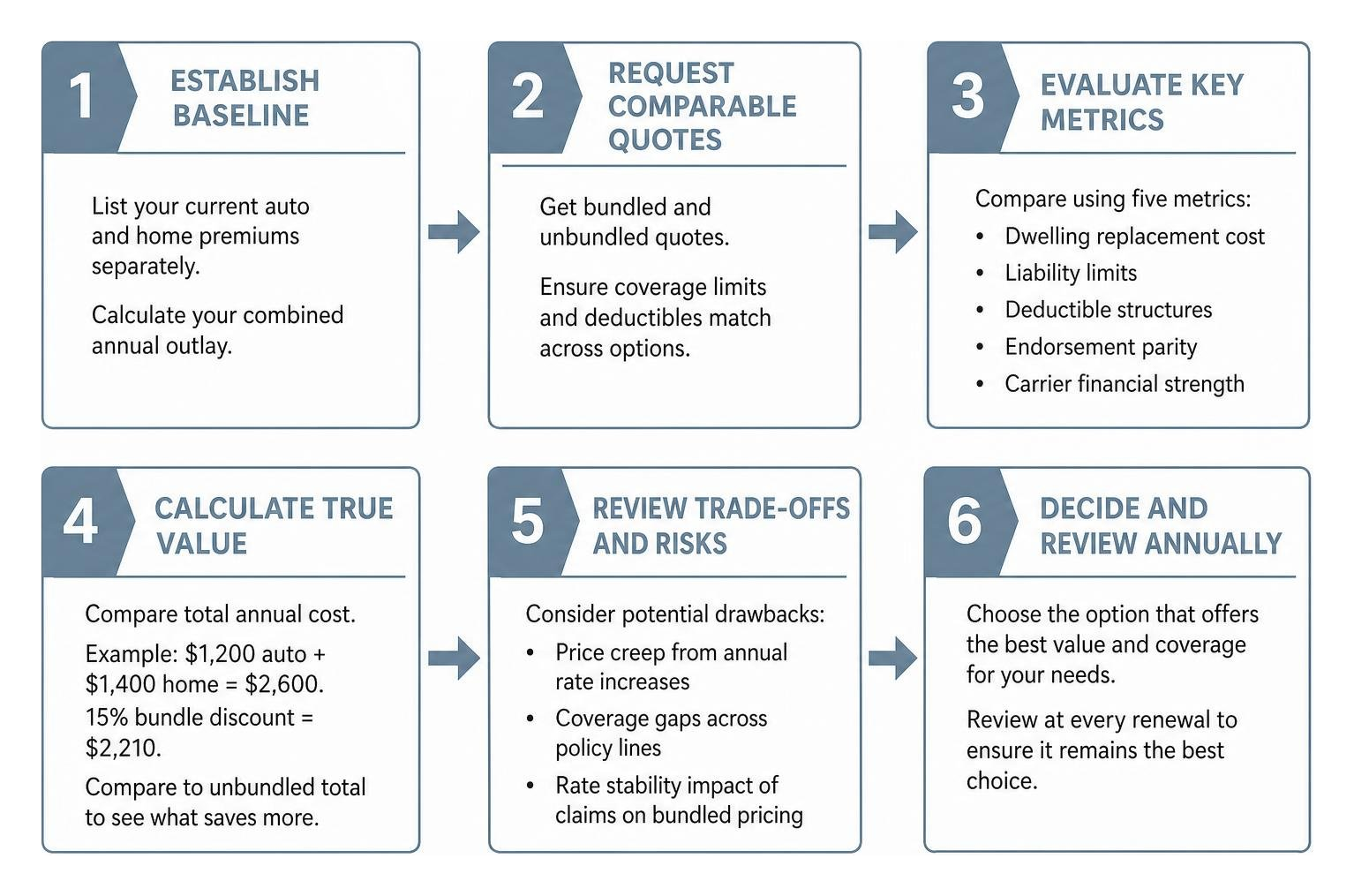
- Dwelling Replacement Cost: Ensure the bundled quote calculates realistic construction replacement costs rather than reducing coverage to make the premium look cheaper.
- Liability Limits: Verify that both quotes carry identical personal liability and bodily injury limits.
- Deductible Structures: Check whether property deductibles are flat dollar amounts ($1,000) or percentage-based deductibles (1% to 2% of dwelling limit for wind/hail).
- Endorsement Parity: Ensure essential add-ons, such as water/sewer backup, service line protection, and roadside assistance, are included equally in all quotes.
- Carrier Financial Strength: Confirm that the carrier holds a stable financial rating (A- or better from A.M. Best).
Assessing the True Value of Bundling Auto and Home
To evaluate true value, calculate the combined annual outlay. If Carrier A offers auto insurance for $1,200 and home insurance for $1,400, your baseline is $2,600. A 15% bundle discount brings the cost down to $2,210.
However, if Carrier B offers specialized auto coverage for $900, and Carrier C offers standalone home insurance for $1,200, your unbundled total is $2,100. In this scenario, purchasing separate policies saves $110 per year compared to the bundled package from Carrier A. Assessing options through resources on the best insurance company for home and auto bundle helps highlight when packaging works in your favor and when splitting policies makes better financial sense.
Potential Drawbacks and Common Mistakes to Avoid
Bundling is convenient, but convenience can sometimes lead to complacency. Policyholders who put their insurance on autopay without regular reviews often encounter preventable issues over time.
Price Creep and Coverage Gaps
Price creep occurs when an insurer gradually increases renewal rates by 4% to 8% annually. Because the policies are bundled, customers are often hesitant to shop around, assuming the multi-policy discount continues to deliver the lowest price available. Over several years, those incremental increases can erase the original discount savings.
Coverage gaps can also arise when a carrier excels in one line of insurance but offers restrictive terms in another:
- Property Exclusions: A carrier with competitive auto rates might offer home coverage with strict roof-age depreciation schedules or low water backup limits.
- High-Risk Drivers: Adding a teen driver or having an at-fault accident can spike your auto rate significantly. If your carrier’s auto pricing is uncompetitive for high-risk profiles, keeping the home policy tied to it may inflate your total costs.
- Specialty Exposures: Standard homeowners policies exclude flood damage and often place low sub-limits on jewelry, fine art, or home-based businesses.
Coordinating Policy Effective Dates and Renewals
A common operational error occurs when switching to a bundled policy while existing policies have staggered expiration dates.
Avoid these critical mistakes:
- Canceling Too Early: Never cancel an active policy until you have written confirmation and an active policy number from your new carrier. A coverage lapse can trigger lender penalties and increase your future insurance rates.
- Overlapping Coverages: If your auto policy renews in January and your home policy renews in July, work with your agent to write a pro-rated or short-term policy to align the renewal dates without paying duplicate premiums.
- Ignoring Escrow Requirements: When replacing a homeowners policy, notify your mortgage servicer immediately so escrow payments are routed to the new carrier without delay.
Frequently Asked Questions About Insurance Bundles
Will a home insurance claim affect my auto insurance rates on a bundled policy?
In most cases, no. Insurance carriers maintain separate rating algorithms for property claims and auto claims. A claim for hail damage or a plumbing leak will apply to your property loss record (C.L.U.E. report) without directly affecting your auto driver tier.
However, if a claim is severe enough to cause a loss of your property claims-free discount, the net premium on your home policy will rise even though your auto discount remains intact.
How does a single deductible work during a severe weather event?
When a covered peril—such as a fallen tree, severe hail, or a structural collapse—damages both your dwelling and an insured vehicle, a single deductible endorsement waives the lower deductible.
For instance, if your homeowners deductible is $1,000 and your auto comprehensive deductible is $500, the carrier applies only the $1,000 property deductible to the combined loss settlement, saving you $500 out of pocket.
Can I adjust coverage options or liability limits on an existing bundle?
Yes. Bundling does not lock your policy terms in place. You can increase dwelling coverage, adjust auto deductibles, add scheduled personal property, or raise liability limits at any point during the policy term. Endorsements take effect on the date requested, and the carrier issues a pro-rated adjustment to your premium billing.
Conclusion
Combining property and auto coverage is one of the most effective ways to lower your insurance costs and simplify policy management. With multi-policy discounts frequently delivering up to 25% in savings alongside perks like single deductibles and streamlined claims, a bundle offers clear value for many households.
However, a discount alone should never be the sole reason for choosing an insurer. True insurance value requires clear coverage limits, tailored endorsements for your property, and regular policy reviews to ensure your rates remain competitive over time.
At Newtown Insurance, we provide transparent guidance and tailored coverage solutions designed around your household’s needs. If you want to see how a bundled package compares to your current coverage, explore our services and coverage options or contact our Newtown, Pennsylvania team today for an independent coverage review.