
Home Insurance Savings Tips That Can Lower Your Premium
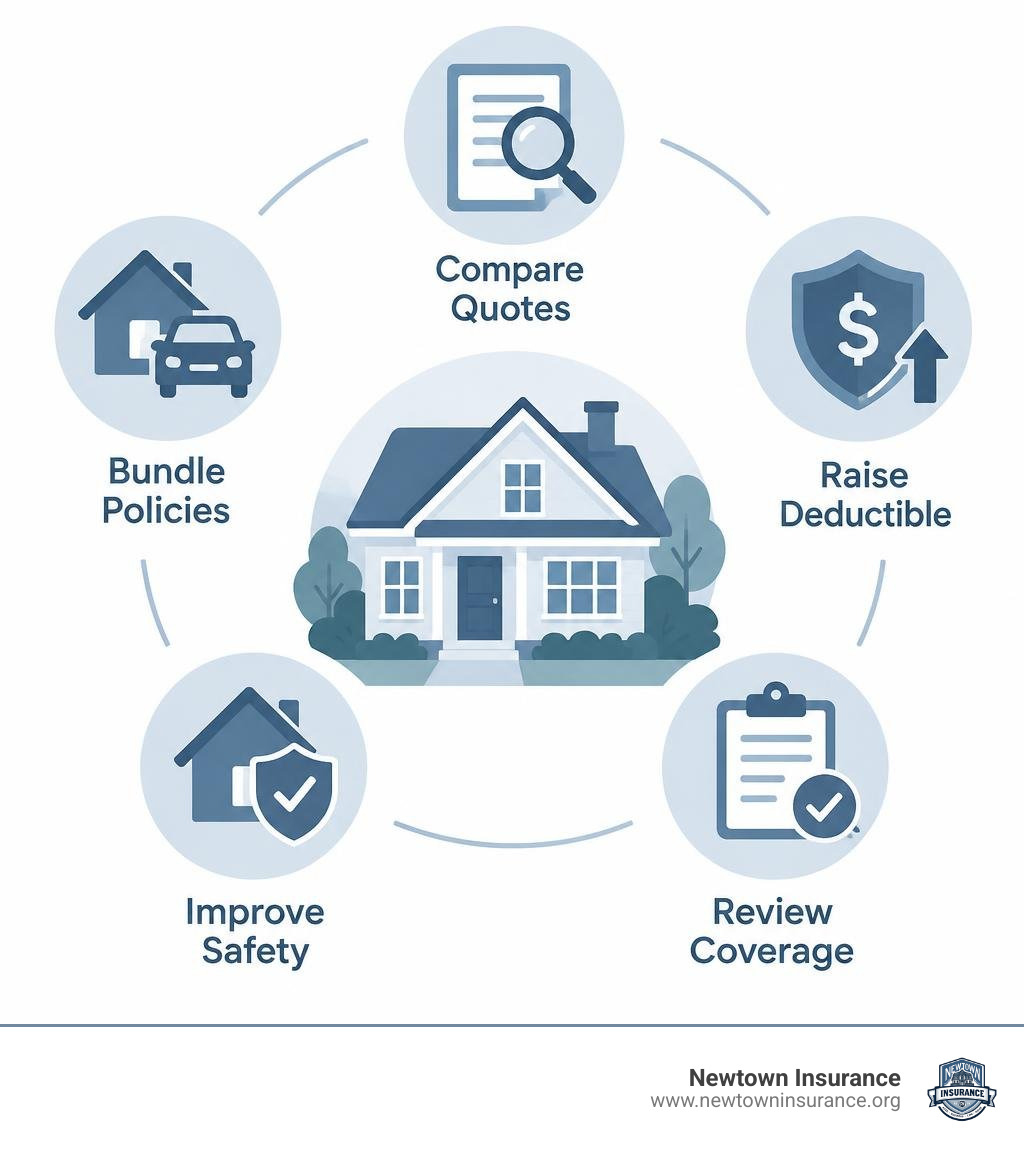
The best home insurance savings tips are simple: compare quotes regularly, bundle home and auto coverage, choose a deductible you can afford, ask for every available discount, and invest in upgrades that reduce real risk. Raising a deductible from $500 to $1,000 may cut premiums by as much as 25%, while bundling can save roughly 5% to 15% – and sometimes more.
Home insurance costs have climbed sharply in recent years because rebuilding costs, severe weather, and insurer losses have increased. That does not mean you should cut valuable coverage just to get a lower bill. The goal is to remove waste, reduce preventable risks, and make sure your policy reflects your home’s current rebuild cost – not its market price.
In this guide, you will learn which savings moves tend to matter most, when a home upgrade is worth the cost, and how to avoid common mistakes such as filing small claims that could raise future rates.
I am Shawn Beihl, with more than 15 years of experience in specialty insurance, commercial property and casualty, life, health, and risk management. I use that background to explain practical home insurance savings tips that can lower costs while helping families keep the protection they need.
Home insurance savings tips further reading:
Core Home Insurance Savings Tips to Slash Your Premiums
Taking control of your annual insurance bill does not require gutting your policy limits or hoping for the best when bad weather hits. Instead, practical premium reduction comes down to smart risk management and understanding how carriers price risk. Across the nation, homeowners have faced massive rate adjustments: premiums jumped 12% in 2023, followed by another 6.9% increase in the first half of 2024, pushing the average annual premium up to $2,948 in 2025. Since 2021, rates have surged 46%—roughly three times the rate of inflation.
Fortunately, standard carrier pricing algorithms reward homeowners who take proactive steps to minimize claim risk. By applying foundational strategies, you can immediately capture double-digit percentage discounts on your policy.
Bundle Multi-Policy Coverage for Maximum Reductions
Combining multiple policies with a single carrier remains one of the fastest and most reliable ways to slash your overall insurance costs. When you secure your vehicle and property protection under one roof, carriers reward the combined business by discounting each component.
Setting up a multi-policy discount through bundling home and auto insurance consistently generates an average savings of 18%, with some combinations delivering between 5% and 25% off your total premium.
Beyond the immediate financial discount, placing your policies with a single insurer streamlines your annual paperwork. You manage one online portal, coordinate policy renewal dates together, and frequently work with dedicated customer service teams who understand your complete household risk profile. If you have specialty vehicles, boats, or secondary policies, bundling those lines can unlock further multi-tier account credits.
Strategic Deductible Adjustments and Risk Management
Your deductible represents the out-of-pocket amount you agree to pay before your insurer covers a covered loss. Shifting this threshold is the most direct lever you have for immediate premium savings.
Carriers charge significantly higher rates for low deductibles because small claims require administrative overhead and signal higher risk frequency. For example, adjusting your home insurance deductible from $500 to $1,000 can cut your base premium by up to 25%. Increasing that threshold further—such as moving from $1,000 to $2,500—can save an additional 9%, while a $5,000 deductible can generate premium cuts of roughly 37%.
When considering this adjustment, keep the following guidelines in mind:
- Maintain an Emergency Fund: Never select a deductible higher than the liquid cash reserves you have set aside for home maintenance and unexpected repairs.
- Calculate the Breakeven Timeline: Divide the upfront deductible difference by your annual premium savings to determine how many claim-free years it takes to come out ahead.
- Review Regulatory Advice: Check the NAIC consumer insights on insurance saving strategies to ensure your deductible choices align with standard state insurance protection benchmarks.
Smart Home Security Upgrades and Mitigation
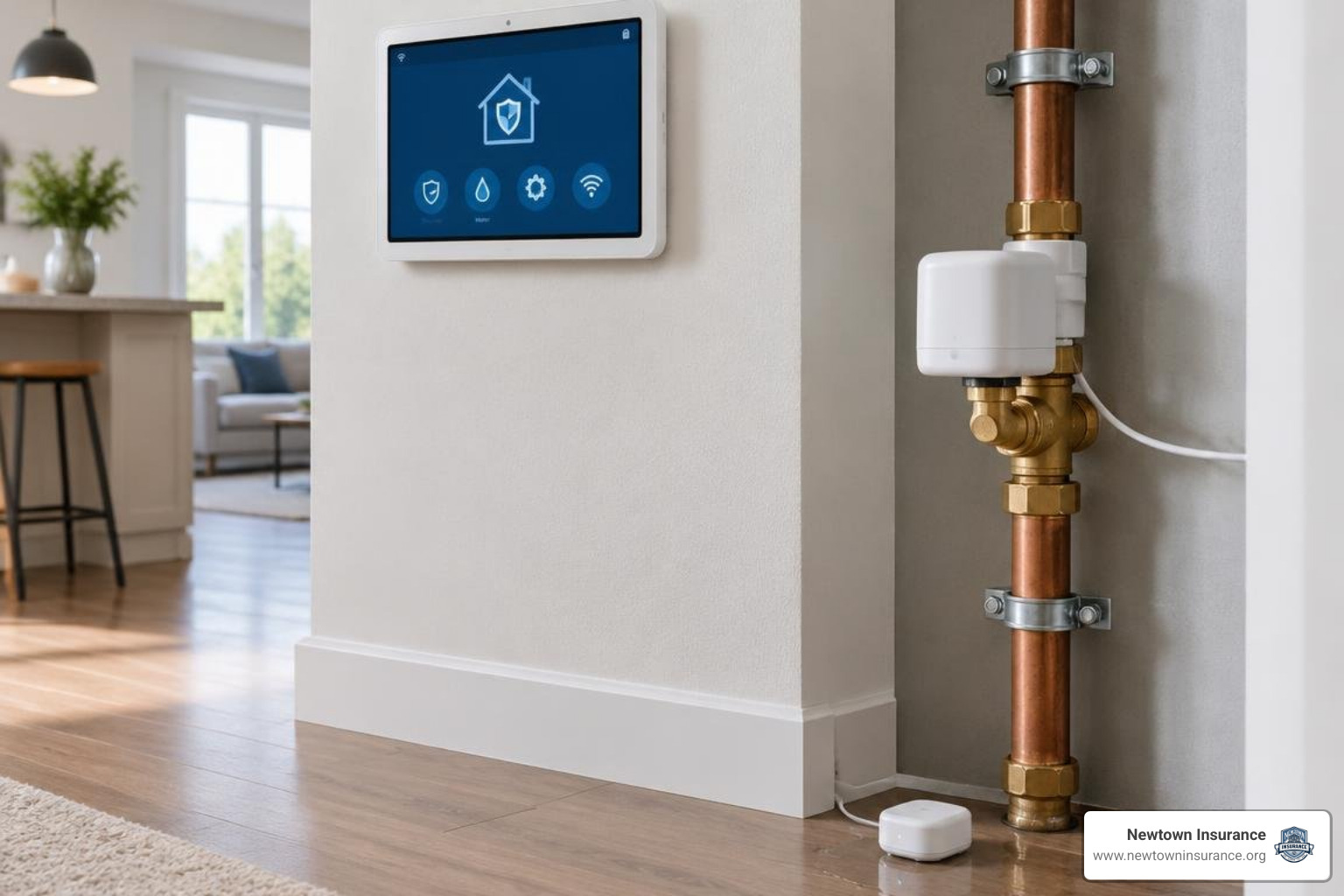
Preventing damage before it happens directly protects your wallet and keeps your claims history spotless. Insurers heavily discount homes equipped with safety devices that alert authorities or automatically mitigate disasters.
Reviewing a comprehensive home insurance discounts guide reveals how basic and advanced systems impact your bottom line:
- Monitored Burglary & Fire Alarms: Central-station systems that alert local emergency responders 24/7 provide savings of up to 15%.
- Automatic Water Shutoff Valves & Leak Sensors: Water damage is one of the leading non-weather causes of property claims. Installing smart sensors that detect pipe leaks and shut off main supply valves can earn premium credits between 5% and 10%.
- Basic Protective Hardware: Installing deadbolts, smoke detectors, and fire extinguishers on every floor yields modest credits (1% to 3%), but combined with advanced hardware, these features help you maximize total discount caps.
Structural Fortification and Weather Resilience
Severe weather and changing climate patterns are primary drivers behind modern rate hikes. Modern building materials and physical structural enhancements make your home significantly more resilient against the elements, earning substantial credits from property underwriters.
Structural Home Insurance Savings Tips for Extreme Weather
Strengthening your home against local weather perils produces some of the steepest premium reductions available in property insurance. Upgrades that protect the building envelope prevent catastrophic losses, saving insurers tens of thousands of dollars in major claim payouts.
| Structural Enhancement | Primary Protection Factor | Typical Premium Discount Range |
|---|---|---|
| Class 4 Impact-Resistant Shingles | Hail and projectile damage | 10% – 35% |
| Wind-Resistant Roof-to-Wall Ties | Uplift resistance in severe storms | 10% – 20% |
| Impact-Resistant Windows & Shutters | High wind and flying debris | 5% – 15% |
| Fire-Wise Perimeter Clearing | Wildfire ember defense | ~5% |
| Non-Combustible Siding Upgrades | Fire and thermal exposure | 5% – 12% |
Upgrading to a Class 4 impact-resistant roof is particularly effective in storm-exposed regions, saving between 10% and 35% on annual premiums. In hail- and wind-prone areas, certified wind-mitigation inspections can document these improvements directly for your carrier, unlocking significant annual credits that offset installation costs over time.
Modernizing Home Systems to Prevent Losses
The physical systems running through your walls dictate a substantial portion of your home’s underlying risk score. As mechanical and structural components age, their failure rate climbs dramatically, leading carriers to add risk surcharges or restrict standard water damage coverage.
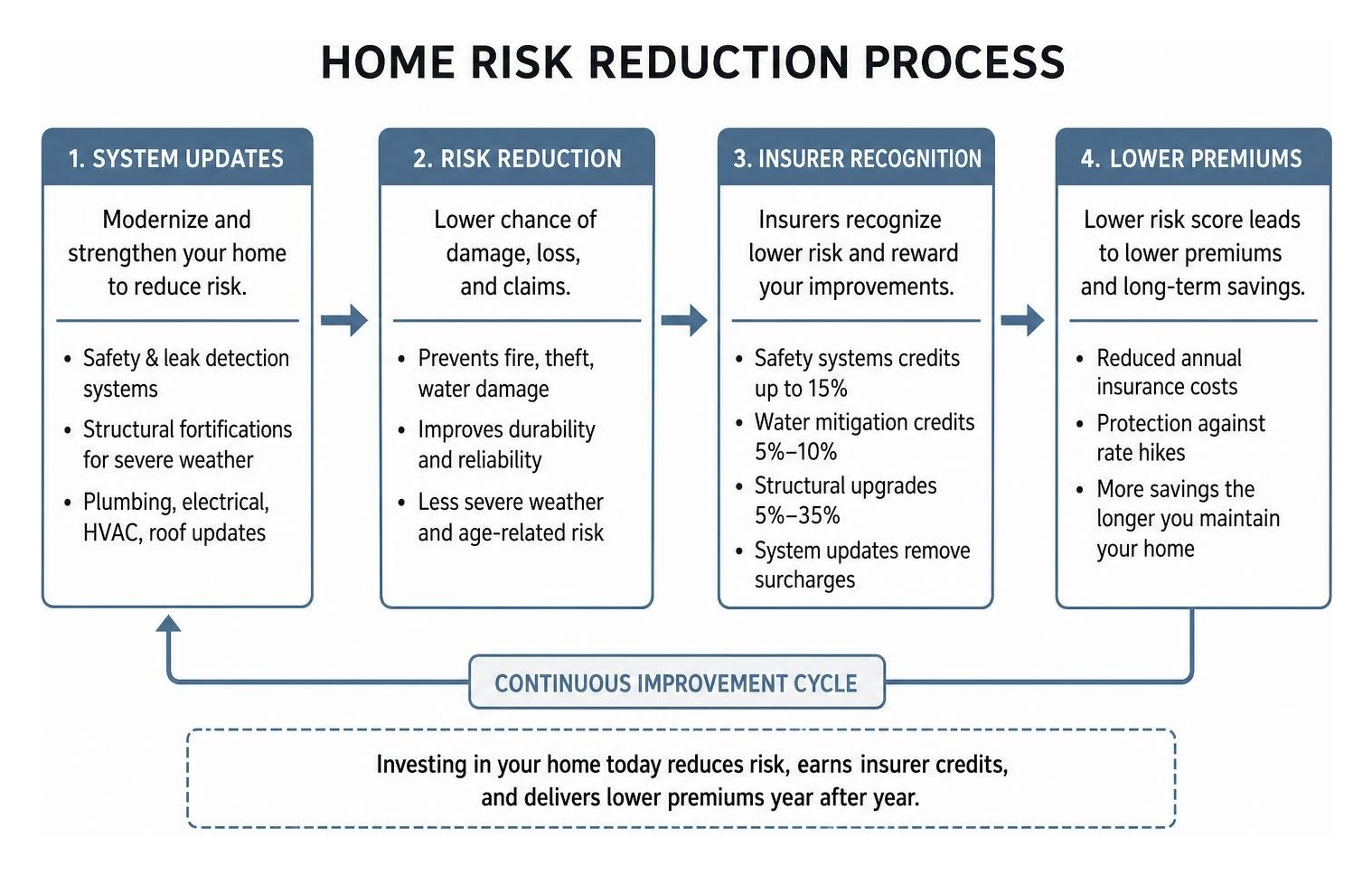
Modernizing major infrastructure yields significant policy savings:
- Plumbing Systems: Replacing legacy galvanized steel or polybutylene pipes with modern PEX or copper eliminates corrosion risks and protects against sudden pipe bursts.
- Electrical Panels: Upgrading obsolete fuse boxes or older panels reduces fire hazards, satisfying carrier safety underwriting standards.
- HVAC and Water Heaters: Replacing aging water heaters (over 10–12 years old) removes a major source of catastrophic indoor basement flooding.
- Roof Age Updates: An aging roof can trigger premium surcharges of 10% to 15%, while a newly constructed or fully replaced roof can qualify for discounts up to 40% when combined with new home construction credits.
For additional perspectives on risk reduction and utility upgrades, explore this CNBC analysis on reducing homeowners insurance costs.
Smart Policy Management and Coverage Auditing
Lowering your property insurance rates requires ongoing vigilance. A policy that fit your needs five years ago may contain outdated coverages or missed discount opportunities today.
Annual Rate Comparison and Policy Shopping
Insurers update their internal rate tables, underwriting formulas, and regional risk maps annually. As a result, the carrier offering the best price three years ago might no longer be the most cost-effective option today.
To keep your pricing sharp, use an established guide to comparing home insurance quotes to evaluate your coverage every one to two years:
- Pull Your Declarations Page: Collect your current policy declarations page to establish a baseline for your dwelling limits, liability coverage, and deductibles.
- Obtain Multiple Independent Quotes: Request quotes from at least three to five carriers to identify competitive rates across standard, regional, and mutual insurers.
- Compare Identical Limits: Always ensure quotes use matching dwelling coverage, personal property replacement cost terms, and deductible amounts so you compare exact coverage levels.
- Consult Independent Insurance Advisors: Local independent professionals can check pricing across diverse markets without locking you into a single corporate brand.
Claims Frequency and Credit Score Optimization

Your personal risk score is influenced by factors beyond the physical condition of your house. In most states, insurers use credit-based insurance scores alongside historical property claims databases to calculate rates.
- Manage Credit-Based Scores: Underwriters have demonstrated a statistical link between higher credit scores and lower claim filing rates. Improving your credit score by paying down revolving balances, making payments on time, and disputing credit report inaccuracies can cut your rates significantly.
- Maintain a Claims-Free Record: Insurers typically offer a 5% to 10% claims-free discount after three to five consecutive years without a claim.
- Review Comprehensive Loss Reports: Obtain your Comprehensive Loss Underwriting Exchange (CLUE) report periodically to verify that closed or inquiries-only claims are not mistakenly listed as paid losses.
For actionable strategies on managing your personal risk profile, review these actionable insurance savings tips.
Reassessing Coverage Limits and Add-On Endorsements
A common reason homeowners overpay for property coverage is confusing market real estate value with true structural reconstruction costs. Your dwelling coverage should only reflect the labor and materials needed to rebuild your home from the ground up—never the land value, school district prestige, or market location premiums.
Make sure your coverage limits remain balanced by reviewing key policy components:
- The Coinsurance 80% Rule: Maintain dwelling coverage equal to at least 80% of your total estimated replacement cost to prevent penalty deductions on partial loss payouts.
- Evaluate Add-Ons: Review endorsements annually. If you no longer own specific high-value collectibles or jewelry, adjust your scheduled personal property coverage limits accordingly.
- Check Temporary Housing Limits: Periodically assess your temporary living arrangements coverage by evaluating loss of use limits to ensure they reflect local rental rates without carrying excessive unneeded capacity.
Frequently Asked Questions About Home Insurance Savings
What are the most overlooked home insurance savings tips for homeowners?
Beyond the standard auto-bundle and deductible changes, several smaller discounts can be stacked together to trim your premium:
- Paid-in-Full & Electronic Billing: Paying your premium annually instead of monthly removes administrative installment fees (saving 5% to 10%), while paperless billing adds another small credit.
- Retiree and Age Credits: Policyholders aged 55 and older who are retired spend more time at home, which allows them to catch plumbing leaks or hazards early. Many insurers offer mature homeowner discounts of 10% to 25%.
- Professional & Alumni Affiliations: Many carriers extend group-rate reductions to members of specific professional organizations, unions, engineering societies, or university alumni networks.
- Non-Smoker Households: Maintaining a smoke-free home reduces fire hazards and can qualify you for specialty carrier discounts.
How does replacement cost differ from actual cash value when trying to save?
Choosing between Replacement Cost Value (RCV) and Actual Cash Value (ACV) significantly affects both your upfront premium and your future claim payout:
- Replacement Cost Value (RCV): Reimburses the full cost to repair or replace damaged property with new materials of like kind and quality, without deductions for depreciation.
- Actual Cash Value (ACV): Reimburses the depreciated value of the damaged item based on its age and wear-and-tear.
While choosing an ACV policy reduces your annual premium, it often results in heavy out-of-pocket costs when a disaster strikes. For example, if a 12-year-old roof is destroyed, an ACV policy only pays a depreciated fraction of the replacement cost, leaving you to pay the difference out of pocket. Maintaining RCV coverage for your dwelling and personal property protects your personal finances during major claims.
When should I avoid filing a homeowners insurance claim?
Filing frequent or minor property claims can erase your claims-free discounts and lead to premium surcharges of 7% to 25% for three to five years. In some cases, multiple claims within a short window can even trigger policy non-renewal.
As a general guideline, handle repairs out of pocket if the estimated repair cost is close to your deductible. For example, if your deductible is $1,000 and a plumbing repair costs $1,300, filing a claim will only net you a $300 payout while risking hundreds of dollars in cumulative premium surcharges over the next three years. Save your insurance policy for catastrophic, high-dollar structural losses that would otherwise disrupt your household finances.
Conclusion
Managing your homeowners insurance costs does not require compromising the safety and structural protection of your home. By combining smart policy structures—such as bundling multi-policy coverage, right-sizing your deductibles, and eliminating redundant endorsements—with home physical security upgrades, you can successfully lower your annual insurance costs.
An annual policy audit ensures you take advantage of new discounts, maintain accurate rebuilding values, and keep your property adequately protected against inflation and severe weather.
At Newtown Insurance, we provide tailored protection, transparent pricing, and customer-first guidance to help you navigate modern insurance markets without overpaying. To audit your existing coverage, uncover overlooked discount opportunities, and explore customized service solutions for your property, connect with our team through our comprehensive services portfolio today.