Low Cost Health Insurance PA Options When Your Budget Is Tight
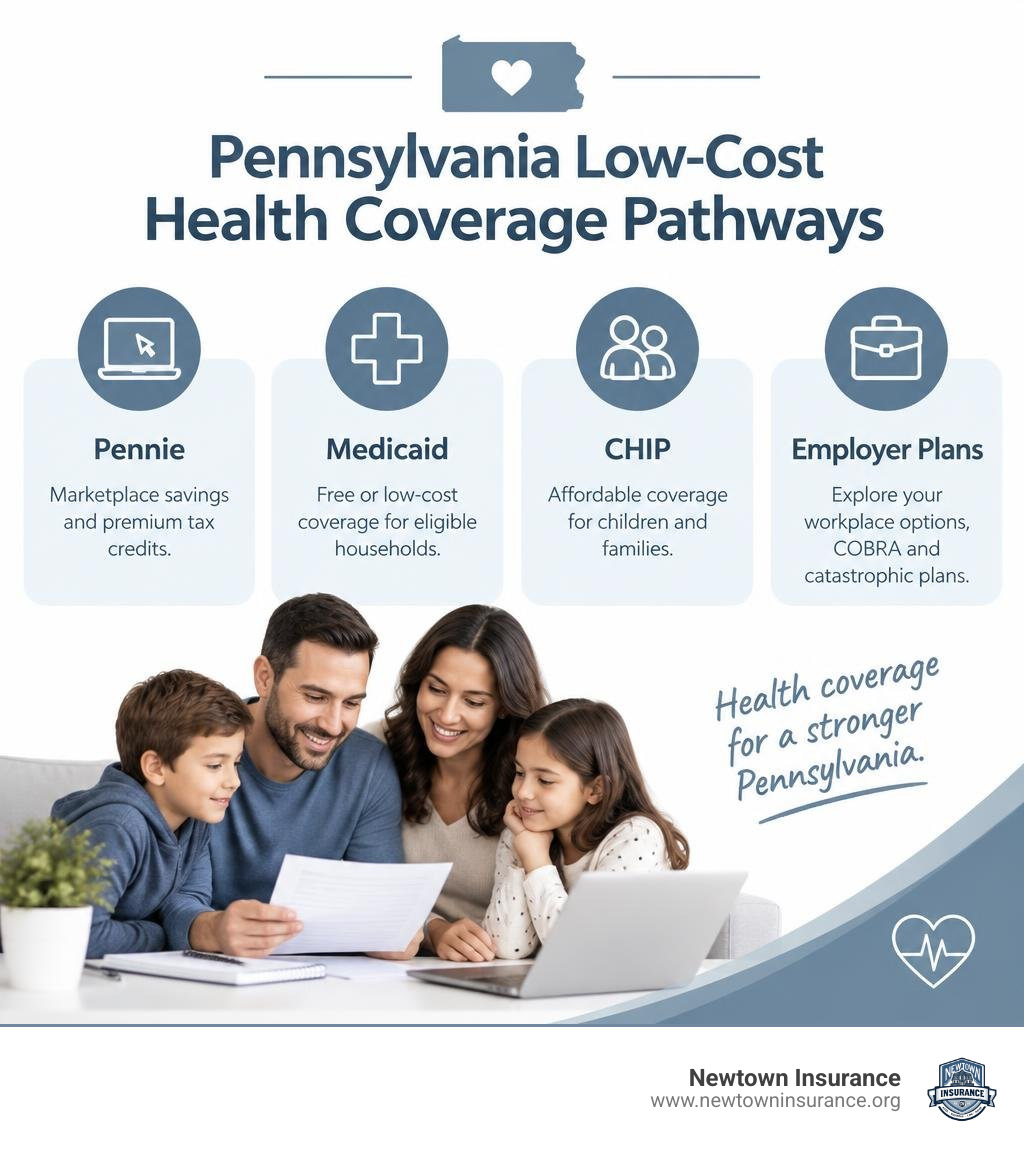
If you need low cost health insurance in PA, start by checking Pennie for marketplace savings, then see whether you qualify for Pennsylvania Medical Assistance (Medicaid) or CHIP. Compare the total cost – monthly premium, deductible, copays, and prescription coverage – rather than choosing the lowest monthly price alone.
In 2026, this step matters more than ever. Pennsylvania approved average ACA premium increases of nearly 22%, while the expiration of enhanced federal premium tax credits caused affected Pennie enrollees’ costs to rise by an average of 102%. If you have lost job-based coverage, had an income change, or experienced another qualifying life event, you may be able to enroll outside the usual November 1 through January 15 open enrollment period.
Pennie plans still include essential health benefits and may come with premium tax credits or lower out-of-pocket costs for eligible households. For residents with lower incomes, Medical Assistance and CHIP can offer free or low-cost coverage year-round. If marketplace coverage still does not fit your budget, it is worth reviewing employer coverage rules, COBRA alternatives, and catastrophic-plan eligibility carefully before going uninsured.
I am Shawn Beihl, with more than 15 years of experience across health, benefits management, disability, life, and commercial insurance. I help Pennsylvania residents understand low cost health insurance PA choices, spot coverage gaps, and make clearer decisions when every dollar counts.
Handy low cost health insurance pa terms:
Main Pathways to Low Cost Health Insurance PA Residents Can Access
Securing affordable healthcare in Pennsylvania requires understanding the distinct systems designed to shield your household from catastrophic medical expenses. Around 80% of Pennsylvania’s uninsured residents express deep anxiety regarding medical debt and potential financial ruin stemming from unexpected injuries or illnesses. Going without health coverage is a dangerous gamble, yet roughly 60% of consumers report finding individual marketplace plans unaffordable without meaningful financial assistance.
Every comprehensive health plan sold to individuals in Pennsylvania must cover the 10 Essential Health Benefits mandated by the Affordable Care Act. These benefits include:
- Ambulatory patient services (outpatient care)
- Emergency services and hospitalization
- Maternity, newborn, and pediatric care (including oral and vision care for children)
- Mental health and substance use disorder services
- Prescription medications
- Rehabilitative and habilitative services and devices
- Laboratory tests
- Preventive and wellness services and chronic disease management
These plans are organized into metal tiers: Bronze, Silver, Gold, and Platinum. Bronze plans carry the lowest monthly premiums but the highest out-of-pocket deductibles, making them ideal for individuals who rarely visit doctors. Silver plans hit the sweet spot for budget-conscious families because they unlock extra federal subsidies known as Cost-Sharing Reductions (CSRs). Gold and Platinum plans feature higher monthly payments in exchange for lower deductibles and copayments.
| Coverage Type | Best Suited For | Typical Monthly Cost | Major Advantage | Key Limitation |
|---|---|---|---|---|
| Pennie Marketplace (Subsidized) | Moderate-income earners (138%–400% FPL) | Low to moderate (scaled by income) | Full ACA protections, subsidies, and Cost-Sharing Reductions | Requires open enrollment or a qualifying life event |
| Medical Assistance (Medicaid) | Adults earning up to 138% FPL | $0 premium | Comprehensive care, no deductibles, minimal copays | Strict household income eligibility ceilings |
| CHIP | Children under 19 across all income levels | $0 to low cost based on income brackets | Free or low-cost dental, vision, and medical care | Limited to pediatric dependents only |
| Catastrophic Plans | Adults under 30 or those with hardship exemptions | Lower baseline premiums | Protects against worst-case medical crises | Very high out-of-pocket deductibles |
Pennsylvania Marketplace Plans: How to Secure Low Cost Health Insurance PA Subsidies
Pennie is Pennsylvania’s official state-based health insurance marketplace exchange. It is the only platform where Pennsylvanians can access Advance Premium Tax Credits (APTC) and Cost-Sharing Reductions. Understanding Pennsylvania health insurance basics can help you determine how these financial tools bring premiums within reach.
Subsidies are calculated against Federal Poverty Level (FPL) benchmarks. For 2026, key baseline thresholds for individuals and families guide your subsidy calculations:
- Individual at 150% FPL: $23,475
- Individual at 200% FPL: $31,300
- Individual at 250% FPL: $39,125
- Family of 4 at 150% FPL: $48,225
- Family of 4 at 200% FPL: $64,300
- Family of 4 at 250% FPL: $80,375
Consumers earning between 100% and 400% FPL receive tax credits that cap the portion of household income required to pay for the benchmark Silver plan. If your income sits below 250% FPL, choosing an eligible Silver plan activates Cost-Sharing Reductions, which lower your deductible, copays, and coinsurance. Roughly four out of five Pennie enrollees qualify for premium tax credits, making these subsidies the primary method for driving down healthcare expenses.
Employer Affordability Rules and Hardship Exemptions
Many workers assume they cannot access marketplace subsidies if their job offers group health coverage. Under federal rules for 2026, an employer’s health plan is legally deemed “unaffordable” if the employee’s required premium contribution for self-only coverage exceeds 9.96% of their total household income.
If your employer’s plan surpasses this 9.96% affordability test, you are legally liberated from the workplace plan and can apply for Pennie subsidies. Furthermore, the resolved “family glitch” ensures that if the cost to cover your family exceeds 9.96% of household earnings, your dependents can access subsidized marketplace plans even if your individual employee-only plan remains technically affordable.

If Pennie plans remain out of reach, catastrophic plans provide an alternative safety valve. These plans are available to individuals under 30 or individuals of any age who receive an official hardship or affordability exemption from Pennie.
Navigating the 2026 Premium Increases and Subsidy Expirations
The Pennsylvania health insurance landscape experienced significant structural changes entering 2026. The Pennsylvania Insurance Department approved 2026 ACA health insurance premiums with an average rate hike of nearly 22%, with some insurers securing individual market increases as high as 38% and small group increases up to 22%. Although regulators intervened to block $50.1 million in excessive insurer rate requests, the market faced compounding upward pressure.
The most severe shock came from the federal expiration of the Enhanced Premium Tax Credits (EPTC). Enacted in 2021 as temporary relief, these expanded credits injected $600 million annually into Pennsylvania, reducing monthly premiums and driving Pennie enrollment up 50% to half a million Pennsylvanians by 2025.
When these enhanced subsidies expired at the end of 2025, premium costs surged by an average of 102% for affected consumers. Many residents faced immediate monthly payment spikes of several hundred dollars. An unprecedented 85,000 enrollees left Pennie during the 2026 open enrollment period—a rate of nearly 1,000 people dropping coverage per day—while new enrollments fell 12%. By September 1, 2026, total marketplace enrollment had dropped to 417,158, as nearly 202,000 consumers canceled coverage due to premium shocks. Implementing clear strategies for navigating the 2026 rate hikes helps policyholders identify structural savings to keep coverage viable.
The State Health Insurance Exchange Affordability Program
To address this coverage drop, Pennsylvania lawmakers established the State Health Insurance Exchange Affordability Program under Act 54 of 2024. This state-funded initiative is structured to supply supplementary premium assistance to lower- and middle-income Pennsylvanians who lost their federal enhanced tax credits.
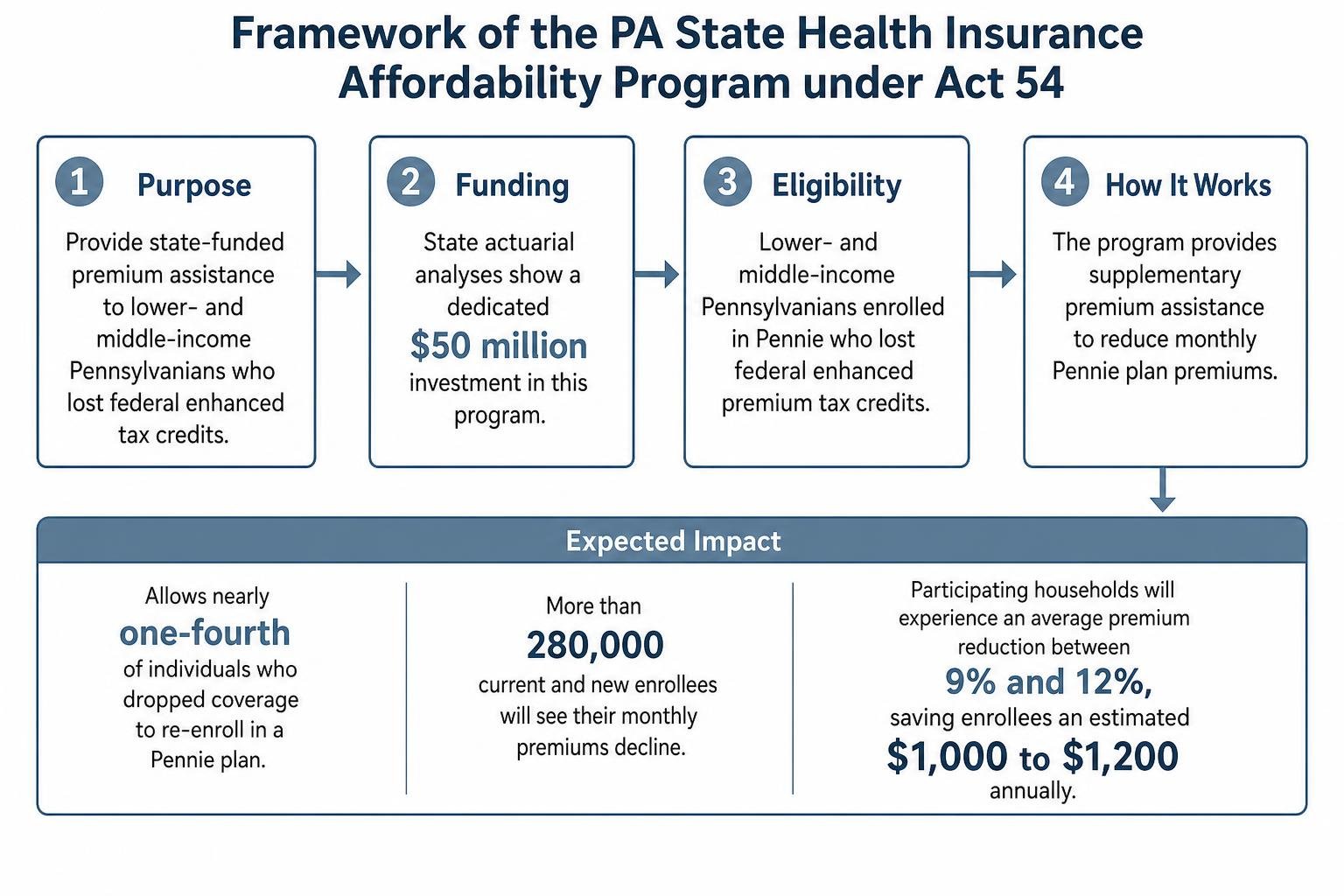
State actuarial analyses show that a dedicated $50 million investment in this program could yield substantial relief:
- It would allow nearly one-fourth of individuals who dropped coverage to re-enroll in a Pennie plan.
- More than 280,000 current and new enrollees would see their monthly premiums decline.
- Participating households would experience an average premium reduction between 9% and 12%, saving enrollees an estimated $1,000 to $1,200 annually.
Residents can monitor official state updates regarding Pennie affordability initiatives to track when these supplemental state funds take effect.
State-Funded Options: Medical Assistance (Medicaid) and CHIP
For Pennsylvanians experiencing low household incomes, state-funded healthcare programs offer a stable safety net. Medical Assistance (Medicaid) and the Children’s Health Insurance Program (CHIP) accept applications all year, without open enrollment windows.
You can learn more about state coverage parameters through official PA Insurance Department consumer resources or read our comprehensive guide to Pennsylvania insurance.
Children’s Health Insurance Program (CHIP) Guidelines
Pennsylvania’s CHIP program provides comprehensive pediatric coverage to uninsured children and teens up to age 19. CHIP provides exceptional care with no waiting lists:
- Free routine checkups, immunizations, and preventive visits
- Comprehensive prescription drug benefits
- Full pediatric dental, vision, and hearing coverage
- Hospitalization, diagnostic tests, and mental healthcare services
CHIP eligibility is divided into income tiers. Families with lower incomes qualify for completely free CHIP coverage with zero monthly premiums and no copayments. Households with higher incomes qualify for low-cost, state-subsidized CHIP plans that cost significantly less than private family insurance policies. Every uninsured child in Pennsylvania who is a U.S. citizen or qualified non-citizen is eligible for CHIP, regardless of parental income.
Medical Assistance (Medicaid Expansion) Coverage
Pennsylvania adopted Medicaid expansion under the ACA, expanding Medical Assistance eligibility to non-elderly adults earning up to 138% of the Federal Poverty Level.
Eligibility is calculated using your Modified Adjusted Gross Income (MAGI). Under 2026 income standards, an individual earning roughly $21,600 or less annually, or a family of three earning up to approximately $36,800, generally qualifies for Medical Assistance.
Medicaid coverage in Pennsylvania features $0 monthly premiums, no deductibles, and minimal out-of-pocket copayments for covered medical services, specialist visits, emergency care, and essential prescription medications.
Alternative Solutions and Enrollment Strategies When Budgets Are Tight
If you fall into the gap where marketplace premiums feel out of reach, you still have concrete ways to manage your healthcare budget without sacrificing vital medical protections. Start by reviewing your household options using our personalized 2026 coverage quotes.
Budget-Friendly Alternatives for Low Cost Health Insurance PA When Facing High Rates
When leaving a job, many employees receive COBRA or Mini-COBRA notices. While COBRA allows you to keep your previous employer’s health plan, you must pay 100% of the premium plus a 2% administrative fee. This makes COBRA one of the most expensive ways to maintain coverage. In almost every case, shopping for a marketplace plan on Pennie or evaluating private options is far more economical.

Some consumers turn to short-term health insurance plans when cash is tight. While short-term policies feature lower sticker prices, they carry significant risks:
- No Essential Health Benefit Mandate: Short-term plans frequently exclude prescription drug coverage, maternity care, and mental health treatments.
- Pre-Existing Condition Exclusions: Insurers can review your medical history and deny claims or cancel coverage for conditions that existed prior to enrollment.
- Dollar Caps on Care: These policies often impose lifetime or annual payout ceilings.
For healthy individuals under 30 or those facing qualifying financial stress, catastrophic coverage through Pennie remains a safer budget-conscious option because it includes standard consumer protections and preventive care at no cost.
Step-by-Step Guide to Applying for Coverage and Lowering Out-of-Pocket Costs
Navigating the application process systematically helps ensure you secure every dollar of assistance available:
- Calculate Your Projected MAGI: Total your expected household income for 2026, including wages, net self-employment earnings, and taxable investments.
- Review Employer Affordability: If offered workplace coverage, calculate whether the self-only premium exceeds 9.96% of your income.
- Submit Your Pennie Application: Enter your household data on Pennie.com to determine whether you qualify for Medicaid, CHIP, or tax credits.
- Select the Right Plan Tier: If your income falls below 250% FPL, prioritize a Silver plan to secure Cost-Sharing Reductions that lower your deductible.
- Prepare Verification Documents: Have recent pay stubs, W-2 forms, or tax returns ready to verify your income if requested.
When preparing your application, our guide on personalized health quote preparation walks you through each step before submitting.
Frequently Asked Questions About Low Cost Health Insurance PA
What are the enrollment deadlines to secure low-cost health insurance in Pennsylvania?
Standard Open Enrollment for individual plans in Pennsylvania runs annually from November 1 through January 15. Enrolling by December 15 ensures your coverage begins on January 1, while enrolling between December 16 and January 15 sets your effective start date to February 1.
Outside of this window, you can enroll only if you qualify for a 60-day Special Enrollment Period (SEP). Qualifying life events include:
- Involuntary loss of employer-sponsored coverage
- Marriage, divorce, or legal separation
- Birth, adoption, or foster placement of a child
- Permanent relocation to a new Pennsylvania coverage area
- Loss of eligibility for Medical Assistance or CHIP
Medical Assistance and CHIP applications are processed year-round with no enrollment deadlines.
What should I do if marketplace premiums become unaffordable after enhanced credits expire?
If your monthly premium jumped following the expiration of enhanced tax credits, take these steps:
- Shop Alternative Metal Tiers: Switch from a Gold or standard Silver plan to a high-deductible Bronze plan to minimize your monthly premium.
- Leverage Cost-Sharing Reductions: If your income is under 250% FPL, confirm you are enrolled in a Silver plan with CSR subsidies to lower your deductibles.
- Request a Hardship Exemption: Apply for a Pennie hardship exemption to unlock low-cost catastrophic plans if you are 30 or older.
- Re-evaluate Medicaid Eligibility: If your household income dropped during the year, update your account to check if you now qualify for Medical Assistance.
Who qualifies for free coverage through Pennsylvania Medical Assistance or CHIP?
Medical Assistance provides free coverage to non-disabled Pennsylvania adults aged 19 to 64 earning at or below 138% of the Federal Poverty Level ($21,600 for an individual in 2026). Pregnant women, children, and individuals with disabilities qualify at higher income levels.
CHIP provides completely free coverage for children in families earning up to roughly 208% FPL (varying slightly by family size). Children from families with higher earnings remain eligible for low-cost subsidized CHIP plans.
Conclusion
Securing reliable, low-cost health insurance in Pennsylvania requires balancing monthly premiums against out-of-pocket deductibles and prescription copays. While 2026 rate increases and subsidy shifts have made finding affordable coverage more challenging, Pennsylvania residents have access to dependable pathways, including Pennie tax credits, Cost-Sharing Reductions, Medical Assistance, and CHIP.
At Newtown Insurance, our team helps Pennsylvania individuals, families, and small business owners navigate their options with transparent pricing and personalized support. You do not have to figure out complex subsidy calculations or compare plan tiers alone. Explore customized health coverage plans with us today to protect your household budget and your health.