Find the Best Dental Insurance in PA Without Overpaying
The best dental insurance in PA depends on what you expect to need: choose a PPO if keeping your current dentist matters, an EPO if you want lower costs and can stay in-network, or an ACA-compliant family plan if you need strong pediatric benefits. For 2026, stand-alone adult dental plans on Pennie range from about $5 to $41 per month, but the lowest premium is not always the lowest total cost once deductibles, waiting periods, and annual benefit limits apply.
Before enrolling, compare these four items:
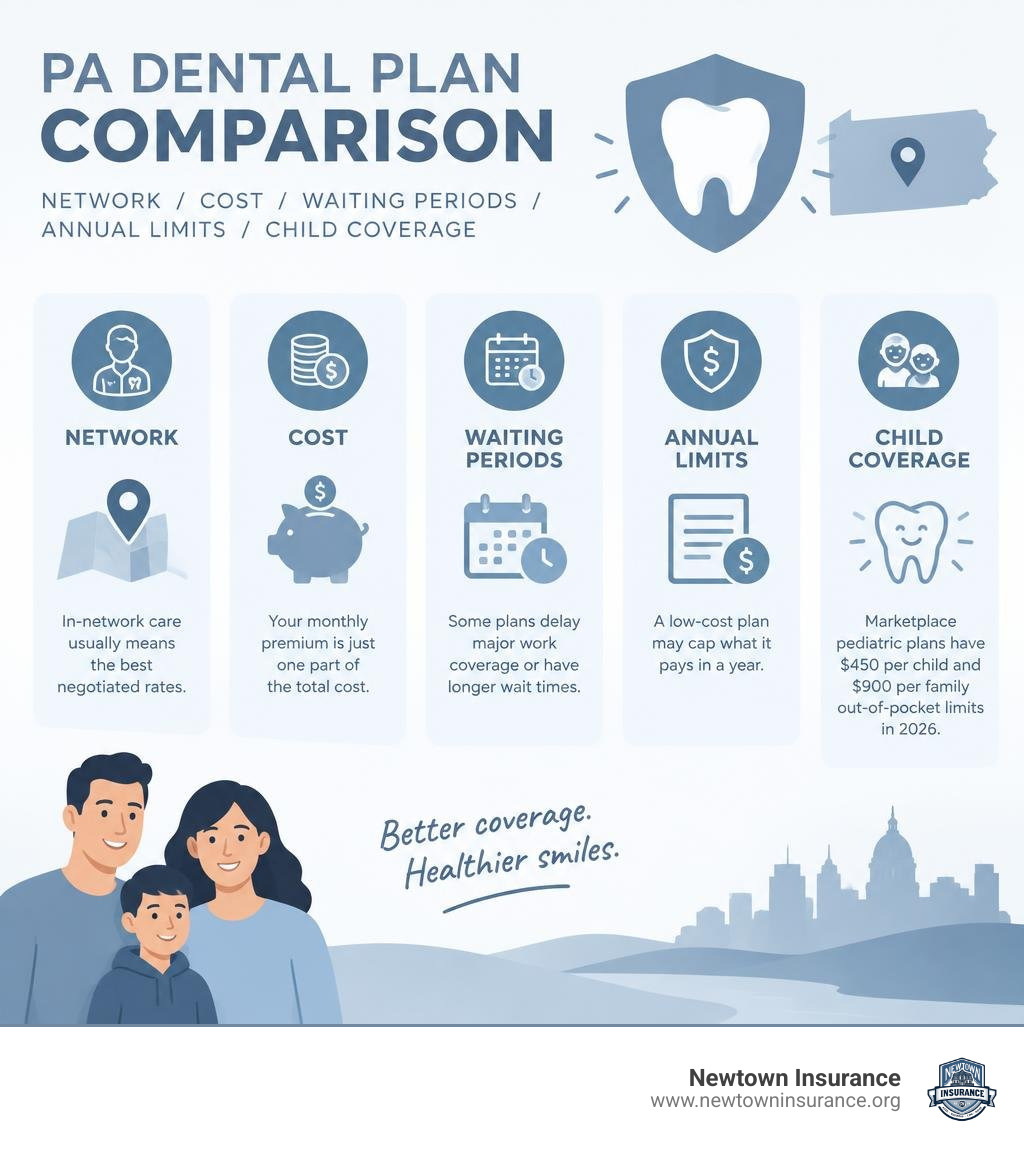
- Your dentist’s network status: In-network care usually means the best negotiated rates.
- Coverage by service type: Preventive care may be covered at 100%, while fillings, crowns, and root canals often have lower coverage.
- Waiting periods and annual maximums: A low-cost plan may delay major-work coverage or limit what it pays in a year.
- Child benefits: Marketplace pediatric plans have 2026 out-of-pocket limits of $450 per child and $900 per family.
Pennsylvania shoppers can compare marketplace plans from several carriers, buy coverage directly, or look at Medicaid, CHIP, dental discount plans, and community clinics when traditional insurance does not fit the budget.
I am Shawn Beihl, an insurance professional with more than 15 years of experience in health, benefits, disability, life, and commercial coverage. I help Pennsylvania residents sort through the details behind the best dental insurance in PA so they can match coverage to real needs instead of paying for a generic plan.
Best dental insurance in pa word list:
- Pennsylvania health insurance 101: finding the right plan for your budget
- Low cost health insurance in PA when money is tight
- Navigating the 2026 PA health insurance rate rollercoaster
Types of Dental Coverage Available in Pennsylvania
Navigating dental coverage across the Keystone State begins with understanding how provider networks operate. While exploring Pennsylvania health insurance basics, you will find that dental plans function through distinct structures designed around network size and cost flexibility.

Dental PPO vs. EPO Plan Networks
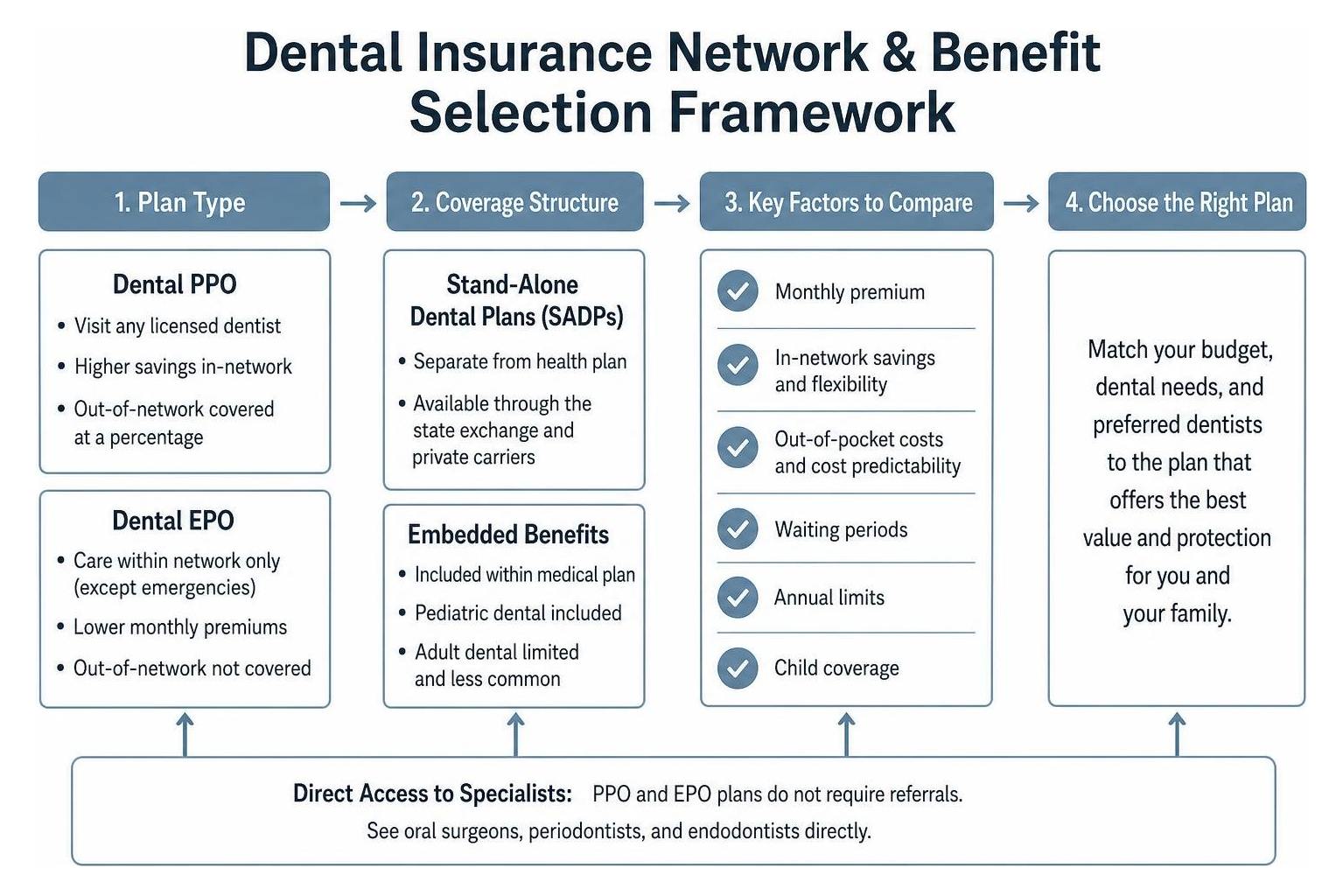
Preferred Provider Organization (PPO) plans remain the most popular dental policies in Pennsylvania. PPOs allow you to visit any licensed dentist, though you receive significantly higher discounts when choosing an in-network provider. If you see an out-of-network dentist, the insurer covers a percentage of the plan’s maximum allowable charge, leaving you responsible for remaining coinsurance and balance billing.
Exclusive Provider Organization (EPO) plans, by contrast, require you to receive care exclusively within the insurer’s network, except during qualifying dental emergencies. EPO plans offer lower monthly premiums and predictable out-of-pocket fees, but visiting an out-of-network provider means paying the entire bill yourself. Neither model requires specialist referrals, giving you direct access to oral surgeons, periodontists, and endodontists.
Stand-Alone Dental Coverage vs. Embedded Health Benefits
When purchasing medical coverage through Pennsylvania’s state exchange (Pennie) or directly from private carriers, dental benefits can be structured in two ways:
- Embedded Benefits: Some medical plans include pediatric dental benefits directly within standard medical coverage to meet federal mandates. Embedded adult benefits are less common and often feature minimal coverage with high shared medical deductibles.
- Stand-Alone Dental Plans (SADPs): Stand-alone policies exist separately from your health policy. In 2026, eight certified carriers offer stand-alone plans through Pennie. Independent policies are also available directly from regional carriers.
How to Choose the Best Dental Insurance in PA for Your Needs
Selecting the right plan requires balancing fixed monthly premiums against potential out-of-pocket costs. Reviewing our guide to health insurance quotes helps illustrate how monthly budgets align with broader healthcare safeguards.
Key Features of the Best Dental Insurance in PA
When evaluating individual or family dental policies, examine four core components:
- Preventive Care Incentives: Look for policies covering routine cleanings, comprehensive exams, and diagnostic bitewing X-rays at 100% without deductible requirements. Some regional PPO plans offer preventive rewards, providing cash incentives for covered members who complete two in-network cleanings within the calendar year.
- Annual Maximums: This is the total dollar amount an insurer pays toward covered care annually. Adult plan maximums in Pennsylvania typically range from $800 on budget policies up to $2,000 on comprehensive plans.
- Deductibles: Individual deductibles generally run between $25 and $50 for in-network care ($150 for family tiers), though many carriers waive the deductible entirely for preventive diagnostic visits.
- Waiting Periods: Plans may require 30-day to 6-month waits for basic services and 6 to 12 months for major restorations. Look for policies offering waiting period waivers if you are transitioning directly from prior continuous group or individual dental coverage.
Comparing Costs for the Best Dental Insurance in PA
The table below outlines common coverage tiers, deductible levels, and annual benefit limits found across Pennsylvania individual and family dental policies in 2026.
| Plan Tier / Option | Typical Monthly Premium (Adult) | In-Network Deductible (Ind / Fam) | Annual Maximum Benefit | Preventive / Basic / Major Coinsurance |
|---|---|---|---|---|
| Basic / Preventive PPO | $12 – $22 | $50 / $150 | $800 – $1,000 | 100% / 50% / Not Covered |
| Mid-Level Standard PPO | $25 – $38 | $50 / $150 | $1,000 – $1,500 | 100% / 80% / 50% |
| Comprehensive Premier PPO | $40 – $65 | $25 – $50 / $150 | $1,500 – $2,000 | 100% / 80% / 50% |
| Low-Cost In-Network EPO | $15 – $28 | $25 / $75 | $1,000 – $2,000 | 100% / 70% / 40% (In-Network Only) |
| Pennie Certified SADP (Exchange) | $5 – $41 | $50 / $150 | $800 – $1,500 | 100% / 50–80% / 50% |
ACA Compliance and Essential Pediatric Benefits
Under the Affordable Care Act, pediatric dental care is categorized as an Essential Health Benefit (EHB) for children under age 19. ACA-compliant individual dental plans certified through Pennie must provide comprehensive pediatric care without annual dollar maximums.
For 2026, stand-alone pediatric marketplace plans cap out-of-pocket spending at $450 per child or $900 per family for two or more children. These plans cover diagnostic cleanings at $0 cost-sharing, basic restorations, and medically necessary orthodontia (subject to clinical criteria for severe craniofacial abnormalities or functional malocclusions).
Affordable Alternatives and Low-Cost Oral Health Resources in PA
If private monthly premiums do not fit your household budget, several alternative pathways provide quality oral healthcare across Pennsylvania. When evaluating ways of finding low cost health coverage in PA, consider state-sponsored and community-level dental care resources.
Public and Community Dental Assistance
- Pennsylvania Medicaid (Medical Assistance): Low-income Pennsylvania adults and children may qualify for comprehensive dental services through Medicaid managed care organizations. Adult benefits include diagnostic exams, routine cleanings, restorative fillings, surgical extractions, and partial or complete dentures.
- Children’s Health Insurance Program (CHIP): Administered statewide, CHIP provides dental coverage with no waiting periods or deductibles for uninsured children up to age 19 whose family income exceeds Medicaid limits.
- Federally Qualified Health Centers (FQHCs): Community health centers across Bucks County and surrounding regions provide routine and restorative dental care on a sliding fee scale based on verified household income.
- University Dental Clinics: Major Pennsylvania academic institutions, including dental schools in Philadelphia and Pittsburgh, offer reduced-cost treatments performed by dental students under direct supervision of board-certified clinical faculty.
Dental Savings Options vs. Traditional Insurance
Dental discount plans offer an alternative to traditional insurance. For an annual membership fee (typically $80 to $200 per year), discount plans grant access to participating provider networks at pre-negotiated rate reductions of 15% to 50% off standard billing charges.
| Feature | Traditional Dental Insurance | Dental Savings / Discount Plans |
|---|---|---|
| Monthly Premium / Fee | $15 – $65 per month | $80 – $200 annual membership fee |
| Waiting Periods | 0 to 12 months for major services | None (immediate discount access) |
| Annual Maximum Payout | Capped ($800 to $2,000 per year) | Unlimited (no annual caps) |
| Deductible Requirements | $25 to $100 per member | None |
| Claim Forms & Pre-approvals | Required for complex treatments | None (pay discounted rate at checkout) |
To understand how individual dental practices coordinate payment structures and accepted discount arrangements, review local dental office payment and insurance information or search for participating regional providers in your area.
Navigating Policy Exclusions, Waiting Periods, and Annual Maximums
Dental insurance policies include specific terms and exclusions designed to manage costs. Understanding how coverage tiers and policy clauses operate helps prevent unexpected out-of-pocket medical bills.
Understanding Coverage Tiers: Preventive, Basic, and Major
Most Pennsylvania dental plans use a 100/80/50 cost-sharing structure:
- Class I: Diagnostic & Preventive (Covered at 100%) includes routine oral examinations, prophylaxis (cleanings), topical fluoride treatments for dependents, bitewing X-rays, and space maintainers.
- Class II: Basic Restorative (Covered at 70% to 80%) encompasses emergency palliative pain treatment, amalgam or composite resin fillings, simple extractions, and routine non-surgical periodontal maintenance.
- Class III: Major Services (Covered at 40% to 50%) covers crowns, inlays, onlays, surgical extractions, endodontic therapy (root canals), complex periodontics, and prosthodontics (bridges, partials, and complete dentures).
Managing Orthodontia Limits and Policy Restrictions
- Lifetime Orthodontia Maximums: When included in non-ACA adult or family plans, orthodontic benefits carry separate lifetime limits (typically $1,000 to $1,500 per insured child under age 19) along with a mandatory 12-month waiting period.
- Missing Tooth Clauses: Many policies exclude benefits for replacing teeth extracted prior to the effective date of coverage unless you maintain continuous documented coverage under an eligible prior plan.
- Least Expensive Alternative Treatment (LEAT) Provisions: If multiple clinical methods can address a dental condition (such as a resin composite filling versus an amalgam silver filling on a back molar, or a bridge versus an implant), the insurer may only pay benefits equivalent to the least costly standard procedure.
- Cosmetic Procedures: Elective cosmetic dentistry—including professional teeth whitening, cosmetic veneers, and gingival reshaping—is universally excluded under standard individual Pennsylvania contracts.
Frequently Asked Questions About Pennsylvania Dental Coverage
How much does individual dental insurance typically cost per month in PA?
Stand-alone individual adult dental premiums in Pennsylvania range from $5 to $41 per month on Pennie for standard coverage. Comprehensive private PPO plans featuring higher annual maximums ($1,500 to $2,000) and broader networks generally cost between $35 and $65 per month.
Is pediatric dental coverage required on Pennsylvania health plans?
Yes. Under federal and state regulations, pediatric dental services are mandatory Essential Health Benefits for dependents under age 19. If an individual health plan does not contain embedded pediatric dental coverage, exchange shoppers must have access to certified stand-alone pediatric policies featuring 2026 out-of-pocket caps of $450 per child or $900 per family.
Do Pennsylvania dental plans cover major work immediately without waiting periods?
Most individual dental insurance policies enforce waiting periods of 6 to 12 months for major restorative procedures like crowns, bridges, and dentures. However, insurers frequently waive waiting periods if you enroll within 30 to 63 days of leaving a qualifying prior dental policy that provided comparable coverage. Additionally, dental savings plans have no waiting periods for restorative care.
Conclusion
Finding dental coverage that fits your budget requires balancing monthly premiums with provider network flexibility, deductible thresholds, and annual benefit maximums. Whether you need a standard individual PPO for routine cleanings, an ACA-compliant family policy with strong pediatric safeguards, or budget-friendly community clinic alternatives, reviewing your plan options helps keep your dental care affordable.
At Newtown Insurance, our local team provides personalized, transparent guidance to help Pennsylvania individuals and families select insurance policies matched to their unique healthcare needs. Visit Newtown Insurance tailored coverage solutions to speak with our licensed advisors and compare affordable dental plans today.