
Short-Term Medical Insurance in PA: Compare the Cost and the Gaps
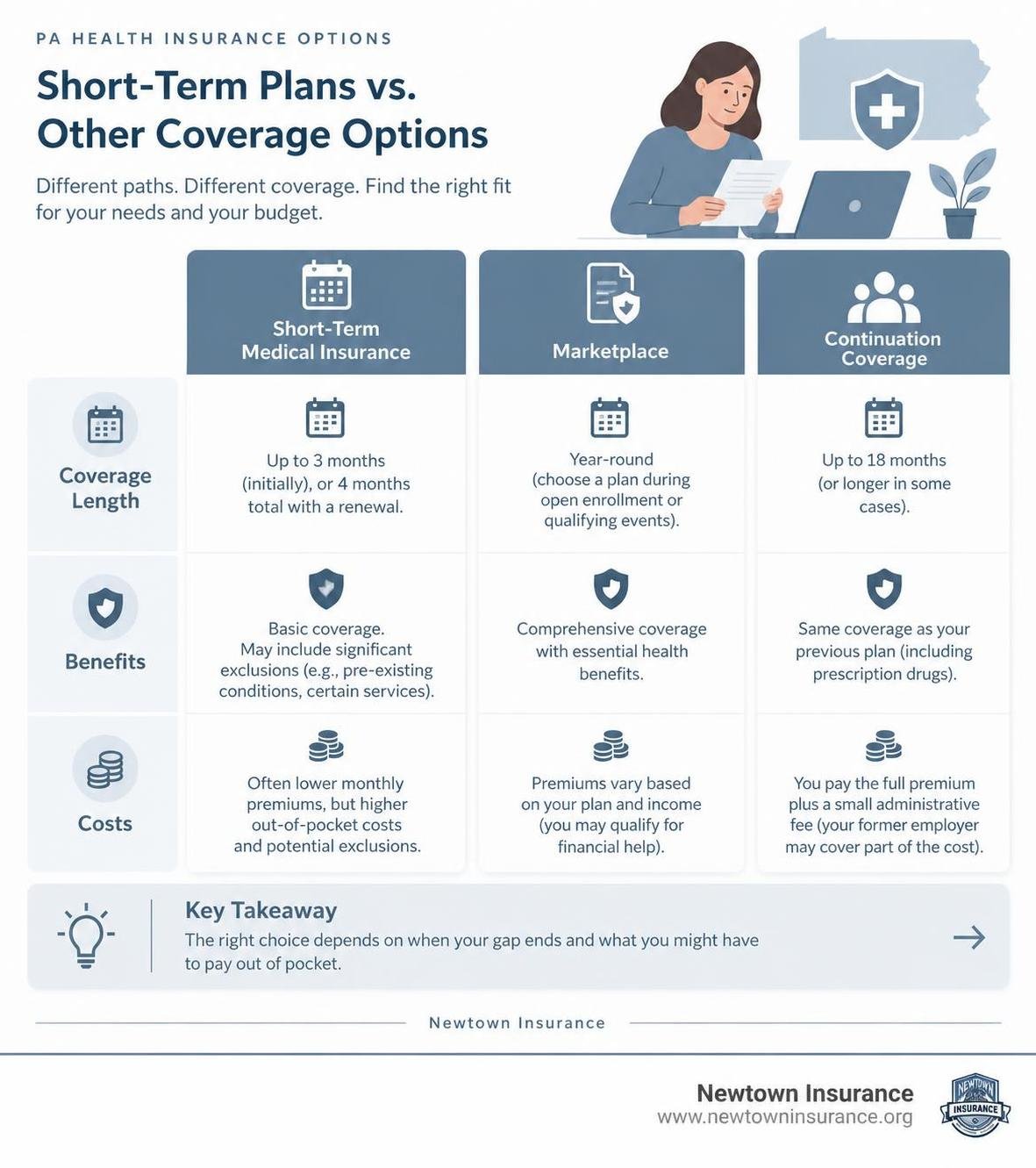
Short-term medical insurance in PA can help cover a brief gap between health plans. In 2026, a policy can last up to three months initially, or four months total with a renewal. Before you buy, compare its premium, deductible, and exclusions with coverage through the state marketplace or continuation coverage. A lower monthly price may not save you money if the plan excludes care you need.
That matters when you’re between jobs or waiting for new coverage to start. The right choice depends on when your gap ends and what you might have to pay out of pocket.
I’m Shawn Beihl. With more than 15 years in health and specialty insurance, I help Pennsylvania residents make sense of short term medical insurance pa choices and the risks behind the price.
Basic short term medical insurance pa terms:
Understanding Short-Term Medical Insurance in PA: Rules and Regulations
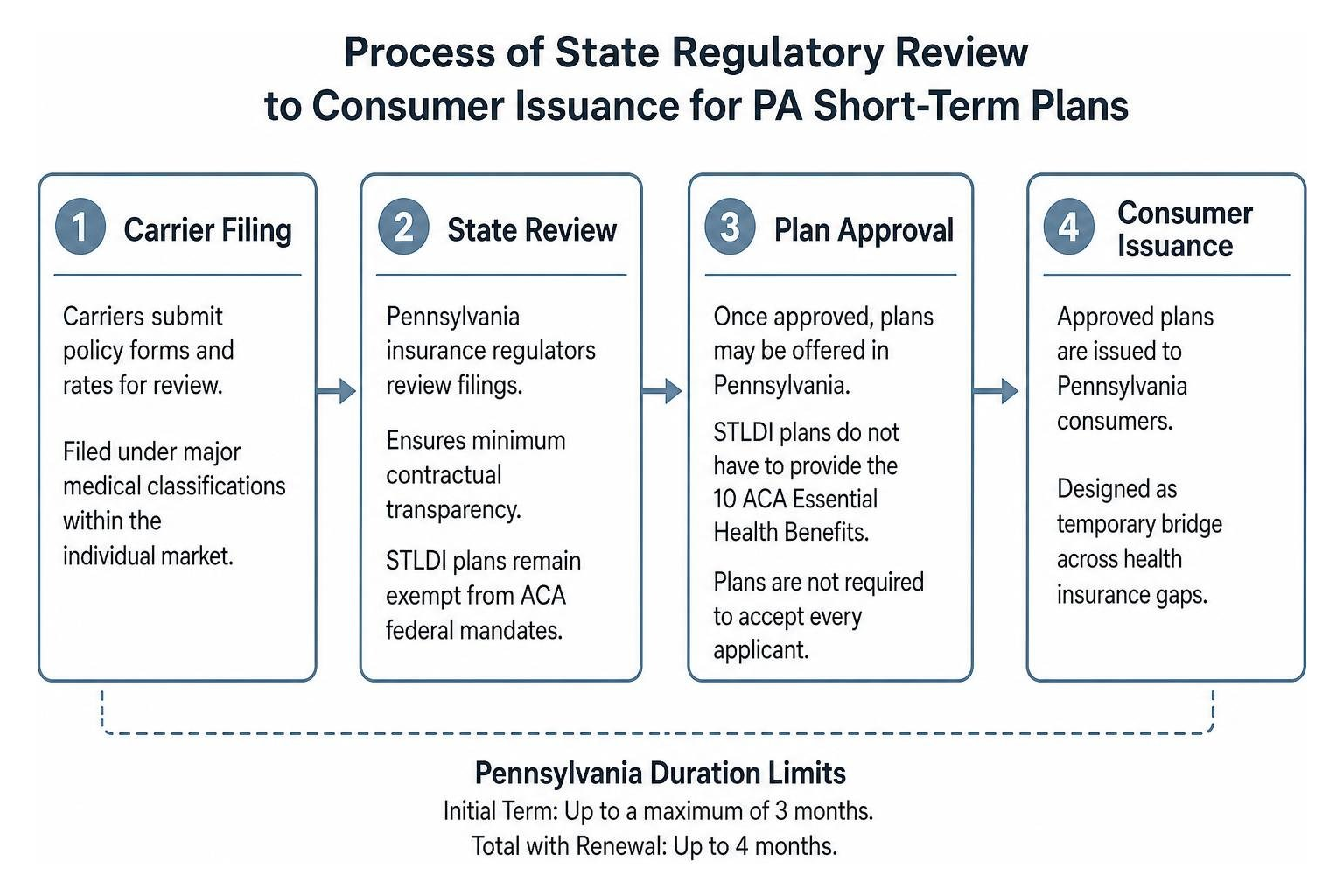
Short-term medical coverage—technically called Short-Term, Limited-Duration Insurance (STLDI)—is designed to serve as a temporary bridge across health insurance gaps. In the Commonwealth of Pennsylvania, these plans operate under a specific regulatory structure that separates them from standard Affordable Care Act (ACA) individual policies.
Under Pennsylvania law, the state treats STLDI filings under major medical classifications within the individual market. The state requires carriers to submit policy forms and rates for review well before they reach consumers, adhering to detailed guidance for form filings from state insurance regulators. While they are legally classified to ensure minimum contractual transparency, short-term plans remain explicitly exempt from ACA federal mandates.
This means STLDI plans do not have to provide the 10 ACA Essential Health Benefits, nor are they required to accept every applicant. For local residents exploring coverage pathways, checking an insurance Pennsylvania complete guide helps put these non-comprehensive policies into proper context alongside long-term individual and group options.
Pennsylvania Duration Limits and Renewal Rules
Plan duration rules in Pennsylvania are strictly defined. Pennsylvania enforces a tight cap on policy terms:
- Initial Term: Up to a maximum of 3 months.
- Renewal Allowance: A single extension of up to 1 month.
- Total Maximum Duration: No more than 4 consecutive months total.
Even when federal enforcement stances shift, state insurance regulators have maintained these duration caps to protect consumers from using temporary policies as indefinite replacements for comprehensive coverage. Understanding these state-specific short-term insurance duration rules prevents unexpected policy expirations before your next permanent plan begins.
Who Qualifies for Short Term Medical Insurance in PA?
Because short-term plans are exempt from ACA community-rating rules, private carriers use medical underwriting to evaluate applicants. Qualification is determined by health questionnaires rather than open-enrollment status.
Common qualifying scenarios include:
- Young adults turning 26: Bridging the gap immediately after aging off a parent’s health policy.
- Career changers: New employees serving out a 30- to 90-day probationary waiting period before employer-sponsored benefits kick in.
- Early retirees: Healthy individuals needing 60 to 90 days of catastrophic backup right before turning 65 to enroll in Medicare.
- Missed enrollment: Individuals who missed the annual marketplace open enrollment window and lack a Qualifying Life Event for a Special Enrollment Period.
Applicants with significant pre-existing health conditions or ongoing prescription requirements may be denied outright or issued policies with strict exclusions.
Coverage Breakdown: What Temporary Health Plans Cover vs. Exclude
Short-term policies are built primarily for catastrophic, unexpected medical events. If you break an arm or end up in an urgent care clinic after a household accident, an STLDI plan can prevent complete financial disruption.

Typically covered services include:
- Inpatient hospital room and board during unexpected admissions
- Emergency room visits and ambulance transport
- Outpatient surgical facilities for acute injuries
- Urgent care visits and emergency diagnostic imaging (X-rays, CT scans)
However, temporary policies are not built for maintenance care. When deciding on interim coverage, taking time for finding the right plan for your budget requires weighing cheap monthly premiums against potentially substantial coverage exclusions.
Standard Exclusions and Pre-Existing Condition Risks
Unlike ACA plans, short-term health insurance policies do not follow guaranteed-issue rules. The most significant financial risk is post-claims underwriting. When you file a large claim, insurers review your past medical records to determine whether any symptom or diagnosis existed prior to the plan’s effective date. If an association is established, the claim can be denied retroactively.
Standard exclusions on short-term plans generally include:
- Pre-existing conditions: Any illness, injury, or symptom treated or diagnosed within the lookback window (often 2 to 5 years).
- Prescription medications: Maintenance drugs for chronic illness, with limited or zero outpatient formulary coverage.
- Maternity and newborn care: Routine prenatal visits, delivery, and postpartum support.
- Mental health and substance abuse: Outpatient therapy, psychiatric consults, and addiction treatment programs.
- Preventive care: Routine annual wellness exams, immunizations, and preventive screenings.
Pros and Cons of Temporary Health Plans
Before applying, evaluate the trade-offs of non-ACA bridge coverage:
Pros:
- Lower monthly premiums: Significantly lower upfront cost compared to employer continuation coverage or full-price individual policies.
- Rapid activation: Coverage can often begin as soon as the day after completing an online application.
- Customizable timeframes: You pay only for the exact window (30, 60, or 90 days) required before permanent coverage starts.
Cons:
- High out-of-pocket costs: High deductibles paired with 20% to 30% coinsurance.
- Dollar benefit caps: Policies often feature lifetime or policy-term payment ceilings (e.g., $1 million or $2 million max payout).
- No guaranteed continuity: The plan ends after four months maximum, and you cannot roll continuous claims into a new term without resetting deductibles and underwriting.
Essential Policy Checklist Before Enrolling:
- Confirm the policy maximum benefit limit fits potential catastrophic hospital bills.
- Verify if the deductible applies per term or per medical incident.
- Check whether local hospitals and physicians participate in the plan’s contracted network.
- Review the complete list of exclusions for prescription medications and diagnostic testing.
Temporary Coverage Costs and Value
Evaluating short-term health insurance requires looking at total financial liability, not just the monthly premium. While monthly payments appear attractive, your actual exposure depends on the deductible, coinsurance limits, and benefit maximums during a severe medical event. Reviewing our 2026 PA health insurance rate guide helps illustrate how temporary coverage stacks up against subsidized marketplace plans.
| Coverage Feature | Short-Term Health Insurance (PA) | ACA Marketplace Plan | Employer Continuation Coverage |
|---|---|---|---|
| Typical Monthly Premium | $120 – $280 | Variable (Subsidies available) | Full premium + 2% admin fee ($600 – $900+) |
| Standard Deductible Range | $2,500 – $10,000 | $0 – $9,100 (Plan dependent) | Matches previous employer plan |
| Pre-Existing Conditions Covered? | No | Yes (Mandatory) | Yes (Continuous coverage) |
| Essential Health Benefits Covered? | Excluded / Very Limited | Comprehensive (Mandatory) | Comprehensive |
| Maximum Pennsylvania Duration | 3 months (+ 1 month renewal) | 12 months (Renewable annually) | 18 to 36 months |
| Out-of-Pocket Exposure | High (Exclusions not capped) | Capped by Federal Out-of-Pocket Max | Capped by employer plan rules |
How to Buy Short Term Medical Insurance in PA Safely
Because short-term coverage is not offered through Pennsylvania’s official marketplace, you must purchase it directly through licensed private carriers or authorized local insurance agents.
To shop safely:
- Demand the Summary of Benefits and Coverage (SBC): Review the exact exclusions matrix to ensure there are no surprises regarding emergency room cost-sharing or imaging limits.
- Work with a licensed Pennsylvania advisor: An independent professional can help you verify carrier network agreements and confirm that short-term coverage is truly the best financial fit compared to catastrophic marketplace options.
- Review all application questions carefully: Complete the medical questionnaire accurately. Omitting past doctor visits or prescriptions can jeopardize your coverage during post-claims reviews.
Getting personalized insurance quotes helps you compare vetted plan designs side-by-side with transparent pricing.
Frequently Asked Questions About Temporary Health Insurance in PA
Does losing short-term insurance create a qualifying coverage event?
No. The expiration or cancellation of a short-term, limited-duration insurance policy does not trigger a Special Enrollment Period (SEP) to purchase an ACA-compliant plan through the state marketplace or off-exchange. If your 4-month maximum short-term term expires outside the standard Open Enrollment window (November 1 through January 15), you will have to wait until the next open enrollment cycle or secure qualified employer coverage to enroll in a comprehensive plan.
How quickly can a short-term health plan take effect in Pennsylvania?
Coverage under a short-term plan can begin as early as midnight on the day following successful application submission and premium payment processing. Most insurers also allow you to select a specific effective date up to 30 or 60 days in advance to align with your final day of employer-sponsored health benefits.
Conclusion
Temporary health plans offer practical protection when you face an unavoidable gap between permanent policies. However, their strict 4-month maximum duration in Pennsylvania, paired with underwriting exclusions and the absence of essential health benefit requirements, means they are a tactical bridge, not a permanent health strategy.
At Newtown Insurance, we believe in transparent pricing, tailored protection, and customer-first support to help you avoid overpaying while staying protected against life’s unexpected turns. If you are navigating an employment transition or coverage gap in Newtown, PA, connect with us to evaluate all your bridge options.
Shawn Beihl
Topic Expert & Health Risk Advisor
Explore customized Pennsylvania coverage with Newtown Insurance