Understanding Auto Anti-Theft Discounts
An auto anti-theft discount lowers the comprehensive portion of your car insurance premium, typically by 5% to 25%, when your vehicle has qualifying security equipment such as an audible alarm, engine immobilizer, GPS tracker, or VIN etching. The discount applies only to comprehensive coverage, not liability or collision, and eligibility generally requires that the device be factory-installed or professionally installed and remain in working order. Many drivers comparing carriers want to understand how securing an anti-theft discount on auto insurance helps lower that specific comprehensive premium by demonstrating that your vehicle is well protected against unlawful entry and unauthorized movement.
When an insurer calculates your rate, vehicle theft risk plays a major role in determining the overall cost of your comprehensive coverage. Comprehensive insurance is the specific portion of your auto policy that pays for losses resulting from events other than collisions, such as theft, vandalism, weather damage, falling objects, or hitting an animal. Theft deterrence works in direct partnership with actuarial risk and loss mitigation. When a vehicle carries tools that make it difficult to steal—or easy to track down and recover if stolen—the likelihood of an insurer paying out a costly total loss claim drops significantly. Insurers reward that reduced liability by passing the financial savings on to you in the form of a percentage reduction on the comprehensive portion of your bill. This underwriting logic applies across top insurance carriers: the harder your vehicle is to break into or steal, the less risk the insurance provider assumes, leading directly to lower monthly or annual premiums.
Understanding these underlying mechanics helps you spot exactly where real savings come from. A basic car alarm might only trim a modest dollar amount if your comprehensive baseline premium is small, but advanced electronic recovery systems and active telematics can yield noticeable percentage reductions, especially on highly targeted, high-theft makes and models.
Qualifying Devices for an Anti-Theft Discount
Security systems are generally evaluated across several distinct tiers, ranging from basic visual deterrents to complex electronic tracking and recovery networks:
- Audible Alarms and Warning Devices: These include active perimeter sensors, siren triggers, horn-honking sequences, and flashing exterior lights designed to scare off opportunistic thieves and alert passersby.
- Engine Immobilizers and Smart Keys: Built-in transponders inside your electronic key fob communicate directly with the vehicle’s engine control module (ECM). If the digitally coded signal does not match, the fuel pump, starter, or ignition system stays completely disabled, preventing hot-wiring.
- GPS Trackers and Stolen Vehicle Recovery Systems: Active tracking hardware (such as LoJack or integrated telematics platforms) broadcasts real-time location data directly to law enforcement agencies or private 24/7 monitoring centers to pinpoint and recover a stolen vehicle quickly.
- VIN Etching: Etching the unique vehicle identification number permanently into the windshield, side windows, and rear glass makes stolen parts significantly harder for illicit chop shops to resell, acting as a proven passive theft deterrent.
- Steering Wheel and Transmission Locks: Visible physical locking mechanisms add an extra layer of mechanical deterrence, forcing potential thieves to spend extra time attempting a bypass.
Factory-Installed vs. Aftermarket Security Systems
Most modern vehicles manufactured in recent years come standard with Original Equipment Manufacturer (OEM) security features. Factory-installed systems—such as standard engine immobilizers, digital perimeter alarms, and remote shut-off capabilities—are linked directly to your car’s Vehicle Identification Number (VIN). When your auto policy is generated or updated, the insurer’s underwriting system decodes the 17-digit VIN and automatically detects these built-in systems to apply appropriate rating credits.
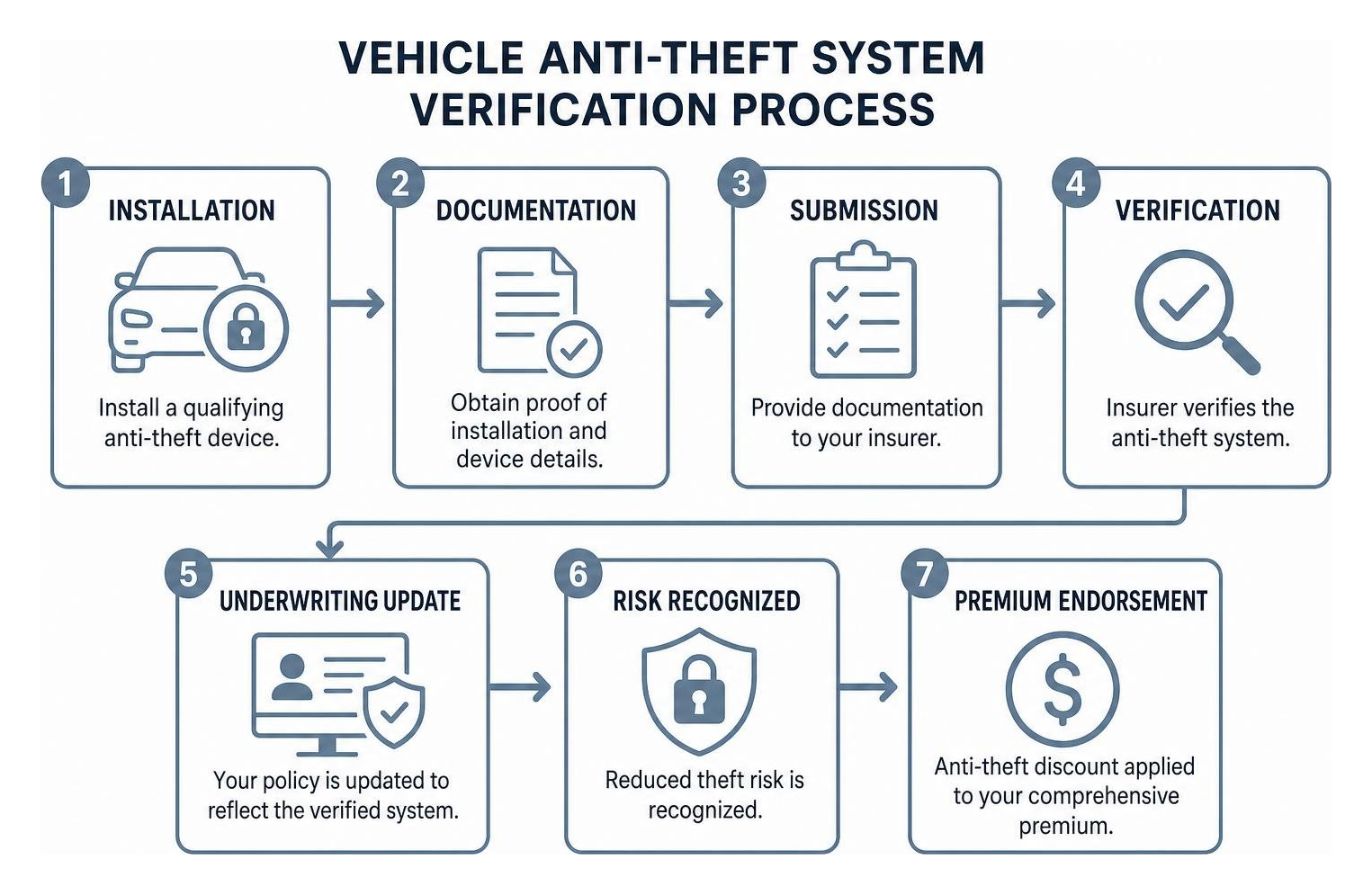
Aftermarket devices require a bit more documentation and verification:
- Professional Installation: Many insurance carriers require aftermarket alarms or tracking units to be installed by a certified automotive technician rather than completed as a DIY project to guarantee reliable operation.
- Receipt Verification: Keep your original purchase invoice and professional installation receipt showing the date, make, and model of the security device.
- Equipment Certification: If your tracking device requires an ongoing subscription or monitoring certificate, you may need to provide a copy of the active service agreement to underwriting.
- System Testing: Ensure the system functions properly so that you can verify operational status if underwriting requests an inspection or functional validation.
How Anti-Theft Savings Compare to Other Vehicle Safety Discounts
Anti-theft devices protect your car from property loss, but insurers also heavily discount features that protect human occupants and prevent roadway collisions. Exploring an auto insurance discounts guide reveals how different safety features apply to distinct line items on your policy declaration page.
While an anti-theft discount applies strictly to your comprehensive coverage, passive restraints (like factory airbags and motorized seatbelts) reduce your Medical Payments (MedPay) or Personal Injury Protection (PIP) costs. Anti-lock Braking Systems (ABS), lane departure warnings, and electronic stability control, meanwhile, reduce collision and bodily injury liability risks by lowering the probability of serious crashes.
| Feature Type | Policy Line Item Affected | Typical Savings Potential | How It Is Verified |
|---|---|---|---|
| Anti-Theft Device / GPS Recovery | Comprehensive Coverage | 5% – 25% off comprehensive portion | VIN decoding or installation receipt |
| Passive Restraints (Airbags) | PIP / Medical Payments | Up to 30% – 40% off medical portion | Automatic VIN decoding |
| Anti-Lock Brakes (ABS) | Collision / Bodily Injury | 5% – 10% off collision & liability | Automatic VIN decoding |
| Driver Assistance Tech (Lane Keep, AEB) | Collision / Property Damage | Varies by make, model, and carrier | Automatic VIN decoding |
Reviewing all car insurance discounts you should ask about ensures you do not miss out on layered vehicle savings when setting up your coverage.
Stacking Vehicle Discounts with Telematics and Bundling
Discounts do not operate in a vacuum. You can combine equipment-based savings with behavioral and account-level discounts to achieve substantial overall reductions on your bill.
- Telematics-Based Safe Driver Programs: Many insurance carriers offer usage-based programs that track your actual driving habits—including smooth braking, speed compliance, gentle acceleration, daytime driving, and cornering stability—via a smartphone app or Bluetooth beacon. Safe driving habits can earn policyholders significant percentage discounts at renewal.
- Multi-Policy (Bundling) Discounts: Pairing your personal auto insurance with a homeowners, renters, condo, or life policy remains one of the most reliable ways to lower your baseline premium across all coverages.
- Multi-Car Savings: Insuring more than one vehicle on the same policy frequently unlocks multi-vehicle rating credits that apply across your entire household fleet, compounding your total savings.
Eligibility Rules, Exclusions, and State Variations
Discount availability, eligibility rules, and statutory requirements are regulated at the state level. In states like New York, legislative rules such as NY State Assembly Bill 2025-A3003B and related measures recorded under Bill Search and Legislative Information demonstrate how state-specific insurance mandates define safety credits and mandatory premium reductions for specific qualifying equipment. Government fiscal and regulatory documents, such as those from the OFFICE OF POLICY AND MANAGEMENT , also highlight how regional insurance rules impact consumer costs and statutory discount structures across jurisdictions.
For complete strategies on structuring your policy limits and taking advantage of all available rating credits, consult our auto insurance savings complete guide.
Several key factors determine your eligibility for an anti-theft discount:
- Comprehensive Coverage Requirement: If your policy only carries basic liability and collision coverage (or liability-only minimum limits), an anti-theft discount cannot be applied because there is no comprehensive line item on your declaration page to reduce.
- Vehicle Age & Claims History: Older classic cars, custom builds, or heavily modified vehicles may require specialized equipment validation from an appraiser. In addition, an extensive history of unrecovered theft claims could impact how an underwriter rates your overall physical damage profile.
- Maximum Discount Caps: Most insurance rating programs enforce an aggregate discount cap (often around 30% to 40% total across vehicle-level safety and security credits) to maintain baseline underwriting solvency.
- Device Operability: The security device must remain in active, working order. Broken alarms, expired recovery subscriptions, or detached tracking units void eligibility for the rate reduction.
How to Apply for an Anti-Theft Discount
Securing the credit on your personal auto policy is a simple, straightforward process:
- Verify Your Equipment: Determine whether your vehicle uses a factory immobilizer, a remote keyless entry alarm, a steering lock, or an active GPS recovery system.
- Locate Your VIN: Check your vehicle title, registration card, insurance card, or driver’s side door jamb for the 17-digit VIN.
- Gather Proof (For Aftermarket Systems): If you purchased an aftermarket security system, find the invoice, installation certificate, or active subscription confirmation.
- Submit to Your Agent: Have your insurance agent endorse your policy by adding the specific anti-theft equipment code to your vehicle record.
- Review Your New Declarations Page: Check your updated billing statement and coverage breakdown to confirm the comprehensive premium adjustment.
Frequently Asked Questions About Auto Security Discounts
Does the anti-theft discount apply to the entire auto insurance premium?
No. An anti-theft discount applies exclusively to the comprehensive coverage line item of your policy. It does not reduce your bodily injury liability, property damage liability, collision coverage, or personal injury protection rates, as those line items protect against driving liability and crash impacts rather than vehicle theft.
Can aftermarket tracking devices qualify for premium reductions?
Yes. Many aftermarket devices—such as GPS tracking units, fuel-cutoff switches, battery disconnect switches, and certified recovery systems—qualify for premium discounts. To apply the credit, you will typically need to provide an invoice from a certified installer or proof of an active tracking service subscription.
Do you need to submit new proof of your anti-theft system at renewal?
Generally, no. Once a factory or permanently installed aftermarket anti-theft device is verified and added to your policy, the discount rolls over automatically at each renewal period. However, if your discount is tied to an active third-party tracking subscription, your insurer may occasionally ask for proof that the monitoring service remains active.
Conclusion: Maximizing Your Vehicle Security and Policy Savings
Protecting your vehicle against theft provides peace of mind and keeps your comprehensive insurance premiums manageable. Taking the time to verify your car’s built-in safety features, properly document aftermarket tracking equipment, and stack your equipment credits with telematics and multi-policy discounts ensures you never overpay for coverage.
At Newtown Insurance, we are dedicated to helping drivers find tailored protection, smart savings, and transparent pricing. If you want to review your current policy, check your eligible discounts, and ensure your vehicle has the exact coverage it needs, reach out to our team today to explore customized auto protection options.