Start With the Right Business Insurance in PA
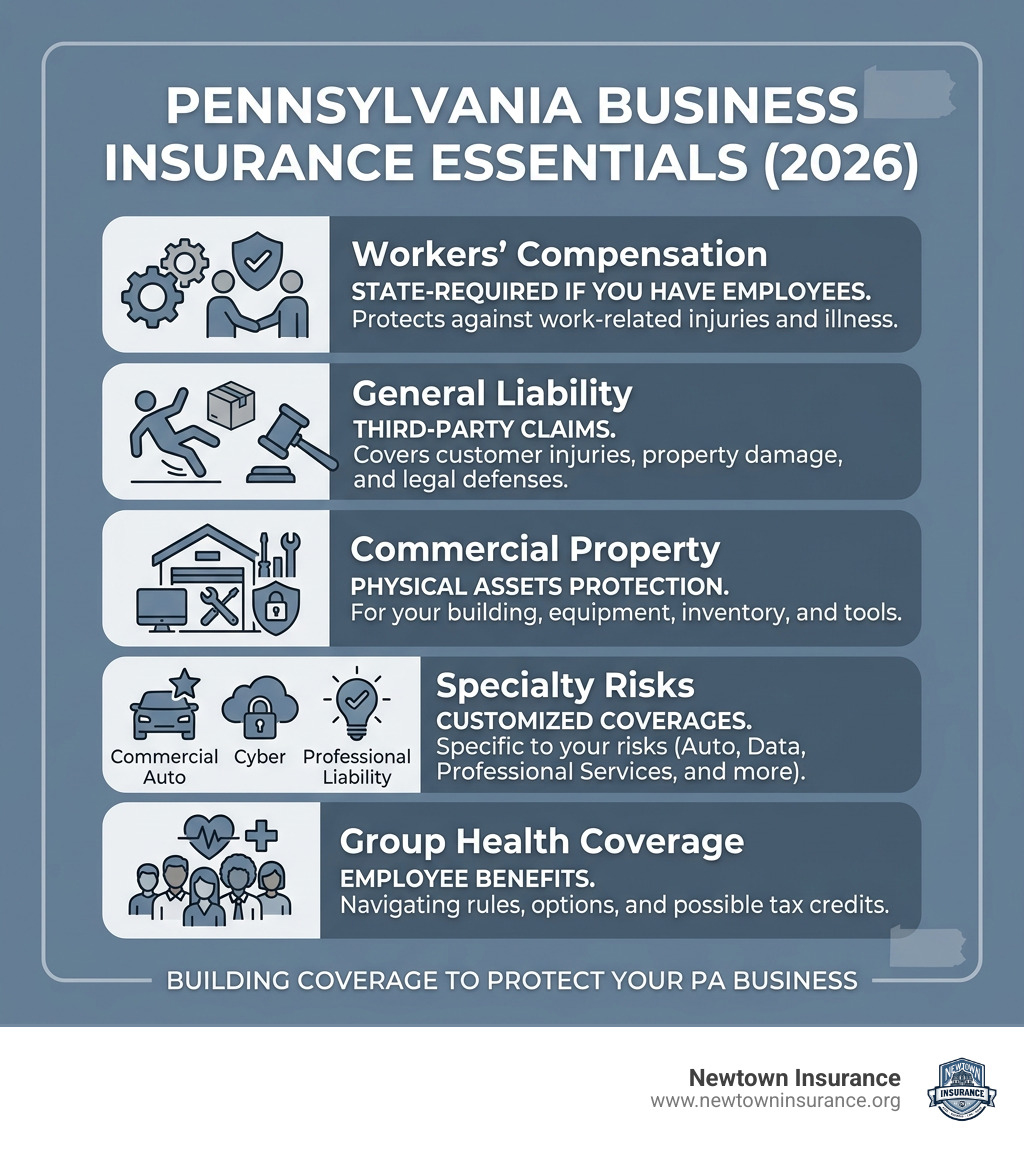
The best way to save on business insurance in PA is to buy the coverage your business truly needs, meet Pennsylvania’s required protections, and avoid paying for gaps or duplicate policies. Start by reviewing these basics:
- Workers’ compensation if you have employees.
- General liability for customer injuries, property damage, and many contract requirements.
- Commercial property for your building, inventory, tools, and equipment.
- Commercial auto, cyber, or professional liability when your vehicles, data, or services create those risks.
- Group health coverage rules and possible tax credits if you offer employee benefits.
Pennsylvania businesses do not all face the same risks. A home-based consultant may need an endorsement beyond a homeowners policy, while a contractor may need coverage for tools, vehicles, job-site liability, and employee injuries. Comparing limits, deductibles, exclusions, and insurer fees before you buy can help you protect your budget without leaving a costly hole in coverage.
I’m Shawn Beihl, with more than 15 years of experience across commercial property and casualty insurance, health benefits, disability, and risk management. I help Pennsylvania owners assess business insurance in PA, identify preventable exposures, and build coverage that supports lower long-term costs.
Terms related to business insurance in pa:
Essential Coverage Options for Business Insurance in PA
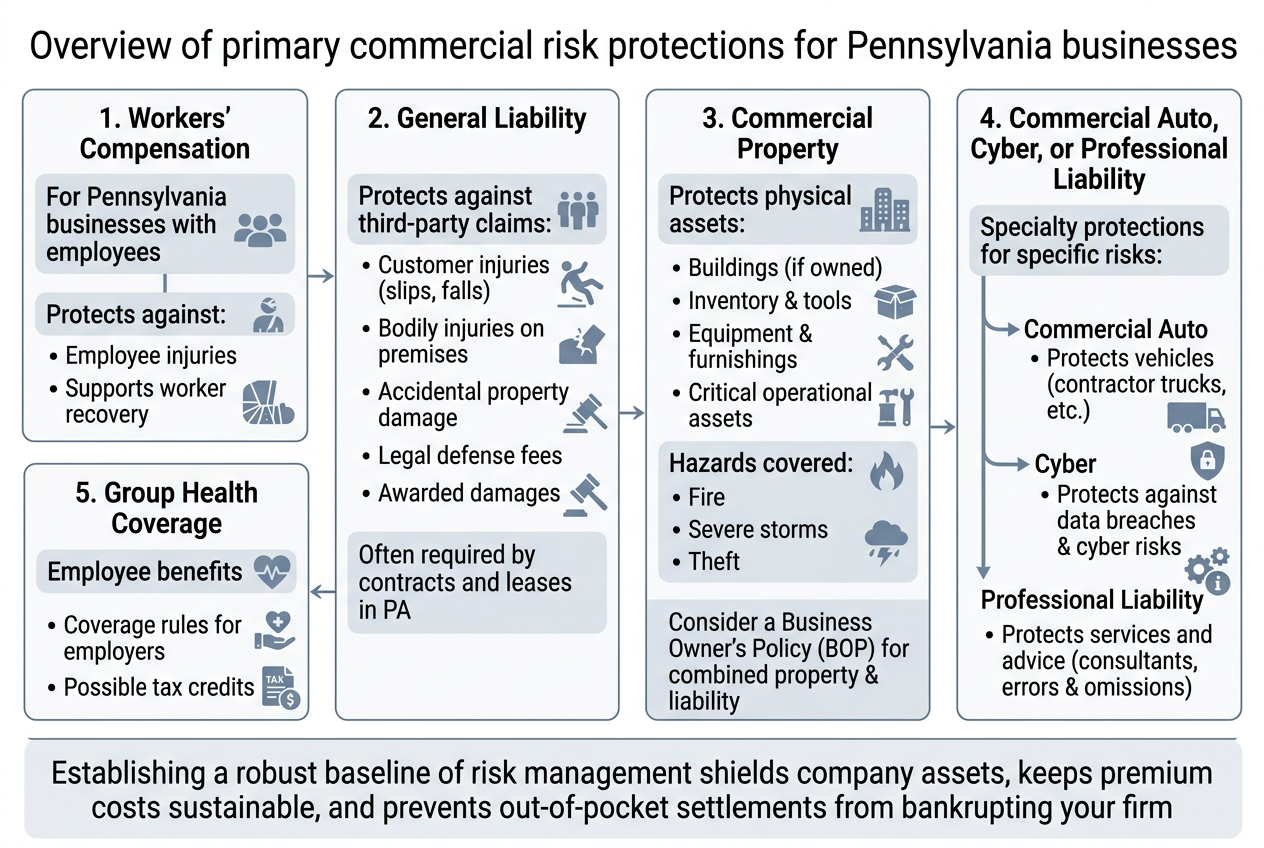
Running an enterprise in the Keystone State requires navigating distinct geographic, economic, and legal risks. Protecting your operations means establishing a robust baseline of risk management that shields company assets while keeping premium costs sustainable. Selecting comprehensive business insurance coverage helps insulate your cash flow from unexpected property claims, third-party lawsuits, and operational interruptions.
Core Commercial Liability and Property Protection
Commercial General Liability (CGL) forms the cornerstone of commercial protection. In the event of customer slips, bodily injuries on premises, or accidental third-party property damage during off-site operations, general liability prevents out-of-pocket settlements from bankrupting your firm. Many vendor agreements, municipal contracts, and commercial leases in Pennsylvania mandate minimum coverage limits—often $1 million per occurrence and $2 million aggregate—before you can execute agreements or begin on-site operations.
Securing solid liability insurance in PA ensures legal defense fees and awarded damages do not derail your business trajectory. Alongside liability, commercial property policies protect physical structures, inventory, office furnishings, and critical operational assets from hazards like fire, severe storms, pipe bursts, and theft. Combining these through a Business Owner’s Policy (BOP) is often a practical, cost-effective way for eligible small to medium-sized enterprises to secure foundational protections under a unified premium with additional endorsements such as business interruption coverage.
Mandatory Workers’ Compensation Protocols
Under the Pennsylvania Workers’ Compensation Act, almost every employer with one or more full-time, part-time, or seasonal employees must carry workers’ comp. Administered through the Pennsylvania Department of Labor and Industry, this coverage pays statutory medical bills and wage replacement benefits to workers injured on the job.

Operating without mandatory coverage exposes business owners to severe civil penalties, stop-work orders, criminal misdemeanor or felony charges, and personal liability for all injury-related costs. Maintaining adequate workers compensation insurance in PA protects your staff and shields leadership from personal exposure. Furthermore, establishing a state-certified workplace safety committee can earn your enterprise an automatic 5% annual discount on your workers’ compensation premium under Pennsylvania guidelines, while improving your experience modifier rating over time.
Commercial Fleet and Equipment Protections
Transporting goods, traveling between client sites, or moving heavy machinery requires dedicated commercial vehicle and equipment protection. Personal auto policies almost universally exclude losses sustained during commercial use, leaving unendorsed drivers fully exposed during an accident.
- Mobile Tools and Machinery: Standard property insurance rarely covers gear once it leaves your main building. Adding specialized business equipment insurance or inland marine coverage protects high-value tools, diagnostic hardware, and rented machinery wherever operations take you.
- Logistics and Heavy Hauling: Fleets operating across regional corridors require higher liability limits and cargo safeguards. Consulting an updated commercial truck insurance in PA plan helps navigate federal compliance and state highway requirements.
- Trade and Artisan Contractors: Comprehensive contractor insurance in Pennsylvania integrates equipment floaters, completed operations liability, and installation floaters into a targeted defense against job-site risks.
Navigating Pennsylvania Health Insurance Regulations for Employers
Offering employee healthcare improves retention and morale, but managing group health requirements requires understanding state and federal thresholds.
Small Group Standards and Marketplace Criteria
Under Pennsylvania law, a small business is defined as an entity employing 50 or fewer full-time equivalent (FTE) employees. Small employers are not legally mandated to provide healthcare under the federal employer shared responsibility rules, but doing so provides a competitive edge in recruitment.
Small groups can access coverage through private carriers or through Pennie, Pennsylvania’s state-based exchange, utilizing the Small Business Health Options Program (SHOP). Reviewing state guidance on Business Insurance Needs | Insurance Department clarifies state requirements, while exploring pennsylvania small business health insurance provides insight into group tier designs that fit balanced operating budgets.
Large Employer Self-Funded Healthcare Rules
Organizations with 51 or more full-time equivalent employees enter large-group territory. These employers often evaluate self-funded (self-insured) plans, where the business pays for employee claims directly rather than paying fixed premiums to an insurance company.
Self-funded benefit structures fall under federal ERISA guidelines regulated by the U.S. Department of Labor and must maintain compliance with Affordable Care Act (ACA) market rules. To protect capital against catastrophic single-claim events, companies implementing self-funded structures routinely purchase stop-loss coverage to cap their maximum financial liability.
| Regulation / Feature | Small Group (1–50 FTEs) | Large Self-Funded (51+ FTEs) |
|---|---|---|
| Primary Regulatory Body | PA Insurance Department & ACA | U.S. Department of Labor (ERISA) |
| Coverage Mandate | Voluntary under state & federal law | Employer Shared Responsibility applies |
| Underwriting Structure | Community-rated small group risk pools | Claims-based / Self-insured structure |
| Catastrophic Protection | Built into policy premium structure | Stop-loss insurance policy required |
| Marketplace Access | Eligible for Pennie / SHOP options | Direct third-party administration (TPA) |
Cost-Saving Strategies and Available State Resources
Managing insurance costs does not mean sacrificing vital protection. Strategic adjustments to policy structures, annual operational audits, and taking advantage of available state incentives help maintain full security without draining financial reserves.
How to Qualify for Tax Credits on Business Insurance in PA
Smaller enterprises can significantly offset health benefit expenses through the federal Small Business Health Care Tax Credit.

To qualify for this credit, an enterprise must meet four core conditions:
- Employ fewer than 25 full-time equivalent employees.
- Pay average annual wages below approximately $50,000 per employee.
- Offer qualified coverage through the SHOP exchange marketplace.
- Contribute at least 50 percent toward employee-only premium costs.
Eligible businesses can receive a credit worth up to 50 percent of employer-paid premiums for two consecutive tax years, substantially lowering overhead while securing affordable business insurance. In addition to tax credits, business owners can lower commercial premiums by reviewing payroll classifications, bundling property and liability into package policies, and raising deductibles on lower-risk assets.
Addressing Niche Risks and Home-Based Business Insurance in PA
Operating a venture from a home office or workshop comes with unique exposures. Standard homeowners policies explicitly exclude commercial property losses, inventory spoilage, and customer slip-and-fall claims occurring on the premises.
Home-based business owners can bridge this gap by purchasing an in-home business endorsement or an independent policy. Tailoring your commercial insurance in PA guarantees that client visits, business equipment, off-site deliveries, and digital operations remain fully protected against unexpected liabilities.
Frequently Asked Questions About Pennsylvania Business Coverage
How does Pennsylvania define a small business for health insurance?
Pennsylvania defines a small business as one with 50 or fewer full-time equivalent (FTE) employees. This standard aligns state underwriting guidelines with federal ACA regulations, governing group eligibility for community-rated health plans and state marketplace options.
What are the eligibility rules for the Small Business Health Care Tax Credit?
To qualify, a business must have fewer than 25 FTEs, maintain average annual employee wages at or below roughly $50,000, purchase coverage through the SHOP marketplace, and pay at least 50% of the employee premium costs. The credit is available for two consecutive tax years.
What resources exist for home-based business insurance needs in PA?
Entrepreneurs can consult consumer publications provided by the Pennsylvania Insurance Department, add commercial endorsements to their homeowners policies, or purchase specialized commercial package policies. Reviewing personal auto use for deliveries and securing separate commercial vehicle riders is also recommended.
Conclusion
Securing your business requires finding the right balance between comprehensive coverage, regulatory compliance, and cost control. Evaluating your operations regularly, identifying emerging risks, and taking advantage of available state tax credits keeps your enterprise protected without stretching your budget. Newtown Insurance delivers tailored coverage, smart savings, and transparent pricing designed to keep Pennsylvania businesses resilient and thriving.
Connect with our team today to explore Newtown Insurance personalized commercial coverage solutions customized for your business.