
Why Comparing a Personal Umbrella Insurance Quote Can Protect Your Family
A personal umbrella insurance quote helps you compare the cost of extra liability protection after your auto or home policy limits are used up. For most households, start by requesting quotes for $1 million, $2 million, and $5 million, then compare the required underlying limits, exclusions, and whether legal defense costs reduce the policy limit.
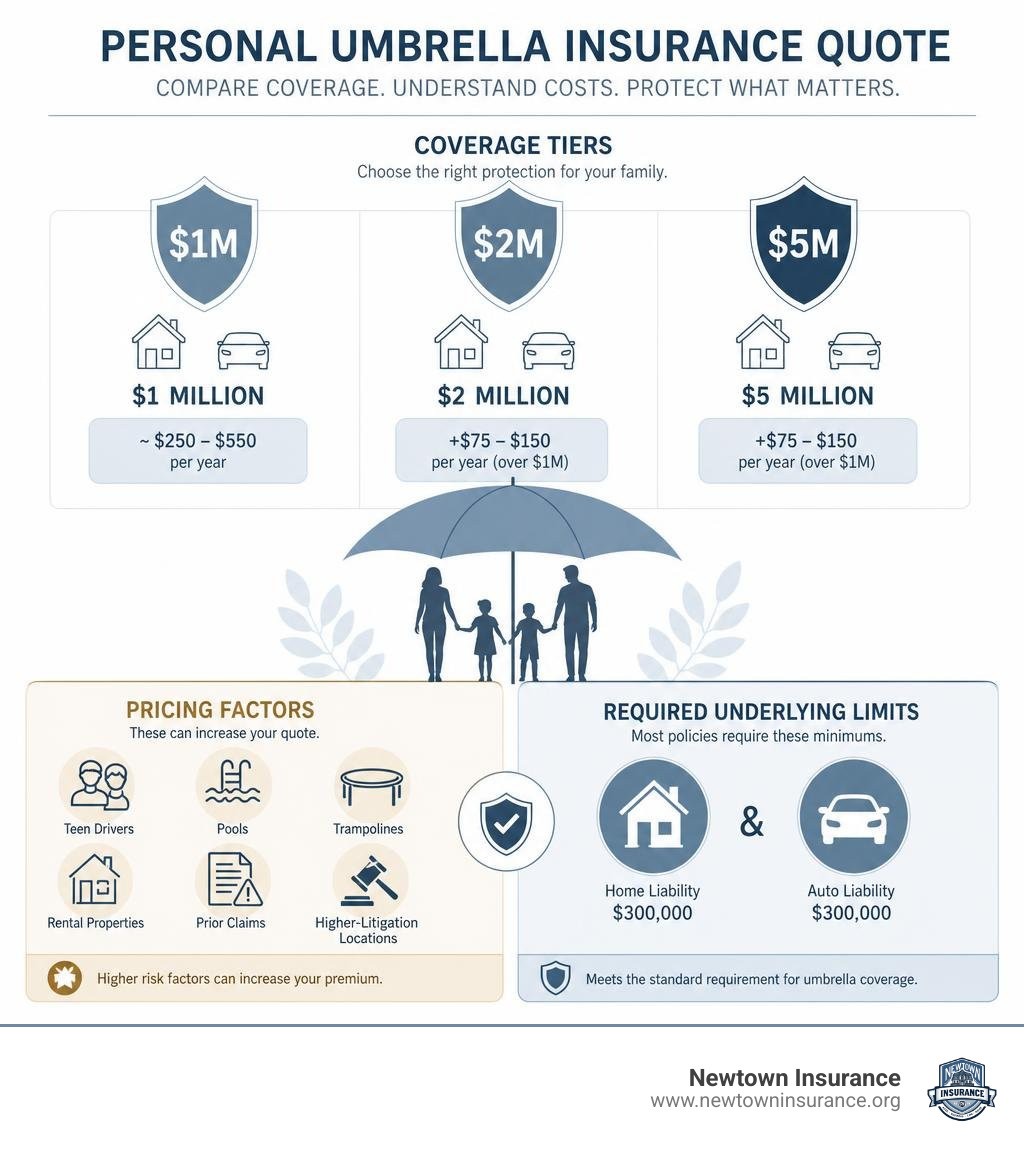
In 2026, $1 million of umbrella coverage commonly costs about $250 to $550 per year. Extra $1 million layers often add roughly $75 to $150 annually. But pricing can rise sharply with teen drivers, pools, trampolines, rental homes, prior claims, and higher-litigation locations.
Umbrella insurance can help when a serious injury or property-damage claim exceeds standard liability coverage. It may also cover certain personal claims, such as libel or slander, that are not always covered by a basic home or auto policy. The goal is simple: protect assets and future income from a lawsuit that costs more than your regular policy can pay.
I’m Shawn Beihl, a specialty insurance professional with more than 15 years of experience assessing personal and business risk. I help families understand what affects a personal umbrella insurance quote, so they can avoid generic coverage and make a clear, cost-conscious choice.
The Growing Need for Excess Liability Protection in 2026
Today’s legal environment involves surging jury verdicts, rising medical expenses, and soaring vehicle replacement costs. When an unexpected catastrophic accident takes place, baseline insurance coverage can be wiped out in a matter of days. Many policyholders mistakenly assume their standard homeowners or auto insurance policies provide full liability shielding. However, standard policies carry strict caps—often $300,000 or $500,000—which can leave family savings, investments, home equity, and future wages completely vulnerable to court-ordered judgments.
Evaluating your coverage options with tools like an Umbrella Insurance Quote Calculator — 2026 Annual Premium by Coverage, Household & Risk | UseCalcPro provides immediate insight into how different policy tiers align with your unique household liability exposures.
When you request a personal umbrella insurance quote, you are evaluating an overarching policy that sits directly on top of your existing primary lines. Rather than having isolated liability buckets, an umbrella policy establishes a unified multi-million-dollar safety net that safeguards your entire balance sheet.
Quick personal umbrella insurance quote terms:
- personal health insurance quotes
- personal liability insurance quotes
- personal trainer insurance quotes
Understanding Umbrella Coverage and Essential Policy Protections

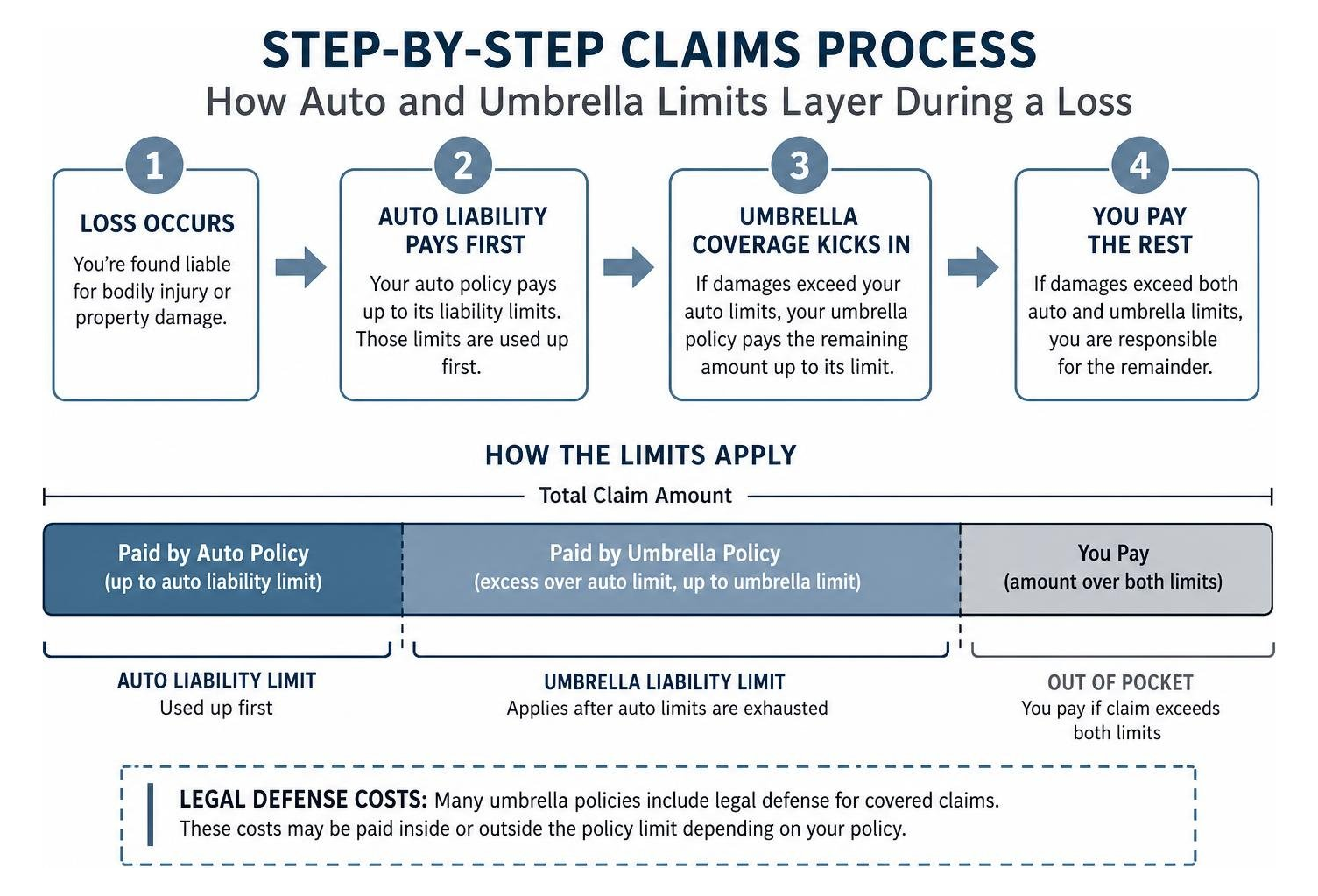
Personal umbrella insurance functions as an extra layer of liability protection that sits directly above your underlying auto, homeowners, condo, or boat policies. When a catastrophic accident occurs and the financial damages exhaust the baseline limits of your primary policy, the umbrella policy activates to absorb the remaining liability.
Standard home and auto policies are designed to handle routine occurrences—a minor fender-bender, a fallen tree limb on a neighbor’s shed, or an isolated slip-and-fall on icy steps. However, when an event results in severe bodily injury, long-term disability, or wrongful death, standard policy maximums can be depleted in days. If you find yourself in a major lawsuit, an umbrella policy steps in to pay for:
- Third-Party Bodily Injury: Medical expenses, physical rehabilitation, ongoing care, and lost earnings for injured individuals.
- Third-Party Property Damage: Structural repairs, complete vehicle replacements, or environmental remediation resulting from an accident you caused.
- Personal Injury Offenses: Lawsuits alleging slander, libel, false arrest, wrongful eviction, or defamation of character (which are frequently excluded from standard homeowners contracts).
- Legal Defense Expenses: Attorney fees, court costs, depositions, expert witness fees, and administrative expenses incurred while defending you in court.
Having personal liability insurance quotes explained without the headache makes it clear that umbrella insurance is not redundant coverage; it is pure liability insurance designed to safeguard your life savings, equity, and future earnings from being seized after a catastrophic judgment.
Legal Defense Costs Inside vs. Outside Policy Limits
One of the most critical structural details in any umbrella policy is how the carrier handles legal defense expenses. A mid-complexity auto-injury lawsuit that settles for $750,000 routinely racks up $150,000 to $400,000 in attorney fees and court costs long before a final settlement or judgment is reached.
Carriers structure defense costs in one of two ways:
- Defense Outside Policy Limits (Preferred): The insurance provider pays all necessary legal defense costs in addition to your policy limit. If you have a $1 million umbrella policy and your legal defense costs $300,000 while the final court judgment is $1 million, the carrier pays the entire $1.3 million. Your full $1 million liability limit remains intact to settle the claim.
- Defense Inside Policy Limits: Every dollar spent on attorneys, expert witnesses, and filing fees directly erodes your coverage. In the same scenario, spending $300,000 on legal defense leaves only $700,000 available to pay the judgment. You would remain personally responsible for the outstanding $300,000 balance out of pocket.
When reviewing policy terms, confirming that legal defense is provided “outside limits” ensures your coverage is not eaten away by billable hours before the injured party is compensated.
Matching Coverage Limits to Real Household Risk
A useful personal umbrella insurance quote should reflect more than a round-number premium. Families should compare the umbrella limit against their home equity, savings, investment accounts, future earnings, and visible liability exposures. A household with a long commute, a teenage driver, a swimming pool, frequent guests, rental property, or volunteer board responsibilities may need a higher limit than a household with fewer risk triggers.
It also helps to ask how the carrier treats household members, permissive drivers, recreational vehicles, watercraft, and rental homes. These details can determine whether the quoted price truly protects the situations your family is most likely to face. For Pennsylvania families, an independent agency can also coordinate umbrella quotes with existing home and auto policies so required underlying limits are not missed.
Before choosing the lowest premium, request side-by-side options for at least $1 million, $2 million, and $5 million in coverage. Then compare exclusions, defense-cost treatment, required auto and homeowners limits, and any optional endorsements. The best umbrella policy is not always the cheapest one; it is the policy that closes the largest liability gaps for the household budget you can sustain.
How to Request and Compare Umbrella Quotes
To get an accurate personal umbrella insurance quote, gather the declarations pages for your auto, homeowners, condo, renters, motorcycle, boat, and rental-property policies before you contact an agent. Those pages show the liability limits, drivers, vehicles, properties, and policy dates that the umbrella carrier will need to review. If any underlying policy falls below the required limit, the quote should show the cost of raising that primary coverage as well as the umbrella premium.
Ask each carrier or agency to quote the same coverage limits so you can compare the options fairly. A low annual premium may look attractive until you notice a broader exclusion, a missing rental-property endorsement, a defense-inside-limits clause, or an underlying-limit requirement that forces a separate premium increase. A cleaner quote should explain what is covered, what is excluded, which household members are insured, how claims are defended, and when the umbrella policy begins paying after the primary policy is exhausted.
For many families, the best next step is a short coverage review rather than a blind online estimate. Newtown Insurance can help Pennsylvania households compare umbrella options alongside their current home and auto policies, identify hidden gaps, and request a quote that fits their assets, vehicles, property, and family risk profile. If you want a clearer view of your excess liability options, contact Newtown Insurance to review your current limits and explore a personal umbrella policy that protects more than the minimum.
Common Policy Exclusions and Liability Gaps
While umbrella insurance provides broad liability protection, it is not a catch-all policy. Standard umbrella contracts carry specific exclusions that require separate policies or endorsements:
- Damage to Your Own Property: Umbrella insurance is strictly third-party liability insurance. It will not pay for structural damage to your own home or collision repairs to your personal vehicles.
- Intentional, Criminal, or Fraudulent Acts: Deliberate harm or criminal actions committed by an insured individual are excluded from coverage.
- Business Operations and Professional Liability: If you operate a business, see clients in your home, or face malpractice claims, your personal umbrella policy will deny the claim. Commercial activities require dedicated commercial general liability or professional liability policies.
- Contractual Liabilities: Oral or written contractual agreements where you assume another party’s liability are routinely excluded under standard personal umbrella forms.
- Uninsured and Underinsured Motorist Gaps: Standard umbrella policies do not automatically protect you if an underinsured driver hits you. You must verify whether your carrier offers an optional Excess UM/UIM endorsement to extend umbrella protection to your own bodily injuries.
Why Policy Integration Matters
Maintaining seamless integration between your underlying auto, home, and umbrella carriers prevents dangerous coverage gaps. If your primary auto policy requires $250,000/$500,000 bodily injury limits, but your policy is mistakenly written at $100,000/$300,000, an insurer will only pay umbrella claims above the required $250,000 threshold. In that scenario, you would be forced to cover the $150,000 difference out of pocket before excess coverage applies. Working closely with an independent insurance agency ensures your underlying limits perfectly match your umbrella policy requirements from day one and keeps every policy coordinated as vehicles, homes, and family risks change.