What Pennsylvania Drivers Need to Know About Car Insurance
Car insurance Pennsylvania drivers must carry is governed by specific state laws — and understanding those rules can mean the difference between being legally protected and facing serious financial risk.
Here’s a quick overview of what’s required:
| Coverage Type | Minimum Required |
|---|---|
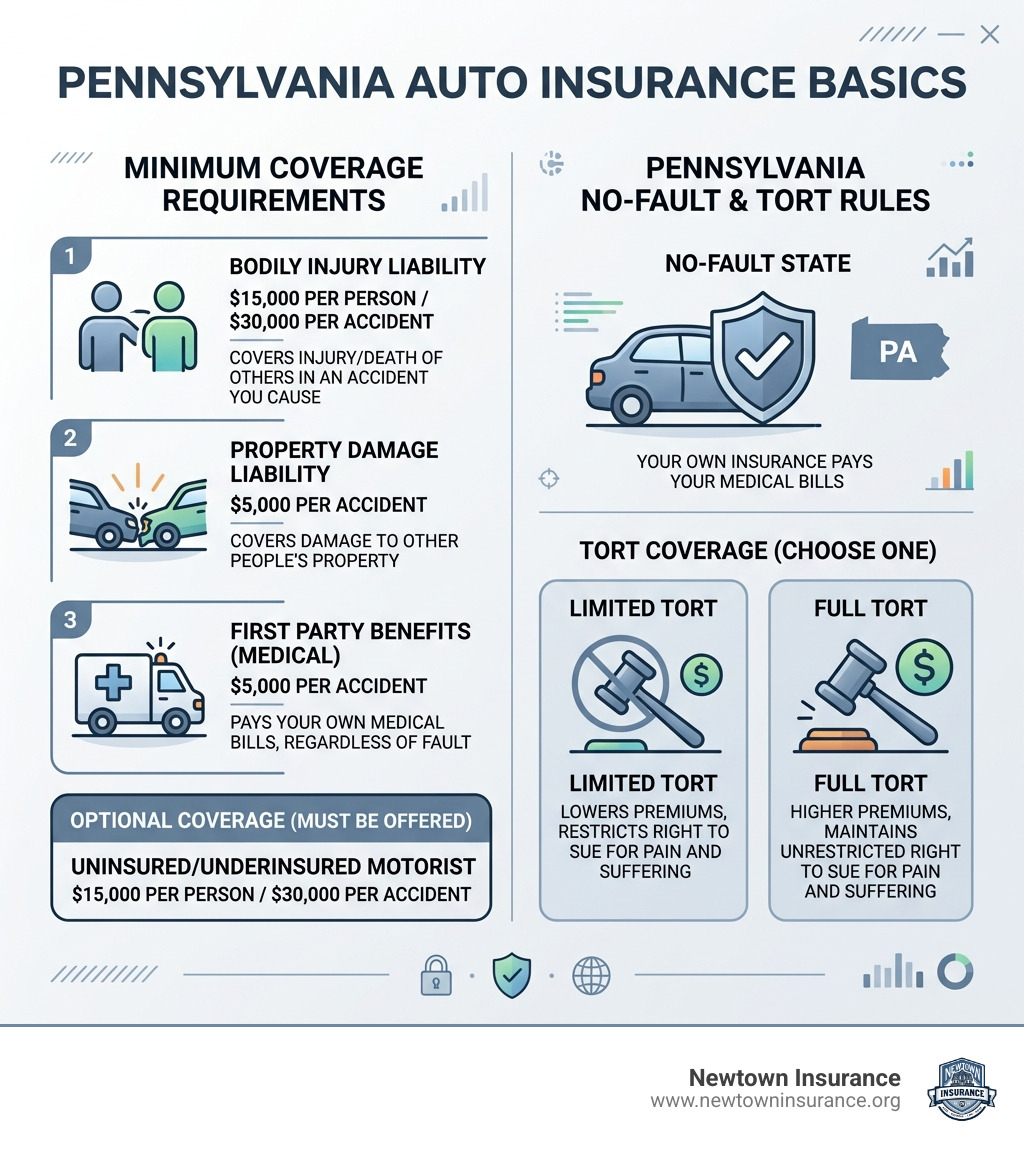
| Bodily Injury Liability | $15,000 per person / $30,000 per accident |
| Property Damage Liability | $5,000 per accident |
| First Party Benefits (Medical) | $5,000 per accident |
| Uninsured/Underinsured Motorist | $15,000 per person / $30,000 per accident (offered, can be rejected in writing) |
| Tort Coverage | Must choose Full Tort or Limited Tort |
Pennsylvania is a no-fault state (since 1990), meaning your own insurance pays your medical bills after an accident — regardless of who caused it. The average cost of car insurance in Pennsylvania is around $2,270 per year, or roughly $111 per month for a basic liability-only policy as of 2025.
Whether you’re worried about overpaying, unsure what coverage you actually need, or just moved to the state, this guide breaks it all down clearly.
I’m Shawn Beihl, and with over 15 years of specialty insurance experience across commercial P&C, life, health, and risk management, I’ve helped countless drivers navigate car insurance Pennsylvania requirements to find coverage that actually fits their needs. Let’s make sure you’re not overpaying — or underprotected.
Understanding Pennsylvania Car Insurance Requirements
Navigating car insurance Pennsylvania can feel a bit like driving through the Liberty Tunnels during rush hour-confusing and slightly stressful. However, the Commonwealth has a very specific set of rules designed to ensure every driver maintains “financial responsibility.” This isn’t just a suggestion; it’s the law.
In Pennsylvania, every motor vehicle must be covered by a valid insurance policy. This policy follows the car, not necessarily the driver, and it must be active whenever the vehicle is operated on public roads. If you’re looking for a deeper dive into how these rules interact with other types of coverage, check out our Insurance Pennsylvania Complete Guide. You can also review registration and insurance compliance information directly through PennDOT.
Minimum Requirements for car insurance Pennsylvania
To drive legally in the Keystone State as of April 2026, your policy must meet or exceed these three primary “split limits”:
- Bodily Injury Liability: $15,000 per person / $30,000 per accident. This pays for medical bills and damages for other people if you are at fault in an accident.
- Property Damage Liability: $5,000. This covers damage you cause to someone else’s property (like their car, fence, or that very expensive mailbox).
- Medical Benefits (First Party Benefits): $5,000. This is the “no-fault” portion that pays for your own medical treatment.
While these are the minimums, we often find that $5,000 in property damage is barely enough to cover a bumper replacement on a modern SUV. We usually recommend looking at higher limits to protect your personal assets.
| Coverage Type | PA State Minimum | Recommended Coverage |
|---|---|---|
| Bodily Injury | $15k / $30k | $100k / $300k |
| Property Damage | $5,000 | $50,000 – $100,000 |
| Medical Benefits | $5,000 | $10,000+ |
| Collision/Comp | Not Required | Highly Recommended |
The No-Fault System Explained
Pennsylvania is a “no-fault” state, but that doesn’t mean “no one is at fault” when a crash happens. It simply means that your own insurance company is the first line of defense for your medical bills. This is handled through First Party Benefits (FPB).
Regardless of who caused the fender-bender, your FPB will cover:
- Medical expenses (surgery, dental, nursing, etc.)
- Income loss (optional)
- Funeral benefits (optional)
- Accidental death benefits (optional)
The goal is to get you medical attention immediately without waiting for a long legal battle to determine who pays. If you’re in the Newtown area and need a hand figuring out which level of FPB is right for you, you can contact our team to see how these benefits impact your premium.
The Choice Between Full Tort and Limited Tort
This is arguably the most important decision you’ll make when buying car insurance Pennsylvania. When you sign up for a policy, you must choose between “Full Tort” and “Limited Tort.”
Limited Tort is the “budget-friendly” option. By choosing this, you receive a discount on your premiums. In exchange, you give up your right to sue for “pain and suffering” unless your injuries meet a “serious injury” threshold (usually involving permanent impairment or disfigurement). You can still sue for out-of-pocket medical bills and property damage, but not for the “non-monetary” toll of the accident.
Full Tort is the unrestricted option. It costs more, but it allows you to seek financial compensation for any pain and suffering caused by an at-fault driver, regardless of the severity of the injury.
For drivers in high-traffic areas like Scranton, choosing the right tort option can significantly change the outcome of a personal injury claim. You can read more about local considerations in our guide to Auto Insurance Scranton PA.
Uninsured and Underinsured Motorist Protection
While the law requires everyone to have insurance, not everyone follows the law. Statistics show that a significant number of drivers on the road are either completely uninsured or carry only the bare minimum limits.
Uninsured Motorist (UM) coverage protects you if you’re hit by a driver who has no insurance at all. Underinsured Motorist (UIM) coverage kicks in when the at-fault driver has insurance, but their limits aren’t high enough to cover your total damages.
In Pennsylvania, insurers are required to offer you UM/UIM coverage at limits equal to your bodily injury liability. You can reject this coverage or choose lower limits, but you must do so in writing. Given the risks, we strongly advise against rejecting this protection. It’s often the only thing standing between you and a massive hospital bill. If you have multiple vehicles or even a motorcycle, you might consider Car Motorcycle and Home Insurance Combined to streamline this protection.
Stacking vs. Unstacking Coverage
If you have more than one vehicle on your policy, Pennsylvania offers a unique feature called stacking.
- Stacked Coverage: This multiplies your UM/UIM limits by the number of vehicles you own. For example, if you have two cars with $15,000/$30,000 UIM limits and you choose “stacked,” your actual protection becomes $30,000/$60,000.
- Unstacked Coverage: Your limits stay at the stated amount regardless of how many cars are on the policy.
Choosing unstacked coverage usually results in a small discount, but stacking provides a much larger safety net for your family. If you’re looking for local expertise in Newtown, you can reach out to our specialists to discuss how stacking might work for your specific household.
Factors Influencing the Cost of car insurance Pennsylvania
As of 2024, the average cost of insurance in Pennsylvania was approximately $2,270 per year, which sits about 4% higher than the national average. By 2025, a basic liability-only policy for a single driver averages around $111.33 per month.
Why the variation? Your premium isn’t a random number; it’s calculated based on several factors:
- ZIP Code: Urban areas like Philadelphia or Pittsburgh generally have higher rates than rural counties due to higher traffic density and theft rates.
- Driving History: A clean record for five years can lead to significant “Good Driver” discounts.
- Vehicle Type: Insuring a brand-new sports car costs more than a five-year-old sedan with high safety ratings.
- Credit-Based Insurance Score: In PA, insurers can use your credit history as a factor in determining your risk level.
- Age and Gender: Younger drivers (especially those under 25) typically face higher premiums.
For more tips on keeping these costs down, take a look at our Moneysaving Car Insurance resource.
How to Save on car insurance Pennsylvania
We don’t want you to pay a penny more than necessary. Here are the most effective ways to lower your car insurance Pennsylvania bill:
- Multi-Policy Bundling: Combining your auto insurance with homeowners or renters insurance can save you over 20% on average.
- Safe Driving Programs: Many modern insurers offer apps that track your driving habits (braking, speed, etc.) and reward safe behavior with discounts of up to 30%.
- Senior Discounts: Pennsylvania law requires a premium reduction of at least 5% for drivers aged 55 or older who complete a PennDOT-approved driver improvement course.
- Good Student Discount: If you have a young driver on your policy who maintains a “B” average or higher, make sure to let your agent know!
- Equipment Discounts: Features like anti-lock brakes (ABS), anti-theft devices, and passive restraints can all shave a few dollars off your premium.
Even if you’re looking for something smaller, like Moped Insurance Price information, many of these same discount principles apply.
Legal Obligations for New Residents and Uninsured Drivers
If you’ve just moved to the Keystone State—welcome! You have 20 days from the time you establish residency to title and register your vehicle in Pennsylvania.
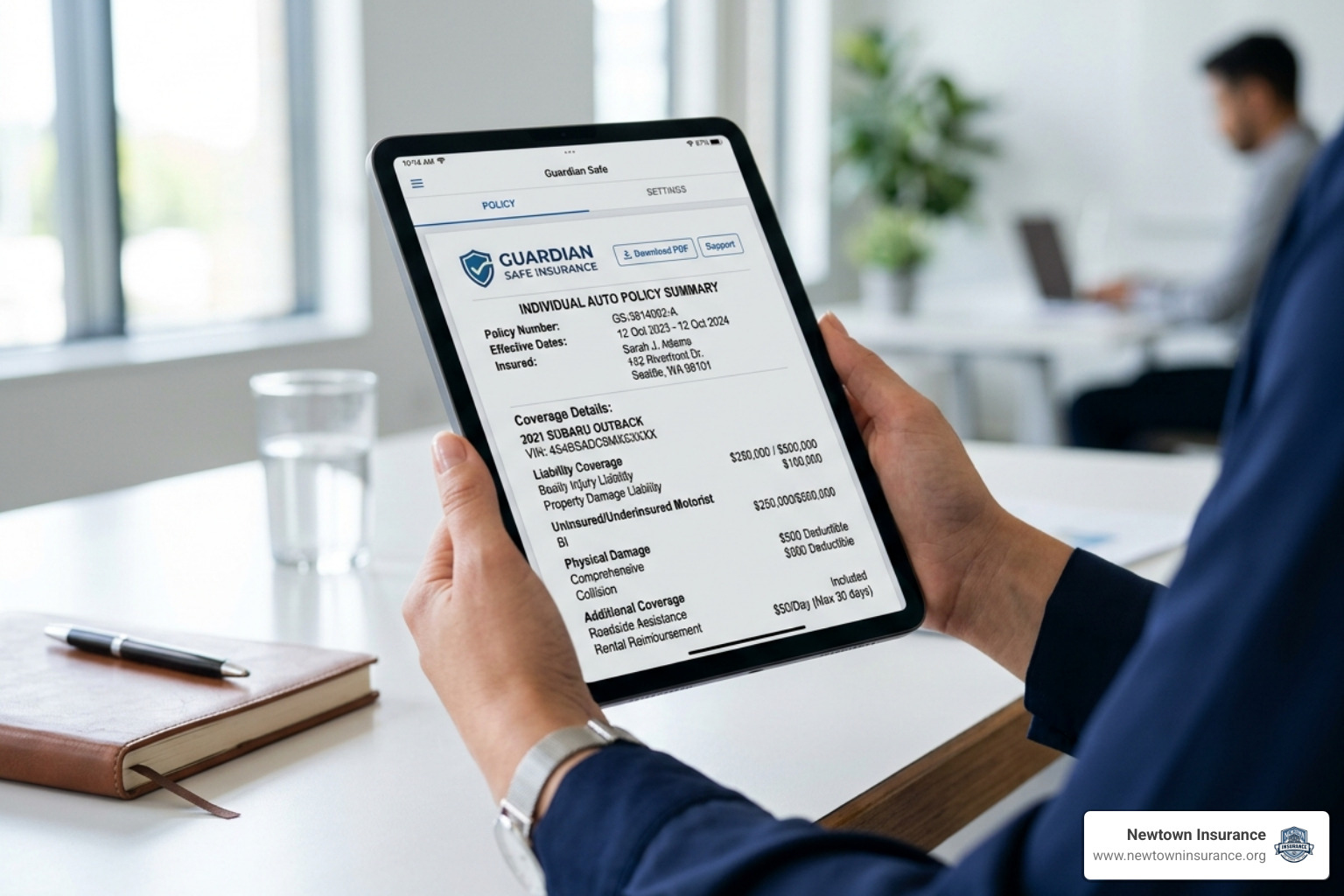
To get your PA registration and license, you must first secure car insurance Pennsylvania from a provider licensed to do business in the state. You’ll need to show proof of insurance (usually an ID card or the policy declaration page) at the DMV or a private tag-and-title shop.
If you are a contractor moving your business vehicles into the state, the rules can get even more complex. Our Contractor Insurance Pennsylvania Guide can help you navigate those professional requirements.
Consequences of Driving Without Insurance
Pennsylvania takes “financial responsibility” very seriously. If your insurance lapses, your insurance company is legally required to notify PennDOT.
The penalties for driving without insurance are stiff:
- Fines: Up to $300.
- Suspensions: A 3-month suspension of your vehicle registration AND a 3-month suspension of your driver’s license.
- Impoundment: Your vehicle could be impounded on the spot.
- Restoration Fees: You’ll have to pay significant fees to get your license and registration back after the suspension period ends.
If you’re in a situation where you’ve had a lapse and need to get back on the road, searching for Car Insurance Quotes in Irwin PA or your local area is the first step toward compliance.
Frequently Asked Questions about Pennsylvania Auto Insurance
Is Pennsylvania a no-fault state?
Yes. Pennsylvania has been a no-fault state since 1990. This means your own insurance company pays for your medical treatment (up to your First Party Benefit limit) regardless of who caused the accident. This applies only to medical bills, not to vehicle damage.
What is the difference between Limited Tort and Full Tort?
Limited Tort allows you to save money on your monthly premium but restricts your right to sue for “pain and suffering” unless your injuries are severe. Full Tort costs more but preserves your right to seek compensation for all damages, including non-monetary ones, if the other driver is at fault.
Can I reject Uninsured Motorist coverage in PA?
Yes, you can reject Uninsured and Underinsured Motorist coverage, but you must sign a specific rejection form provided by your insurer. We highly recommend keeping this coverage, as it protects you from drivers who are illegally operating without insurance.
Does my car insurance cover my boat or trailer?
Generally, no. While your auto policy might provide some liability coverage while towing, it won’t cover damage to the boat itself. For that, you’ll need specialized Pennsylvania Boat Insurance Quotes.
How do I prove I have insurance?
You can use a paper ID card provided by your insurer or a digital version on your smartphone. Pennsylvania law accepts electronic proof of insurance during traffic stops.
Conclusion
At Newtown Insurance, we believe that car insurance Pennsylvania shouldn’t be a “one-size-fits-all” product. Whether you’re commuting into Philadelphia or enjoying the scenic backroads of Bucks County, your coverage should reflect your actual risks and budget.
By understanding the difference between Full and Limited Tort, the benefits of stacking, and how to maximize your discounts, you can protect your family without overpaying. We pride ourselves on offering tailored protection and transparent pricing that puts you first.
Ready to see how much you could save while staying fully protected? Get a customized Pennsylvania car insurance quote from us today. We’re here to help you navigate the road ahead with confidence.