Home Insurance Costs Are Rising — Here’s How to Stop Overpaying in 2026
Finding the most affordable home insurance in 2026 requires looking beyond the big names. According to data from the Insurance Information Institute, premiums are influenced by a variety of factors including inflation and rising construction costs.
| Provider Type | Est. Annual Premium ($300k Dwelling) | Availability |
|---|---|---|
| Top-Rated Regional | ~$806 – $1,300/yr | Select States |
| National Carrier A | ~$1,994/yr | Nationwide |
| National Carrier B | ~$2,031/yr | Nationwide |
| National Carrier C | ~$2,209/yr | Nationwide |
Premiums vary by location, credit score, coverage level, and home age. Always compare at least three quotes.
Home insurance costs have been climbing fast. More than half of U.S. homeowners — 54% — saw their premiums go up in the past year alone. The national average now sits at roughly $2,490 per year for $400,000 in dwelling coverage.
That’s a real burden, especially when you’re not sure why you’re paying what you’re paying.
The good news? There’s a wide range of rates out there. Some Pennsylvania homeowners are locking in coverage for under $500 a year. Others are overpaying by thousands — often without realizing it.
This guide breaks down exactly what drives your premium, which companies offer the best rates, and what you can do right now to pay less without giving up the protection you need.
I’m Shawn Beihl from Newtown Insurance, and with over 15 years of experience across commercial and personal insurance lines, I’ve helped countless homeowners find the most affordable home insurance without sacrificing real coverage. Let’s dig into what actually moves the needle on your premium.
Key Factors That Determine the Most Affordable Home Insurance
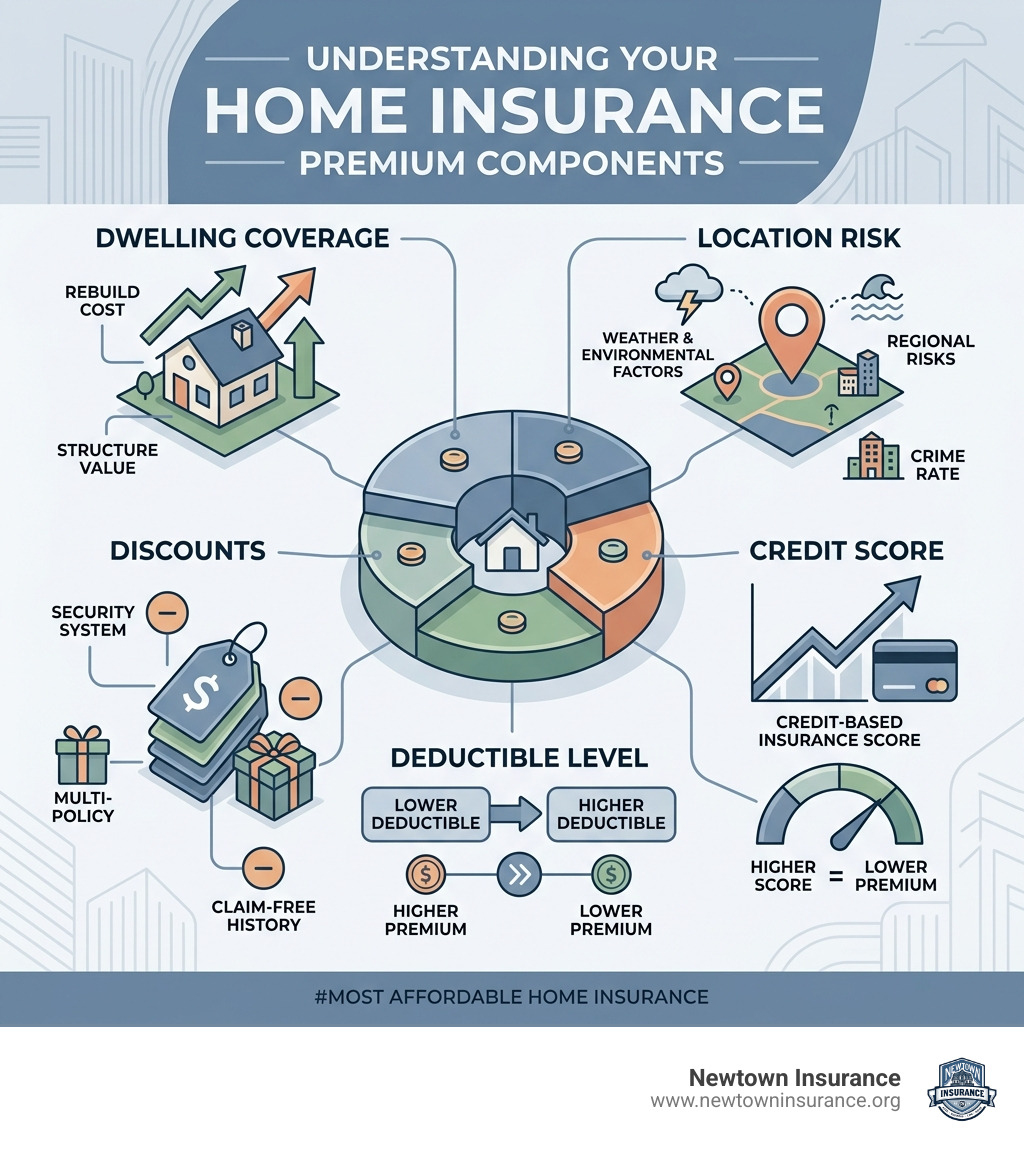
Finding the most affordable home insurance isn’t just about picking the lowest number on a screen. It’s about understanding the “math” behind the quote. Insurance companies aren’t just pulling numbers out of a hat; they are assessing risk.
One of the biggest components of your premium is dwelling coverage. This is the amount it would cost to completely rebuild your home from the ground up if it were destroyed. A common mistake we see in Pennsylvania is homeowners confusing their home’s market value with its replacement cost.
Your market value includes the land and the local real estate “hype,” but your insurance company only cares about the lumber, labor, and bricks. If you insure your home for its $600,000 market value when it only costs $400,000 to rebuild, you are essentially donating money to your insurance company. On the flip side, under-insuring can leave you stranded after a disaster.
Understanding this home insurance information is the first step toward a leaner bill. By accurately calculating your replacement cost, you ensure you aren’t paying for “ghost” coverage that you’ll never be able to claim.

How Credit Scores Impact the Most Affordable Home Insurance
It might feel a bit personal, but in most states—including Pennsylvania—insurers use your credit-based insurance score to help set your rates. Statistics show that homeowners with poor credit pay an average of 72% to 97% more for dwelling coverage than those with good credit.
Why? Actuarial data suggests a correlation between financial responsibility and claim frequency. To an insurer, a high credit score signals that you are more likely to maintain your home and less likely to file small, “nuisance” claims.
If you’re looking for tips for saving money on insurance, one of the most effective long-term strategies is simply keeping your credit healthy. Even a modest bump in your score can move you into a different “tier,” potentially saving you hundreds of dollars a year.
Why Location and Home Age Affect the Most Affordable Home Insurance
In Pennsylvania, where you live matters—down to the ZIP code. Insurers look at local crime rates, the distance to the nearest fire station, and even the history of weather events in your specific neighborhood.
The age of your home is another massive factor. An older home in Newtown or Bucks County might have a lot of charm, but if it still has its original 1970s electrical panel or a 25-year-old roof, insurers see a ticking time bomb. In fact, research shows that homes built 40 years ago can cost 75% more to insure than brand-new homes.
Newer homes often qualify for “new home” discounts because their plumbing, electrical, and heating systems are less likely to fail and cause a claim. When shopping for no hidden fee insurance, always be upfront about any recent upgrades you’ve made to your roof or systems—it’s often the key to unlocking a lower rate.
Proven Strategies to Lower Your Annual Premiums
If your premium just jumped, don’t panic. You have more control over the price than you might think. The most effective way to secure the most affordable home insurance is through bundling.
When you place your home and auto insurance with the same carrier, you can often see discounts ranging from 10% to 25%. Some carriers even offer a single deductible if a single event (like a nasty Pennsylvania hailstorm) damages both your car and your house.
Beyond bundling, here is a quick look at how your choice of deductible impacts your bottom line:
| Deductible Amount | Estimated Premium Savings |
|---|---|
| $500 | 0% (Baseline) |
| $1,000 | 5% – 10% |
| $2,500 | 15% – 20% |
| $5,000 | 25% – 30% |
For more insurance savings tips, check out our deep dive into policy optimizations.
Maximizing Protective Device Discounts
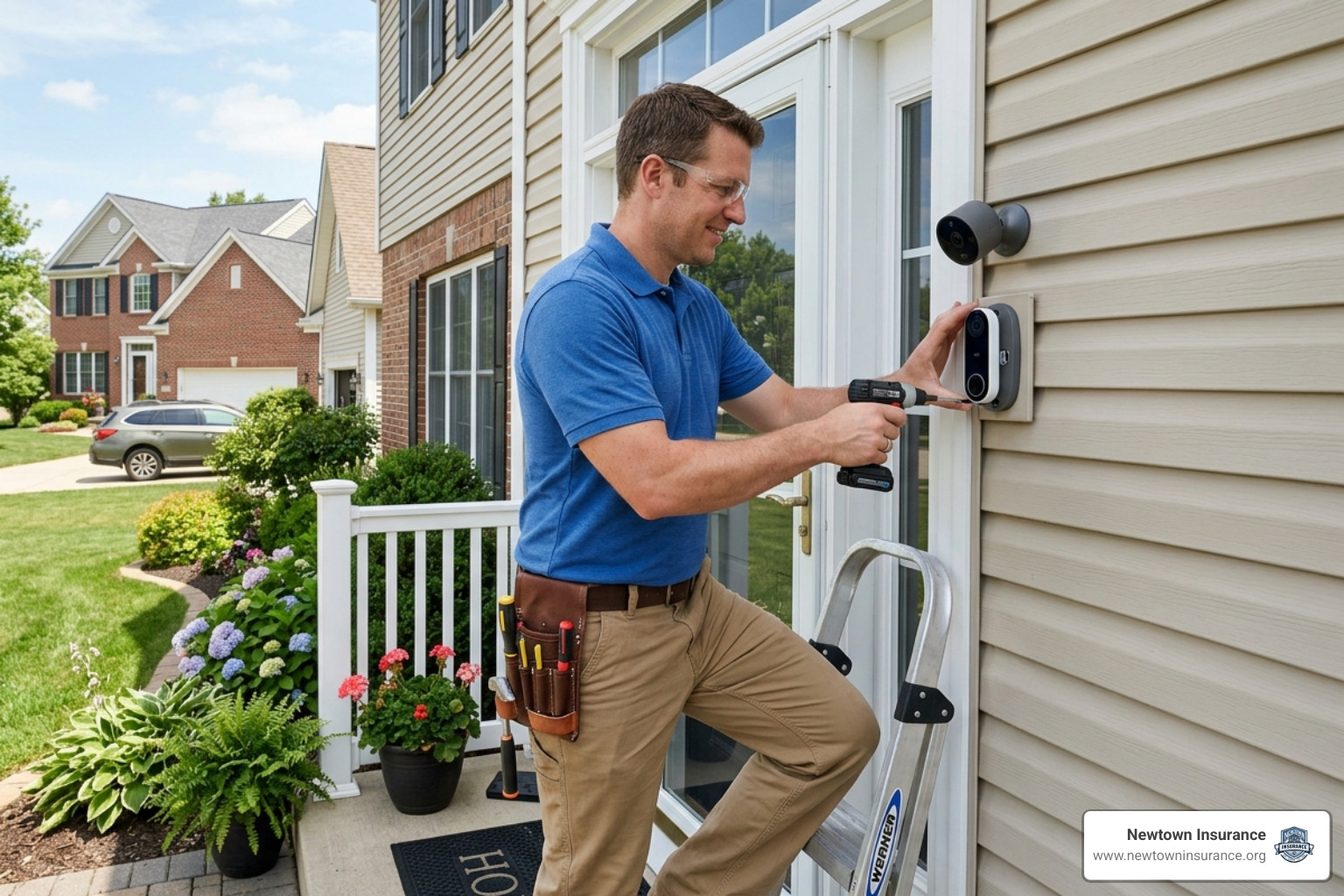
In 2026, “smart homes” aren’t just for tech enthusiasts—they are for budget-conscious homeowners. Most insurers offer discounts for:
- Monitored Burglar Alarms: These can shave 5% to 10% off your premium.
- Fire Sprinklers & Smoke Detectors: Especially those that notify the fire department automatically.
- Water Leak Sensors: Water damage is one of the most common (and expensive) claims. Installing a $50 sensor that shuts off your water main automatically can lead to significant annual savings.
These devices reduce the severity of a loss, which makes you a much more attractive client for insurance companies.
The Impact of Raising Your Deductible
Raising your deductible is perhaps the fastest way to lower your premium. By moving from a $1,000 deductible to a $2,500 deductible, many homeowners see an immediate 9% to 15% reduction in their annual cost.
However, this is only a “smart play” if you have the cash reserves to cover that deductible in an emergency. We always tell our clients: insurance should be for the “big stuff”—the catastrophic losses that would ruin you financially. If you can afford to pay for a $2,000 repair out of pocket, a higher deductible is a great way to stop trading dollars with the insurance company. For a step-by-step walkthrough, see our compare insurance quotes complete guide.
Navigating Coverage Options Without Sacrificing Protection
The trap many fall into when searching for the most affordable home insurance is cutting out coverage they actually need. It’s easy to get a “cheap” quote by slashing your liability limits or removing personal property protection, but that’s a dangerous game.
A standard policy usually includes:
- Dwelling: The structure itself.
- Personal Property: Your clothes, furniture, and electronics.
- Liability: Protection if someone gets hurt on your property and sues you.
- Additional Living Expenses (ALE): Pays for a hotel if your home is uninhabitable.
We recommend keeping your liability at a minimum of $300,000—or $500,000 if you have significant assets. The cost difference is usually less than the price of a pizza per year.
Standard vs. Optional Add-ons
While you want to keep costs low, some “add-ons” are actually incredible values.
- Service Line Protection: Most homeowners don’t realize they are responsible for the pipes running from the street to their house. A break can cost $10,000+. Adding this for $50 a year is often worth it.
- Equipment Breakdown: Covers expensive appliances and HVAC systems when they fail due to mechanical issues.
- Identity Theft: A cheap addition that provides professional help if your data is compromised.
If you are currently renting while looking for a home, understanding renters insurance cost per year can help you budget for these types of protections early on.
Understanding Actual Cash Value vs. Replacement Cost
This is where many “budget” policies hide their secrets.
- Actual Cash Value (ACV): If your 10-year-old TV is stolen, the insurance company gives you what a 10-year-old TV is worth today (maybe $50).
- Replacement Cost: They give you enough to buy a brand-new TV of similar quality.
While ACV is cheaper, it can leave you with a massive bill when you actually need to replace your belongings. For Pennsylvania residents, knowing the homeowners insurance pa cost for replacement cost coverage is vital to avoid being underpaid during a claim.
Regional Insights for Pennsylvania Homeowners
Pennsylvania presents a unique set of challenges. We don’t have the hurricanes of Florida or the wildfires of California, but we do have heavy snow, spring flooding, and the occasional tornado.
Our state also has specific regulations on how insurance companies can raise rates and what they must cover. For instance, Pennsylvania has specific laws regarding “bad faith” insurance practices, giving consumers a bit more leverage. For a full breakdown of the local landscape, read our Home Insurance Pennsylvania Complete Guide.
Finding Value in Local Insurance Providers
While the giant national brands spend billions on commercials, local and regional providers often offer the most affordable home insurance in Pennsylvania.
Because regional companies understand the local risks (like the specific types of winter storms we get in Bucks County), they can often price their policies more accurately than a company based in another part of the country. Plus, you get the benefit of working with someone who knows your neighborhood. If you’re currently in an apartment, checking out Renters Insurance Pennsylvania options from these local carriers is a great way to start building a relationship.
Frequently Asked Questions about Affordable Home Insurance
How often should I shop for new quotes?
We recommend shopping your insurance every 12 to 24 months. Rates in the insurance industry are constantly shifting. A company that was the most expensive two years ago might be aggressively targeting new business today with lower rates. Also, if you’ve recently improved your credit score or replaced your roof, you should shop immediately to capture those savings.
Does filing a small claim always raise my rates?
Usually, yes. Filing a claim—especially for something small like a $1,200 fence repair when you have a $1,000 deductible—is rarely worth it. Not only will you only get $200, but you will likely lose your “claims-free discount,” which can be 10% to 20% of your premium. Keep your insurance for the big disasters and pay for the small stuff yourself to keep your rates low.
What is the best way to compare multiple insurers?
The “best” way isn’t just using a single website; it’s using a combination of tools and expertise. While you can use the best website to compare home insurance quotes to get a baseline, an independent agent can often access regional carriers that don’t appear on the big comparison sites.
Conclusion: Take Control of Your Home Insurance Today
At Newtown Insurance, we believe that “affordable” shouldn’t mean “cheap quality.” Our mission is to provide Pennsylvania homeowners with tailored protection, smart savings, and completely transparent pricing.
The 2026 market is tough, but you don’t have to navigate it alone. Whether you’re a first-time buyer in Newtown or a long-time resident looking to slash your premiums, we’re here to help you find the most affordable home insurance that actually protects your most valuable asset.
Ready to see how much you could be saving? Get your personalized insurance quotes today and stop overpaying for coverage you can get for less.