Why Getting Easy Home Insurance Doesn’t Have to Be Stressful
Easy home insurance starts with knowing exactly what you need — and where to get it without the runaround.
Here’s a quick breakdown of how to simplify your coverage:
| Step | What to Do |
|---|---|
| 1. Know your coverage needs | Dwelling, personal property, liability, and living expenses |
| 2. Gather your home details | Age, size, construction type, safety features |
| 3. Compare multiple quotes | Use an independent agent or online tools |
| 4. Check for discounts | Bundling, security systems, advance quoting |
| 5. Review and customize | Add riders for floods, high-value items, or identity theft |
Shopping for home insurance can feel overwhelming. Between confusing policy terms, surprise exclusions, and premiums that seem to change for no clear reason, it’s easy to end up overpaying for coverage that doesn’t actually fit your home or your life.
The good news? It doesn’t have to be that way.
According to NAIC data, the average annual cost of homeowners insurance rose nearly 7% between 2020 and 2021 alone — which means getting the right coverage at the right price matters more than ever.
I’m Shawn Beihl from Newtown Insurance, and with over 15 years of specialty insurance experience, I’ve helped countless Pennsylvania homeowners cut through the complexity and find easy home insurance that’s transparent, fairly priced, and actually built around their needs. In this guide, I’ll walk you through everything you need to know — from what a standard policy covers to how to stop overpaying.
Demystifying Easy Home Insurance: What Does It Actually Cover?

When we talk about easy home insurance, we mean coverage that is straightforward to understand, simple to acquire, and comprehensive enough to let you sleep soundly at night. A standard homeowners policy (often referred to as an HO-3 policy in the insurance world) is designed to protect your home, your belongings, and your financial security.
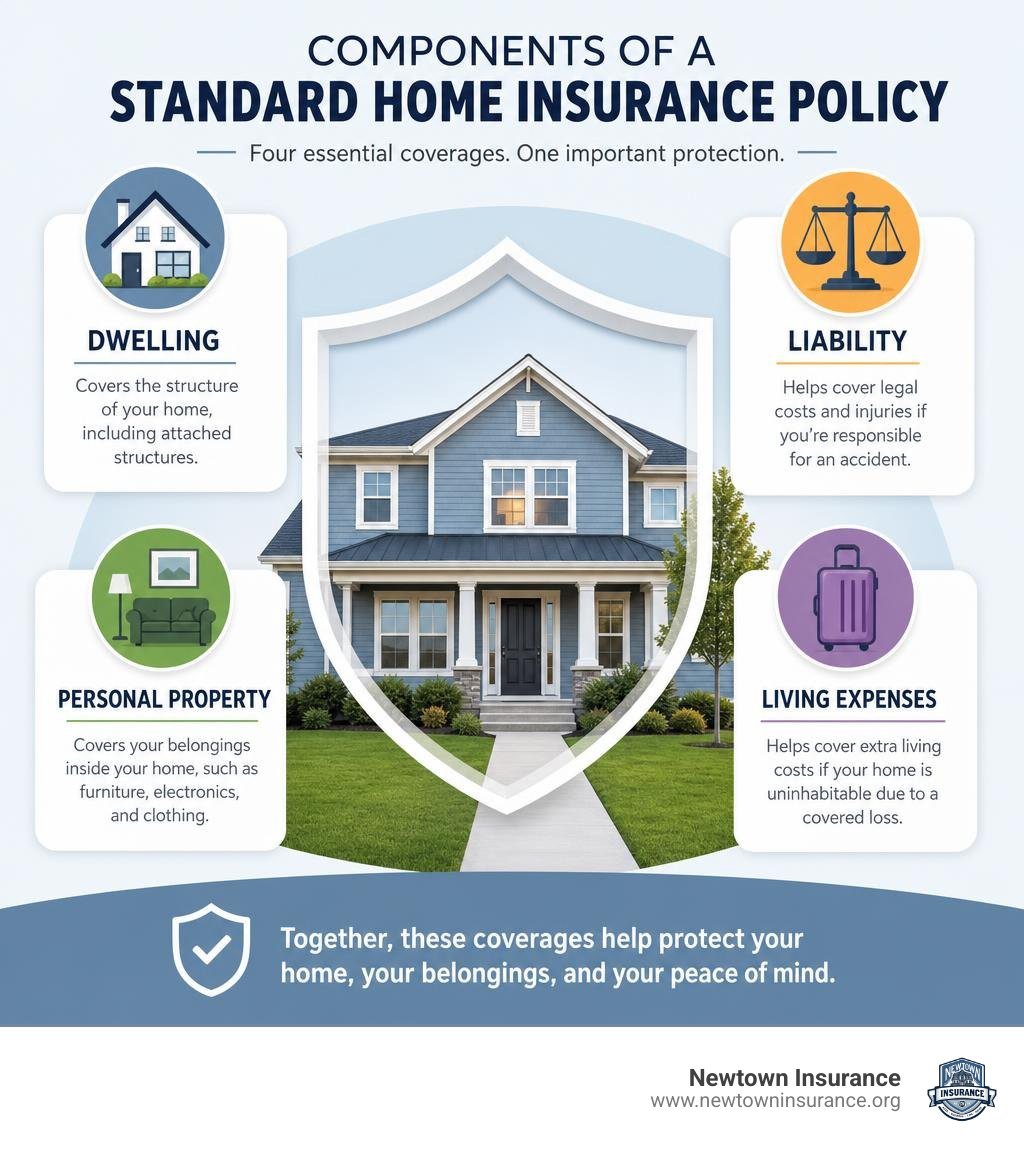
To make sense of your policy, it helps to break down standard home insurance information into four primary pillars:
- Dwelling Coverage: This protects the physical structure of your home, including the walls, roof, floors, and built-in appliances. If a covered hazard—like a fire or a severe winter storm—damages your house, dwelling coverage helps pay for the repairs or rebuilding costs. It also typically extends to other structures on your property, such as a detached garage, a fence, or even a backyard shed.
- Personal Property: This covers the things inside your home. Think of your furniture, electronics, clothing, and kitchenware. If your home is burglarized or damaged by a covered event, personal property coverage helps pay to replace these items. Best of all, this protection often follows you off-premises, meaning your phone or laptop could be covered even if it is stolen while you are traveling.
- Personal Liability Protection: If a guest slips on an icy patch on your driveway or your dog accidentally bites a visitor, you could be held legally and financially responsible. Liability coverage helps pay for legal defense fees, court judgments, and medical settlements up to your policy limits.
- Additional Living Expenses (ALE): If a major fire or storm makes your home temporarily uninhabitable, ALE covers the extra costs of living elsewhere. This includes hotel stays, restaurant meals, and even lost rental income if you rent out a portion of your property to a tenant.
Why Easy Home Insurance is Essential for Modern Homeowners
Your home is likely your largest financial asset. Beyond the physical structure, it is the center of your daily life. Having a reliable insurance policy is not just about satisfying a mortgage lender; it is about building a bulletproof financial safety net.
Without adequate coverage, a single burst pipe or kitchen fire could wipe out your savings. Modern policies simplify this safety net by integrating essential protections like loss of use coverage and guest medical coverage directly into your base policy. Guest medical coverage, for instance, pays for minor medical bills if a visitor is injured on your property, regardless of who was at fault. This often prevents small accidents from turning into major, stressful lawsuits.
Tailoring Your Policy with Optional Add-Ons
While standard policies are incredibly robust, they do have limits. That is why customizing your coverage with targeted add-ons is a crucial part of securing easy home insurance.
For Pennsylvania homeowners, we frequently recommend considering these essential enhancements:
- Water Backup Coverage: Standard policies do not cover damage caused by backed-up sewers or overflowing sump pumps. Adding water backup protection ensures that if your basement floods due to a sump pump failure, the cleanup and restoration costs are covered.
- Identity Theft Protection: This add-on helps cover the legal fees, lost wages, and administrative costs associated with restoring your credit and identity if you fall victim to cybercriminals.
- Scheduled Personal Property: Standard policies place sub-limits on high-value items like jewelry, fine art, and high-end electronics. By opting for scheduled personal property coverage, you can insure these specific valuables for their full, appraised value with no deductible.
How to Compare and Customize Your Coverage

Many homeowners make the mistake of choosing a policy based solely on the cheapest monthly premium. However, true insurance value is found by looking at the details of what you are actually getting. When you begin to compare insurance quotes complete guide, you must ensure you are comparing identical coverage limits and deductibles to get an accurate picture.
The best way to start is by utilizing the best website to compare home insurance quotes or working directly with an independent agent who can shop multiple carriers on your behalf.
One of the most critical decisions you will make during this process is choosing between Replacement Cost and Actual Cash Value (ACV):
- Actual Cash Value (ACV): This option pays out the value of your damaged property minus depreciation for age and wear-and-tear. For example, if a five-year-old laptop is stolen, an ACV policy will only pay what a five-year-old laptop is worth today, which might not be enough to buy a new one.
- Replacement Cost: This option pays to replace your damaged items or rebuild your home with brand-new materials of similar quality, without any deductions for depreciation. While replacement cost coverage carries slightly higher premiums, it provides far superior financial protection when you need to file a claim.
Step-by-Step Guide to Securing Easy Home Insurance Quotes
Getting a personalized quote does not have to involve endless paperwork. By gathering a few key details in advance, you can streamline the quoting process down to just a few minutes.
Here is what you will need to have ready:
- Property Details: The age of your home, the square footage, the number of stories, and the type of construction materials used (e.g., brick vs. wood frame).
- Major Home Systems: The age and condition of your roof, plumbing, electrical wiring, and heating/cooling systems. Upgraded systems lower your risk and often qualify you for lower rates.
- Safety and Security Features: Let your agent know if you have smoke detectors, deadbolts, a fire sprinkler system, or a centrally monitored burglar alarm.
- Personal Information: Your name, date of birth, and claims history.
For a complete walkthrough of this process, check out our home insurance quotes guide 2026 to secure highly accurate, personalized insurance quotes tailored to your specific property.
Understanding the 80% Replacement Cost Rule
A lesser-known but incredibly vital concept in home insurance is the 80% rule.
Most insurance carriers require you to maintain dwelling coverage equal to at least 80% of your home’s total replacement value (the actual cost to rebuild the structure from scratch, which is different from its market value or tax assessment).
If your coverage falls below this 80% threshold and you experience a loss, your insurance company may not pay the full value of your claim. Instead, they will only pay a proportionate share of the repair costs, leaving you to cover the rest out-of-pocket.
To protect yourself, make sure your policy keeps pace with inflation and local construction costs. Choosing the right home insurance deductible can also help balance your coverage levels with your monthly budget.
Key Factors That Determine Your Premium Costs
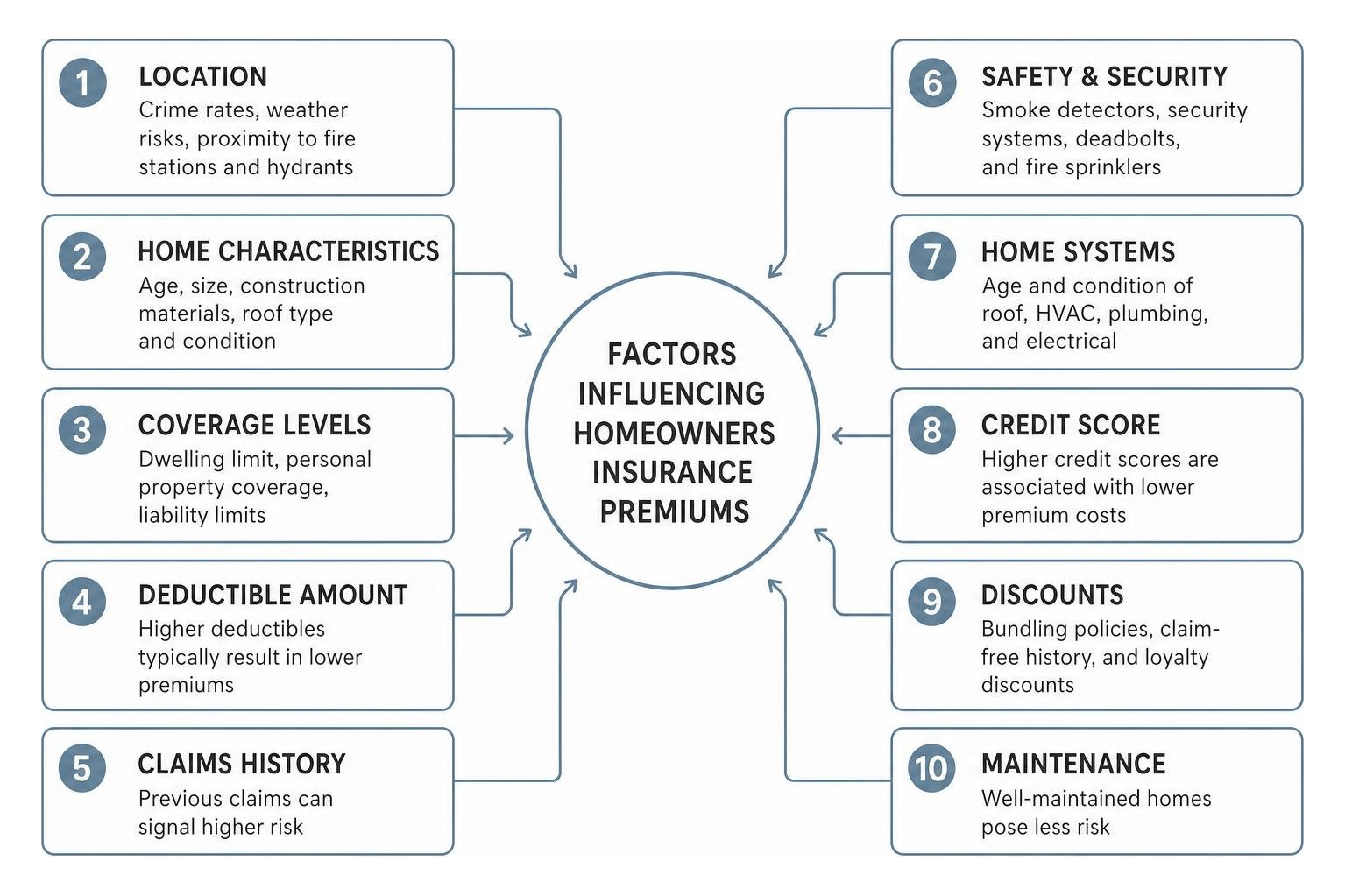
Your home insurance premium is not a random number pulled out of thin air. Insurance underwriters use a variety of risk factors to calculate exactly how much you will pay.
To help you understand what goes into your rate, here is a comparison of the primary factors that can drive your premium up or down:
| Factors That Can Increase Your Premium | Factors That Can Decrease Your Premium |
|---|---|
| Older roof or outdated home systems | Brand-new or recently updated roof |
| History of frequent insurance claims | Clean claims history |
| Location in a high-risk flood or storm zone | Proximity to a local fire department or hydrant |
| Low deductible selection | Higher deductible selection |
| Smoking inside the household | Monitored home security and fire alarms |
Understanding these variables is key to managing your homeowners insurance pa cost effectively. For example, while you cannot change the geographic location of your home, you can control your deductible level or choose to proactively upgrade your electrical panel to lower your overall risk profile.
Smart Ways to Save on Your Home Policy
Securing great coverage does not mean you have to overpay. There are several highly effective strategies you can use to lower your premiums without sacrificing your peace of mind.
- Install Safety Devices: Adding deadbolts, smoke alarms, carbon monoxide detectors, and smart home security cameras can earn you immediate discounts on your policy.
- Increase Your Deductible: Your deductible is the amount you pay out-of-pocket before your insurance coverage kicks in. By raising your deductible from $500 to $1,000 or $2,500, you can significantly lower your monthly premium. Just make sure you keep enough cash in savings to cover that higher deductible if you ever need to file a claim.
- Quote in Advance: Many insurance companies offer a discount if you secure your new policy at least 7 to 10 days before your old policy expires.
- Maintain a Good Credit Score: In Pennsylvania, insurance companies are permitted to use credit-based insurance scores to help determine premiums. Keeping your credit in good standing directly translates to lower insurance rates.
For more practical strategies, explore our comprehensive guides on tips for saving money on insurance and general insurance savings tips.
The Power of Bundling Policies
By far, the easiest and most impactful way to save money on your coverage is to bundle multiple policies with the same provider.
When you combine your auto and home insurance into a single package, most carriers will reward you with a substantial multi-policy discount. This not only puts hundreds of dollars back in your pocket annually but also simplifies your life by consolidating your billing and policy management under one roof.
To find the absolute best rates, take a look at our analysis on the auto and home bundle and learn how to choose the best insurance company for home and auto bundle.
Frequently Asked Questions About Home Insurance
Does standard home insurance cover natural disasters like floods and earthquakes?
No. This is one of the most common and dangerous misconceptions in the insurance industry. Standard homeowners insurance policies explicitly exclude damage caused by floods, earthquakes, and general earth movement.
If a heavy rainstorm causes a nearby creek to overflow and flood your basement, your standard policy will not pay for the damage. To protect your home against these perils, you must purchase separate flood insurance (usually backed by the National Flood Insurance Program) or add an earthquake endorsement to your policy.
To learn more about local weather risks and coverage options, read our home insurance pennsylvania complete guide.
How does the claims process work with modern digital providers?
Modern insurance has made filing a claim incredibly simple. If your home suffers damage, you can typically file a claim online or through a mobile app in just a few minutes. You will be asked to upload photos of the damage, provide a brief description of the incident, and submit any relevant receipts.
Once submitted, a claims adjuster will review your case. For minor claims, some digital-first platforms can approve and pay out funds in a matter of days—or even hours. For larger, more complex losses, a local adjuster may visit your home to inspect the damage in person. Working with a company that prioritizes the best insurance customer support ensures you have a dedicated guide to help you navigate the process smoothly.
Is home insurance legally required in Pennsylvania?
Technically, no. The state of Pennsylvania does not legally require you to carry homeowners insurance.
However, if you have a mortgage on your home, your lender almost certainly will require it. Lenders mandate home insurance to protect their financial investment in your property. If you let your coverage lapse, your lender has the right to purchase “force-placed” insurance on your behalf, which is typically much more expensive and offers far less coverage than a policy you would choose yourself.
Even if your home is paid off entirely, maintaining coverage is highly recommended to prevent catastrophic financial loss. For more state-specific rules, refer to our insurance pennsylvania complete guide.
Conclusion
At Newtown Insurance, we believe that securing easy home insurance should be a transparent, stress-free experience. As a local Pennsylvania provider, we are proud to offer tailored protection, smart savings, and clear, honest pricing. We specialize in customer-first support to help you avoid overpaying for coverage you don’t need, ensuring you get a no hidden fee insurance policy built entirely around your life.
Ready to simplify your coverage and protect your home without losing your mind? Get a free quote today and let us do the heavy lifting for you.